

Fuelling the Future: Ethanol’s Contribution to India’s Energy Goals
(Relevant for GS paper-3, Conservation of Sources, Economic Growth)
|
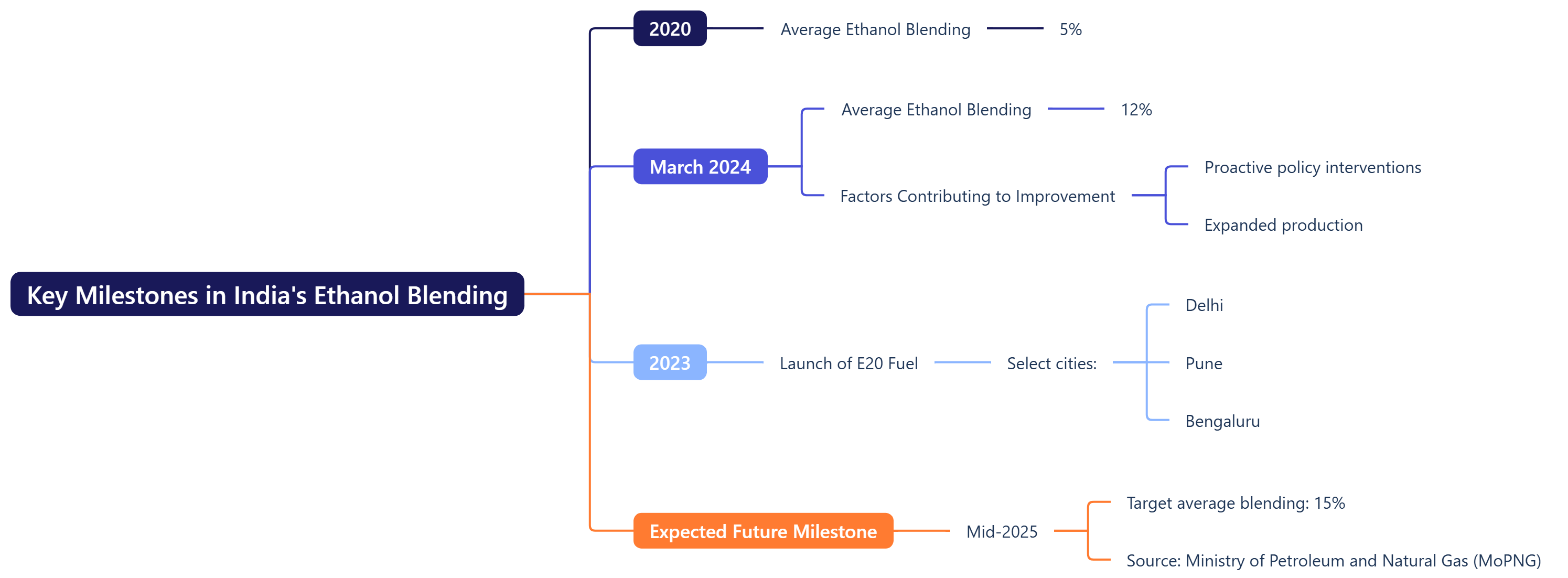
India, as one of the fastest-growing major economies in the world, faces a dual challenge—meeting its rising energy demand while ensuring environmental sustainability. In this context, ethanol has emerged as a key component in India’s strategy for achieving energy security, reducing carbon emissions, and promoting agricultural sustainability. What is Ethanol and Why It MattersEthanol is a biofuel derived primarily from sugarcane, maize, rice, and other starch- or sugar-rich crops. It can be blended with petrol to reduce dependency on fossil fuels. As a renewable, domestically produced fuel, ethanol offers a cleaner alternative that burns more efficiently and produces fewer greenhouse gas emissions. India, which imports over 85% of its crude oil needs, spends billions of dollars on fuel imports. Ethanol blending provides a way to mitigate this burden while promoting self-reliance in energy, in line with the vision of Aatmanirbhar Bharat. National Ethanol Blending ProgrammeIndia’s Ethanol Blended Petrol (EBP) Programme, launched in 2003 and significantly revamped in the past decade, aims to promote the use of ethanol as a blend stock with petrol. The government set an ambitious target to achieve 20% ethanol blending in petrol by 2025, known as the E20 target. Key Milestones
Economic Benefits of Ethanol
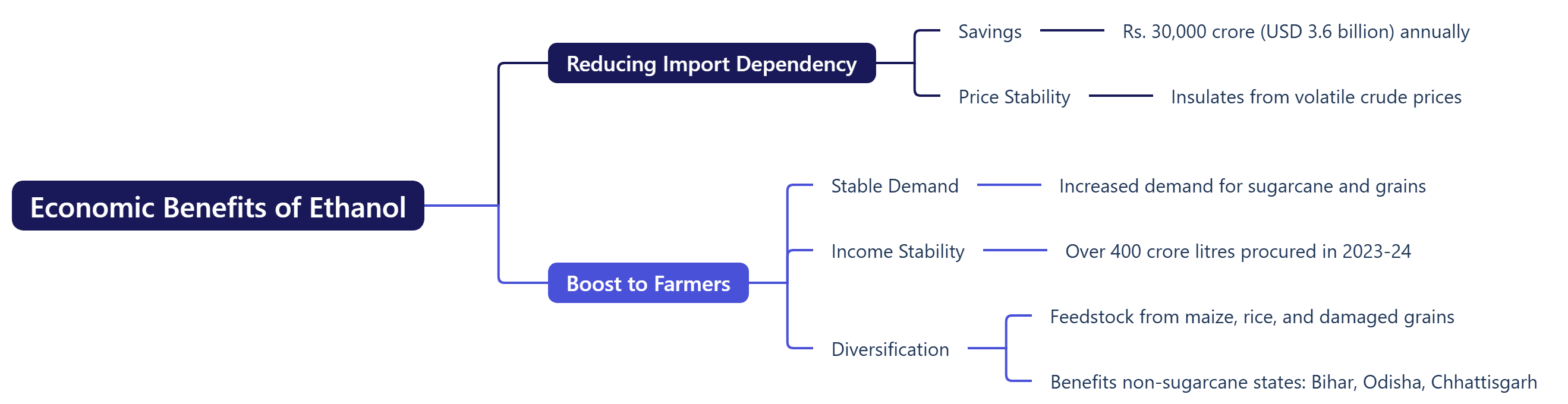
According to NITI Aayog, 20% ethanol blending could save India Rs. 30,000 crore (USD 3.6 billion) annually in oil import bills. Additionally, it insulates the country from volatile international crude prices.
The ethanol program has created a stable demand for agricultural produce, especially sugarcane and grains. In 2023-24, over 400 crore litres of ethanol were procured, providing income stability to farmers. The diversification of feedstock to maize, rice, and damaged grains is also helping farmers in non-sugarcane states like Bihar, Odisha, and Chhattisgarh. Environmental and Climate GainsBurning ethanol produces lower carbon monoxide, hydrocarbons, and particulate matter compared to petrol. According to the Indian Institute of Petroleum, blending 20% ethanol could result in:
Moreover, ethanol helps meet India’s commitments under the Paris Agreement and its Net Zero target by 2070. Technological and Infrastructure Developments
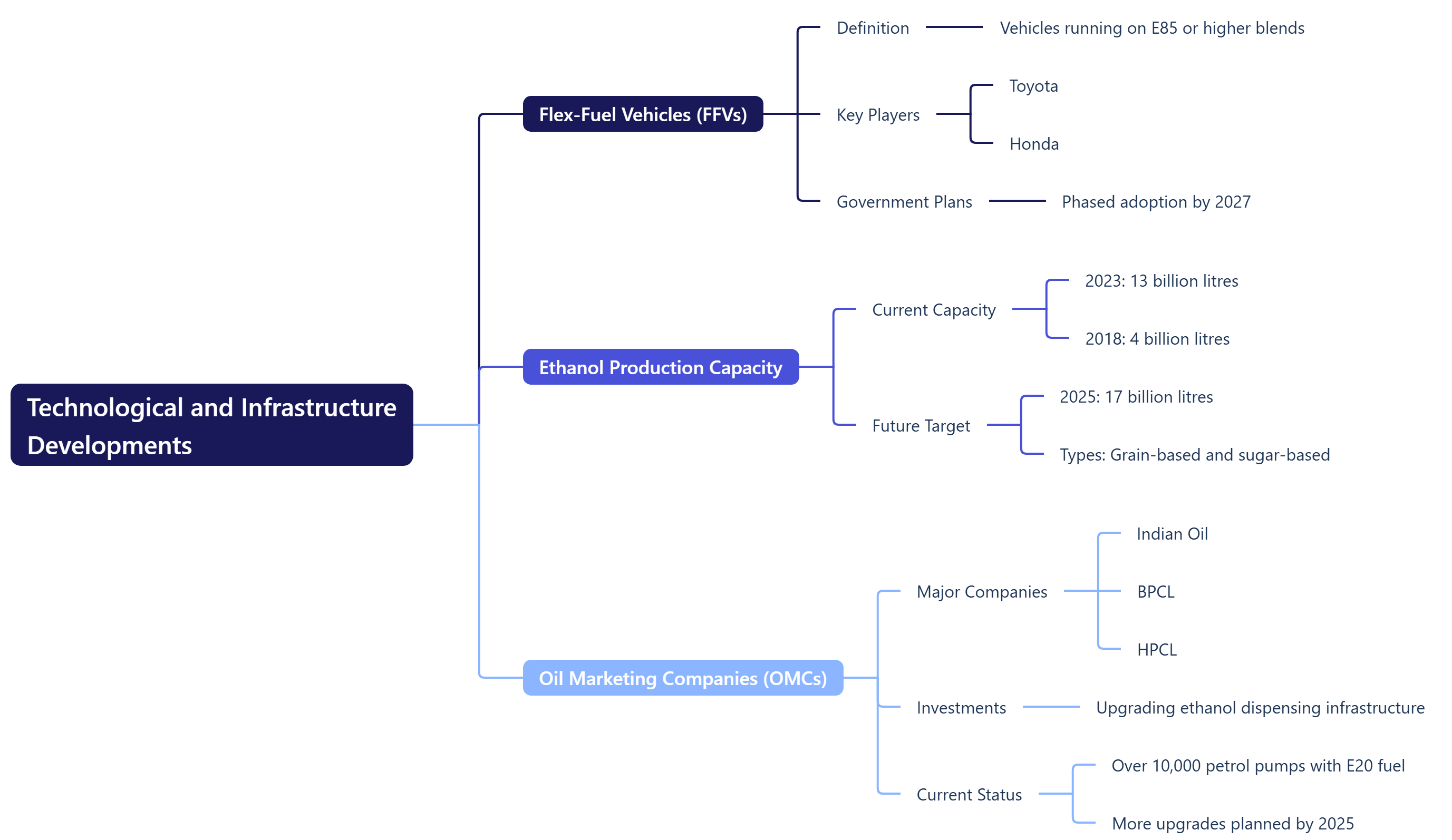
Flex-fuel vehicles that can run on E85 (85% ethanol) or higher blends are being promoted. Automobile majors like Toyota and Honda have initiated pilot FFV models in India. The government plans to make FFV adoption mandatory in phased manner by 2027.
India’s installed ethanol production capacity in 2023 stood at 13 billion litres, up from just 4 billion litres in 2018. The target is to raise it to 17 billion litres by 2025, including grain-based and sugar-based ethanol.
OMCs like Indian Oil, BPCL, and HPCL are investing in ethanol dispensing infrastructure. Over 10,000 petrol pumps have already been upgraded to provide E20 fuel, with more to be covered by 2025. Policy SupportTo promote ethanol as a mainstream fuel, the government has adopted a multi-pronged policy approach: National Policy on Biofuels 2018 (Revised in 2022)
Interest Subvention Scheme
GST and Pricing
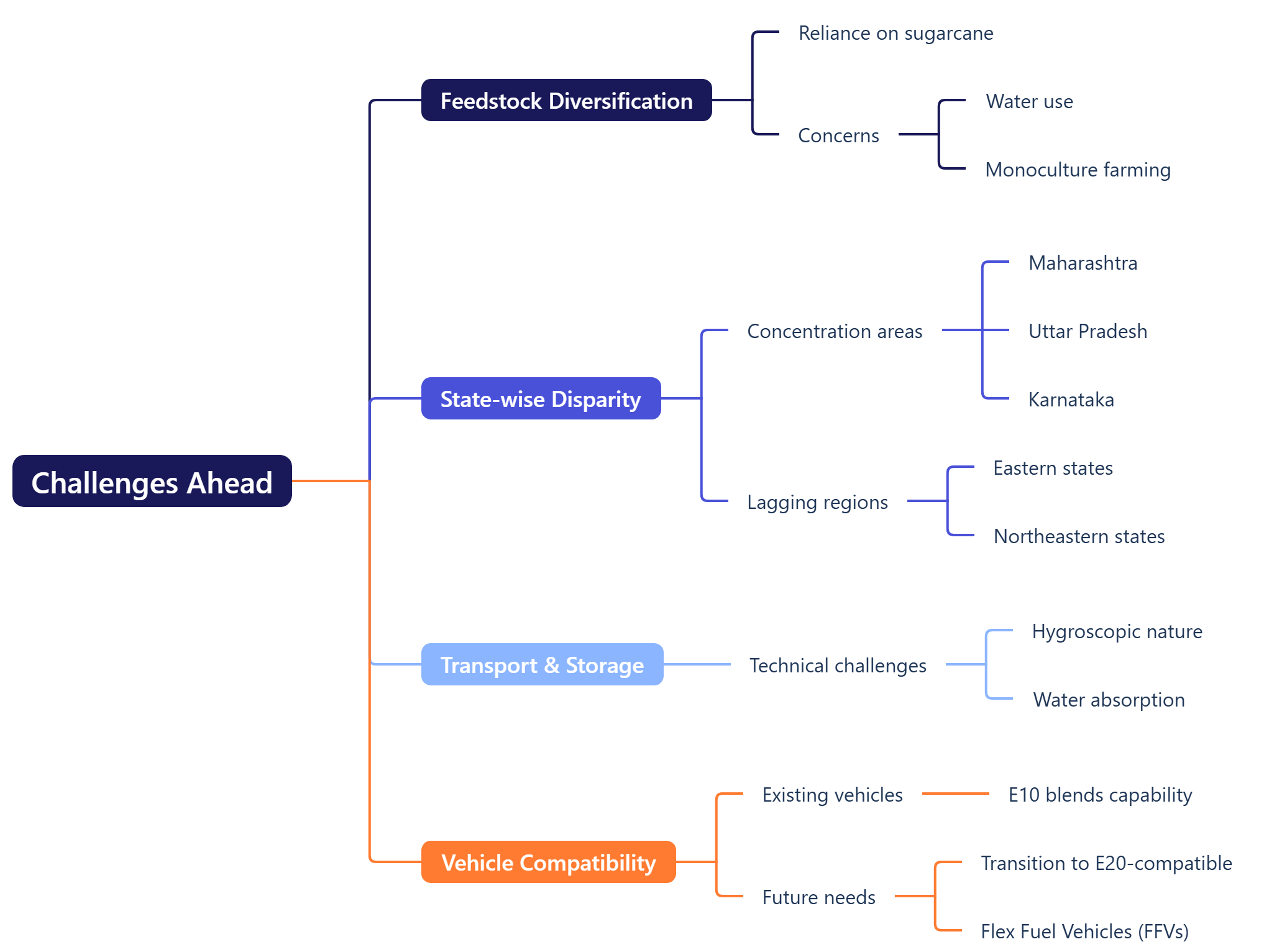
Challenges Ahead
While progress is commendable, several challenges remain:
Way Forward
ConclusionEthanol is not just a cleaner fuel—it’s a strategic asset that intersects India’s energy, agriculture, climate, and economic priorities. With strong political will, proactive policies, and stakeholder participation, ethanol can significantly reshape India’s energy future. As we move towards energy independence and net-zero goals, ethanol stands out as a torchbearer of sustainable and inclusive growth. |

To Read more topics, visit: www.triumphias.com/blogs
Read more Blogs:
IPS, SANKET KUMAR | Water resources Management is Need of the Hour | Triumph IAS
It’s great to see how ethanol is contributing not just to India’s energy security, but also to farmers’ livelihoods. It’s a win-win for both the economy and the environment, especially with the growing focus on reducing carbon emissions.