|
Food adulteration has emerged as a significant public health challenge in India, affecting millions of lives and undermining trust in the food industry. Despite having robust regulatory frameworks, the scale of adulteration continues to rise, posing serious risks to consumer health, economic stability, and food security. With increasing incidents reported across the country, there is an urgent need for coordinated, comprehensive, and sustainable measures to combat this menace.
Understanding Food Adulteration
Food adulteration refers to the deliberate or accidental contamination of food products with inferior, harmful, or prohibited substances. Adulterants are often introduced to increase quantity, enhance appearance, or prolong shelf life, usually at the cost of safety and nutritional value. Common adulterants include non-edible colors, starch, stones, soapstone, urea, and even hazardous chemicals like formalin and calcium carbide.
The Food Safety and Standards Authority of India (FSSAI) defines food adulteration as the addition or removal of any substance from food, making it substandard, injurious to health, or misleading in presentation.
Recent Data and Trends
According to the FSSAI 2023-24 report, approximately 28% of food samples tested across India were found to be adulterated or misbranded, marking a worrying increase from 23% in 2018-19.
- Notably, dairy products, edible oils, and spices were the most adulterated categories.
- States like Uttar Pradesh, Bihar, and West Bengal reported the highest instances of food adulteration.
- In 2024, a high-profile case from Delhi exposed large-scale adulteration of milk using synthetic chemicals like detergent and urea, highlighting gaps in routine inspections and law enforcement.
Globally, India ranked among the top five countries reporting high levels of food fraud, according to a 2023 Food Fraud Database update by the US Pharmacopeia (USP).
Health Hazards
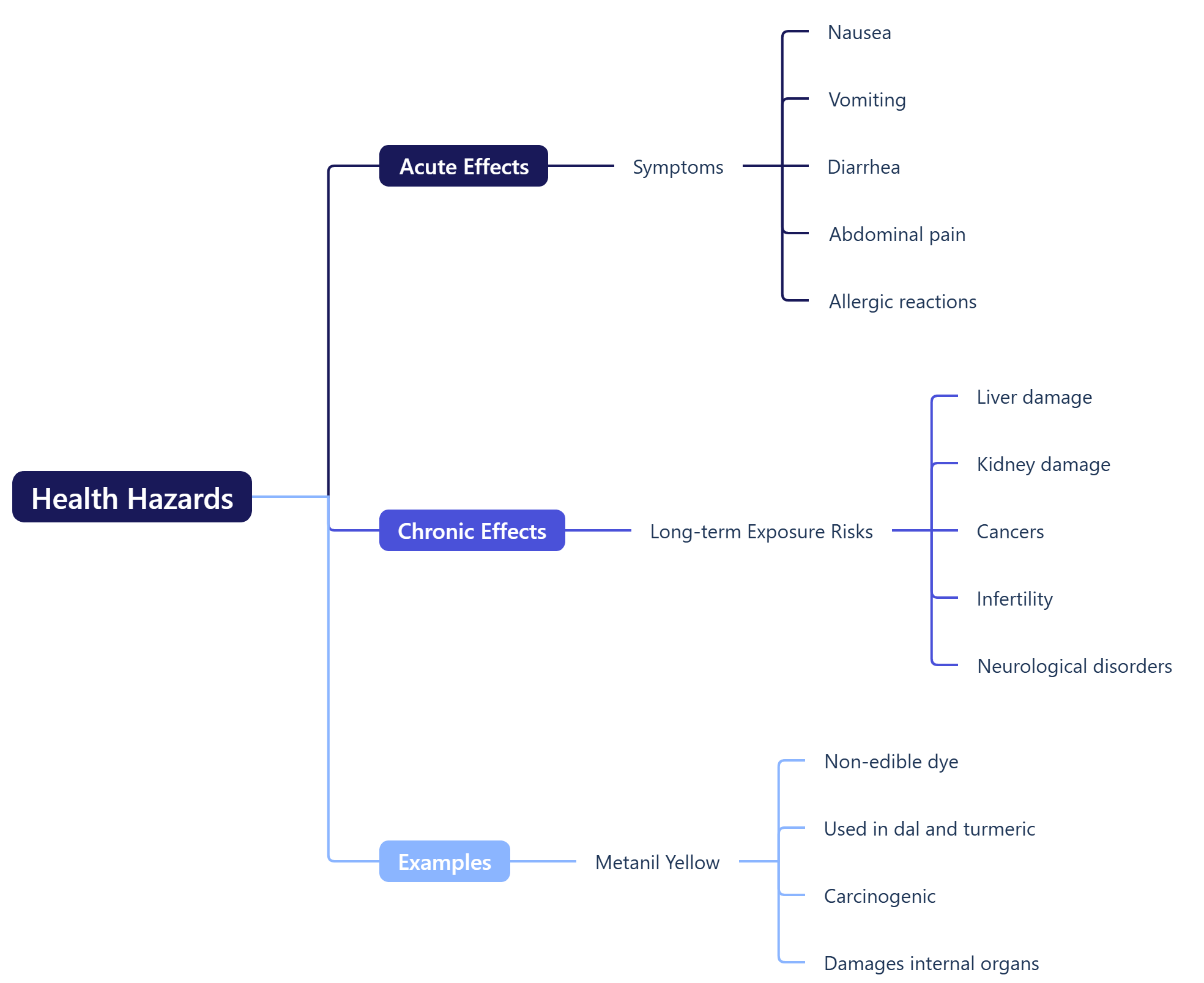
Food adulteration severely impacts public health:
- Acute Effects: Immediate symptoms like nausea, vomiting, diarrhea, abdominal pain, and allergic reactions.
- Chronic Effects: Long-term exposure can cause liver and kidney damage, cancers, infertility, and neurological disorders.
- For example, metanil yellow, a non-edible dye sometimes used in dal and turmeric, is carcinogenic and damages internal organs.
Children, pregnant women, and the elderly are particularly vulnerable to the harmful effects of adulterated foods, amplifying the social costs.
Causes behind Food Adulteration
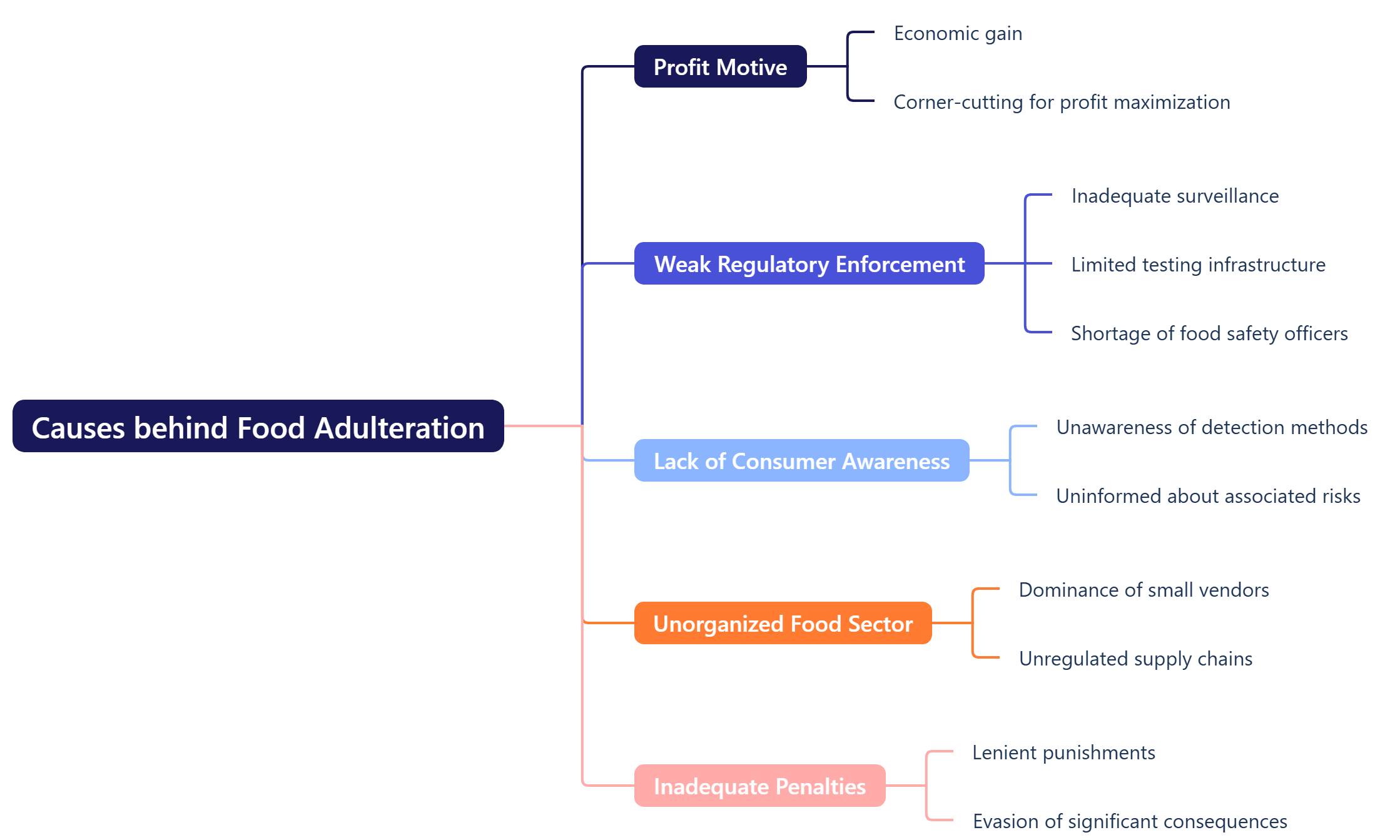
Several factors contribute to the prevalence of adulteration:
- Profit Motive: The primary driver is economic gain — adulterators cut corners to maximize profits.
- Weak Regulatory Enforcement: Despite strong laws, inadequate surveillance, limited testing infrastructure, and shortage of food safety officers weaken enforcement.
- Lack of Consumer Awareness: Many consumers are unaware of simple detection methods or the risks involved.
- Unorganized Food Sector: The dominance of small vendors and unregulated supply chains makes monitoring difficult.
- Inadequate Penalties: Punishments under existing laws are often lenient, allowing habitual offenders to escape significant consequences.
Legal Framework
India has several regulations aimed at preventing food adulteration:
- The Food Safety and Standards Act, 2006: Consolidates multiple food laws and established FSSAI.
- Prevention of Food Adulteration Act, 1954: Now subsumed, but provided the early framework.
- FSSAI Regulations (2022 Amendments): Introduced stricter labeling norms and harsher penalties for adulteration.
- Recent Initiatives:
- FSSAI’s Eat Right India Movement focuses on safe and healthy food practices.
- State Food Safety Index 2023 ranked Tamil Nadu, Gujarat, and Maharashtra as top performers in ensuring food safety.
However, the implementation gap remains substantial.
Suggested Measures to Combat Food Adulteration
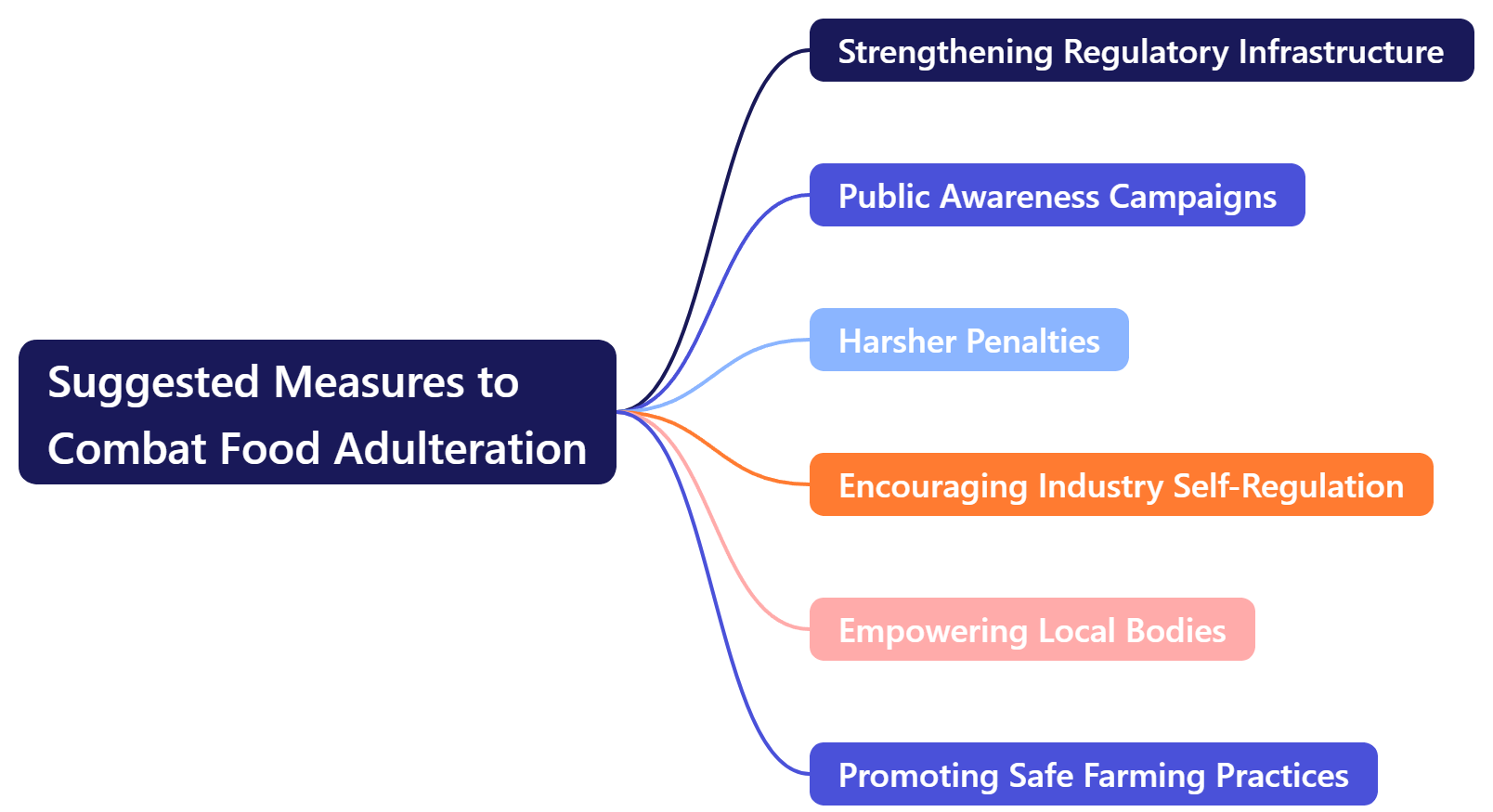
A multi-pronged strategy is essential:
-
Strengthening Regulatory Infrastructure:
- Increase the number of accredited food testing laboratories.
- Employ more food inspectors and ensure regular inspections at all levels — from farms to retail shops.
- Adopt advanced technology like blockchain for supply chain traceability.
-
Public Awareness Campaigns:
- Educate consumers on simple home tests (like starch detection in milk) and promote mobile food-testing kits.
- Leverage social media, community programs, and school curricula to spread awareness.
-
Harsher Penalties:
- Revise the FSS Act to include higher fines and longer prison sentences for offenders.
- Introduce “naming and shaming” measures against companies found guilty.
-
Encouraging Industry Self-Regulation:
- Incentivize food businesses to adopt internal quality audits and certifications like FSSAI’s “Jaivik Bharat” for organic products.
- Develop voluntary “clean food” labeling initiatives for safe products.
-
Empowering Local Bodies:
- Train panchayat members and urban municipal workers in basic food safety checks.
- Create a local food vigilance force equipped with mobile testing vans.
-
Promoting Safe Farming Practices:
- Curb the use of banned pesticides and chemicals at the agricultural level.
- Promote organic farming and Good Agricultural Practices (GAP).
Recent Positive Developments
- FSSAI Mobile Food Testing Vans: Deployed across various states like Punjab and Kerala, providing quick field testing facilities.
- Smart Food Safety Compliance Platform (FoSCoS): Launched in 2022, it aims to digitize food licensing and registration processes, ensuring better transparency.
- Swachhata Hi Seva Campaign (2023): Included food hygiene as a critical focus area.
These efforts have shown positive outcomes but need scaling and replication across India.
Conclusion
Food adulteration not only threatens public health but also tarnishes India’s image as a growing economic power. As India aspires to become a $5 trillion economy, ensuring safe and unadulterated food must become a national priority.
A decisive response — combining strict enforcement, public participation, technology adoption, and robust regulatory reforms — is the need of the hour.
Only through collective action can we hope to secure the right to safe and nutritious food for every citizen.
|



One comment