India Global Trade
India’s aspiration to become a global trade powerhouse is intrinsically linked to the efficiency and robustness of its logistics sector. As of 2025, significant strides have been made to enhance infrastructure, reduce costs, and streamline operations, positioning the country favorably on the global stage.
The Logistics Landscape: Current Status
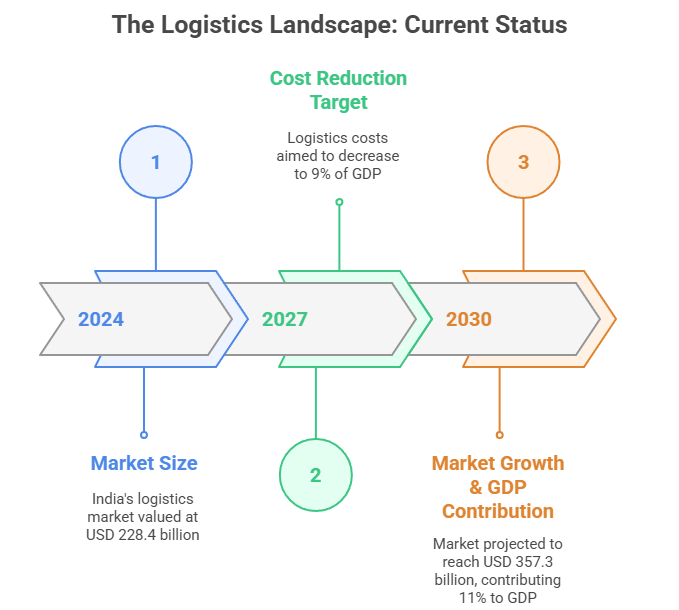
- Market Size & Growth: India’s logistics market was valued at USD 228.4 billion in 2024 and is projected to reach USD 357.3 billion by 2030, growing at a CAGR of 7.7%.
- Contribution to GDP: The sector contributes approximately 7% to India’s GDP, with expectations to increase to 11% by 2030
- Cost Efficiency: Logistics costs have traditionally been high, accounting for 13-14% of GDP, compared to the global average of 8-10%. Efforts are underway to reduce this to 9% by 2027, enhancing competitiveness.
- Strategic Initiatives Driving Transformation
1. National Logistics Policy (NLP)
Launched in 2022, the NLP aims to:
- Reduce logistics costs to global benchmarks.
- Enhance infrastructure through multimodal logistics parks and improved rail and waterway systems
- Promote digital integration for efficient supply chain management.
2. PM Gati Shakti – National Master Plan
This initiative focuses on: Integrating various modes of transport for seamless connectivity.
- Developing infrastructure to support economic zones and industrial corridors.
- Utilizing geospatial planning tools for efficient project implementation.
3. Budget 2025 Allocations
The Union Budget 2025 emphasizes: Investments in multimodal logistics parks.
- Enhancement of air cargo facilities.
- Implementation of the Bharat Trade Net platform for streamlined trade processes.
Infrastructure Developments: Enhancing Connectivity
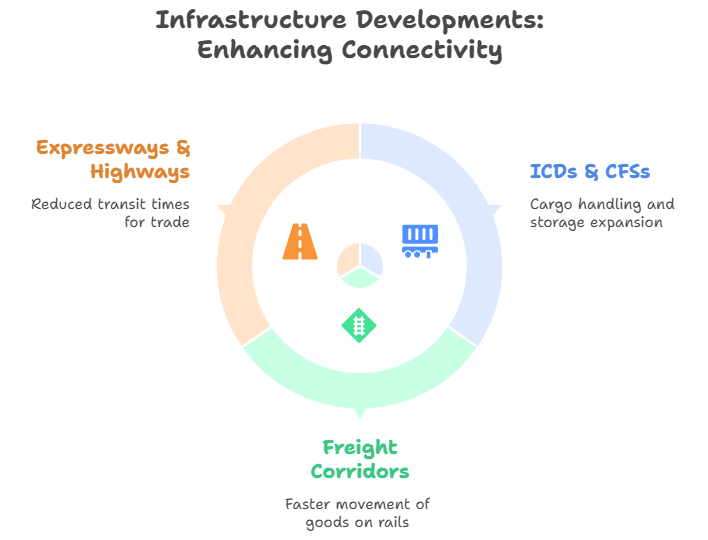
- Inland Container Depots (ICDs) & Container Freight Stations (CFSs): Expansion of these facilities is central to improving cargo handling and storage capabilities. The
- Dedicated Freight Corridors (DFCs): The Western and Eastern DFCs aim to decongest existing rail networks, ensuring faster movement of goods.
- Expressways & Highways: Projects like the Delhi-Mumbai Expressway are set to reduce transit times significantly, bolstering trade efficiency.
Technological Integration: The Digital Push
- Aggregator Platforms: Utilization of AI-driven platforms is optimizing demand-supply matching, reducing empty runs, and enhancing asset utilization.
- Digital Documentation: Initiatives are in place to digitize logistics documentation, reducing paperwork and expediting processes.
Regional Initiatives: State-Level Contributions
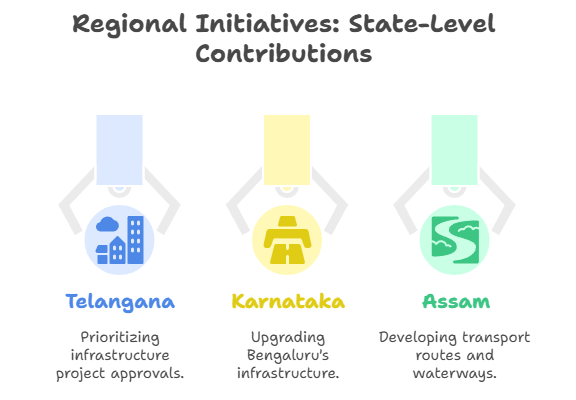
- Telangana: The state is advocating for expedited approvals for infrastructure projects, including metro expansions and dedicated railway lines, to enhance connectivity and attract investments.
- Karnataka: Bengaluru is set to undergo significant infrastructure upgrades, including a 114-km elevated corridor, aimed at alleviating traffic congestion and improving urban mobility.
- Assam: Emphasizing its strategic location, Assam is focusing on infrastructural advancements like dedicated transport routes and inland waterways to position itself as a gateway to Southeast Asia.
Challenges Ahead
- Infrastructure Bottlenecks: Despite progress, rural and remote areas still face connectivity challenges, impacting last-mile delivery.
- Regulatory Hurdles: Streamlining approvals and reducing bureaucratic delays remain critical for timely project execution.
- Skill Development: There’s a pressing need for training programs to equip the workforce with skills aligned to modern logistics demands.
Conclusion
India’s logistics sector is on a transformative journey, with concerted efforts from both central and state governments to build a robust, efficient, and cost-effective system. By addressing existing challenges and leveraging technological advancements, India is poised to enhance its global trade competitiveness, aligning with its vision of becoming a $5 trillion economy.
|


One comment