Introduction
In a society where marriage is idealized as sacred, divorce often invites stigma, particularly for women. Divorce shaming refers to the social ridicule, judgment, and alienation faced by individuals—especially women—who choose to end a marriage. This issue is not merely personal; it intersects with broader sociological themes like gender inequality, social norms, patriarchal structure, and the changing nature of family in India. As Sociology students, understanding the phenomenon of divorce shaming offers a rich ground to explore social change, deviance, and the transformation of institutions.
Why Is Divorce Still a Taboo in Indian Society?
Despite modernization, India remains largely traditional when it comes to family values and gender roles. Marriage is seen not just as a union of individuals but as a social obligation, especially for women. A divorced woman is often labeled as a “failure” or “immoral”, while men generally face fewer consequences.
Key Factors behind Divorce Shaming
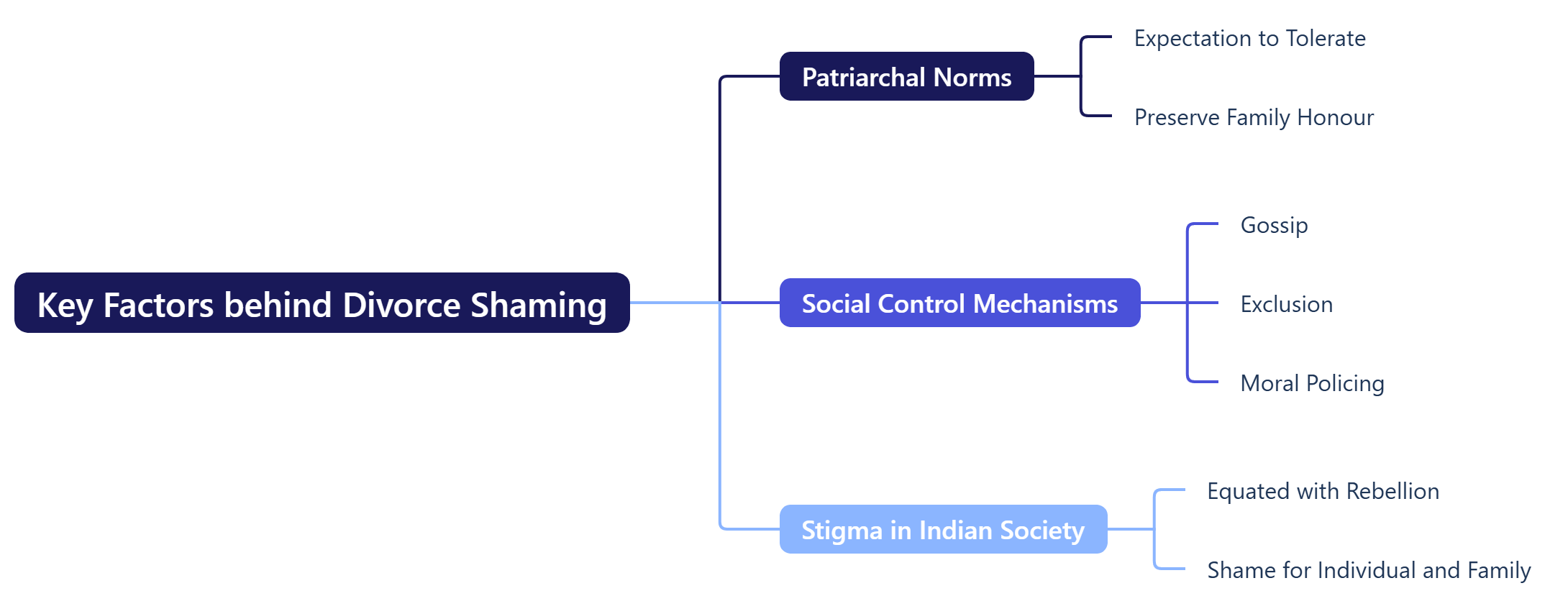
- Patriarchal norms: Women are expected to tolerate abusive or unhappy marriages to preserve family honour.
- Social control mechanisms: Gossip, exclusion, and moral policing act as deterrents for seeking divorce.
- Stigma in Indian society: Divorce is equated with rebellion against tradition, bringing shame not only to the individual but also to the family.
Sociological Analysis
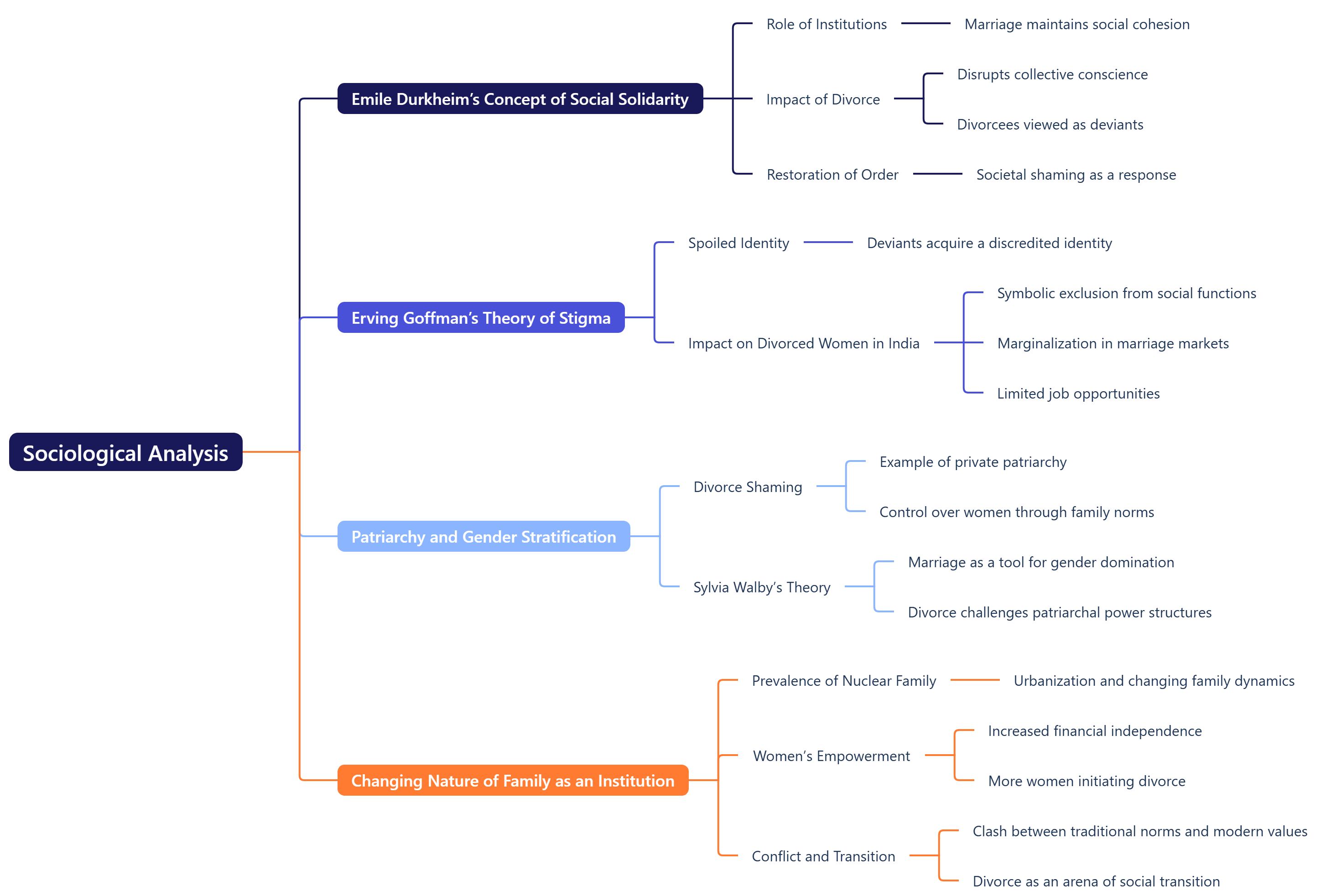
- Emile Durkheim’s Concept of Social Solidarity: Durkheim emphasized that institutions like marriage serve to maintain social cohesion. Divorce, in this view, disrupts the collective conscience, and divorcees may be viewed as deviants. This is why society uses shaming as a means of restoring order.
- Erving Goffman’s Theory of Stigma: Goffman explained that individuals who deviate from accepted norms acquire a spoiled identity. In Indian society, a divorced woman is “discredited” and faces symbolic exclusion from social functions, marriage markets, and even job opportunities.
- Patriarchy and Gender Stratification: Divorce shaming is an example of private patriarchy, where the control over women is exercised through family norms. Sociologist Sylvia Walby’s theory on patriarchal structures helps explain how marriage becomes a tool for gender domination, and divorce is seen as a challenge to that power structure.
- Changing Nature of Family as an Institution: As the nuclear family system gains prevalence and urbanization increases, women’s empowerment and financial independence have led to more women initiating divorce. This transition is creating a clash between traditional norms and modern values, making divorce an arena of conflict and social transition.
Divorce Shaming and Women’s Rights
With the rise of social media awareness campaigns, more women are speaking out about toxic marriages, abuse, and the emotional trauma of shaming after divorce. Legal reforms like the Protection of Women from Domestic Violence Act and rising cases of women filing for divorce reflect the growing assertion of rights. However, societal attitudes remain regressive in many areas. For instance, recent headlines about celebrities and politicians facing public backlash after separation highlight how social perception still favors marital endurance over personal happiness, especially for women.
What Can Be Done?
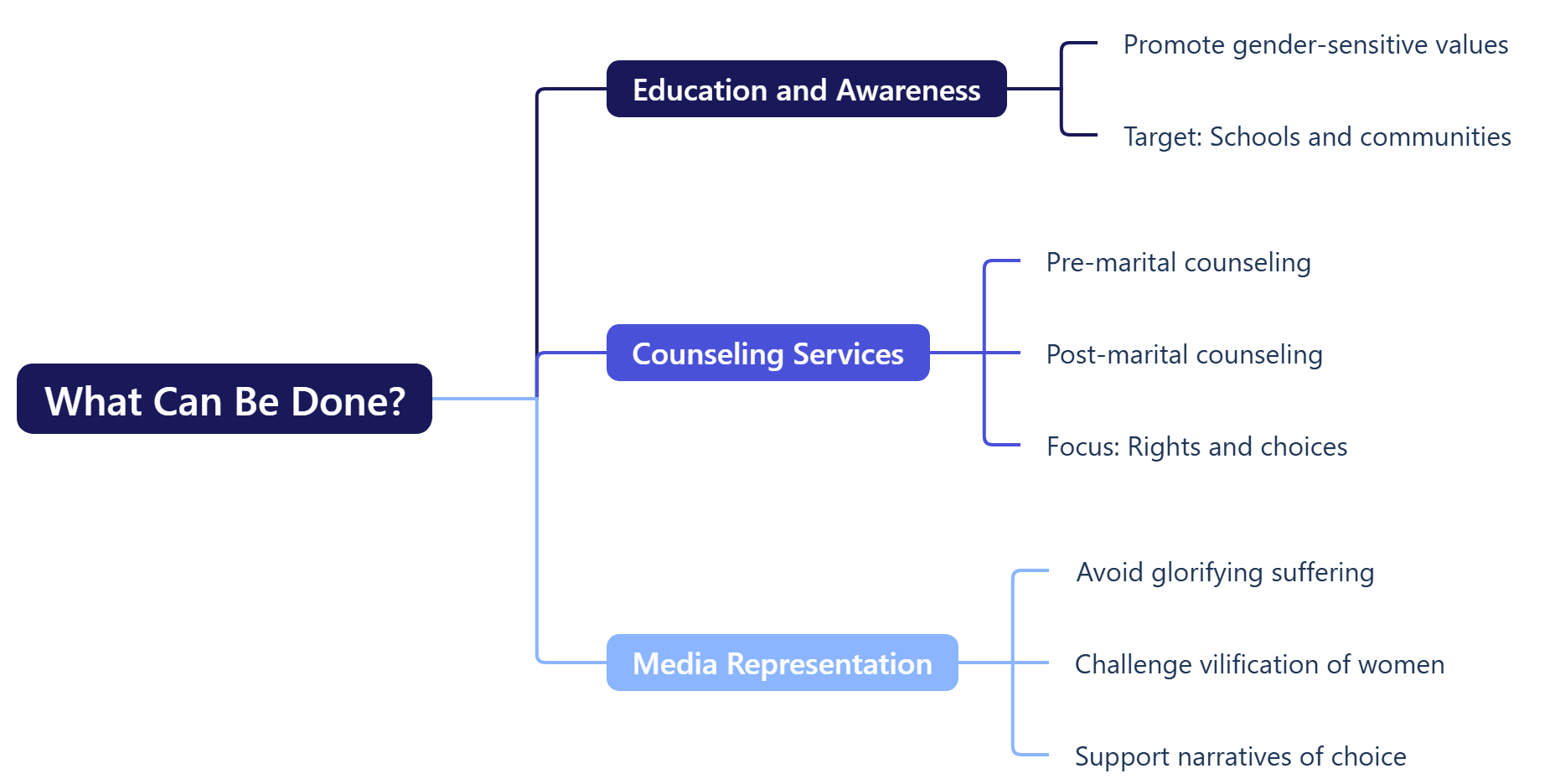
- Education and awareness: Promoting gender-sensitive values in schools and communities.
- Counseling services: Pre- and post-marital counseling can help people understand their rights and choices.
- Media representation: Avoiding narratives that glorify suffering and vilify women who choose to leave marriages.
Conclusion
Divorce shaming in India reflects the deep-rooted patriarchal mindset and rigid social norms that define gender roles, family structure, and honor-based morality. It is a powerful case study to understand social deviance, the role of institutions, changing gender relations, and the resistance to modernization in Indian society. Recognizing divorce not as a failure, but as a right to individual autonomy, is essential for an equitable and progressive society.
PYQs
Paper 1 –
- How does modernization affect kinship and marriage patterns? (2014)
- Discuss the concept of patriarchy and how it manifests in social institutions like family and religion. (2016)
- Examine the role of women’s movements in challenging traditional family structures. (2017)
- Analyze how gender roles are constructed and reinforced through the institution of family. (2018)
- Discuss the feminist perspectives on family. How do they critique traditional family structures? (2019)
- Examine the changing forms of family in modern society and the factors influencing it. (2020)
- Evaluate the impact of increasing individualism on marriage and family as social institutions. (2021)
- Explain the concept of ‘stigma’ as discussed by Erving Goffman and apply it to contemporary social issues. (2022)
- How does the institution of marriage regulate social relations in modern societies? (2023)
Paper 2 –
- Discuss how women’s movements have influenced family norms and gender relations in India. (2014)
- Examine how social legislation (like the Hindu Marriage Act, 1955) has altered gender relations in Indian families. (2015)
- Discuss the role of caste and class in shaping marriage alliances in India. Has there been a change in recent times? (2016)
- Critically examine the status of women in contemporary Indian society with reference to legal and social indicators. (2017)
- Assess the influence of Westernization and secularization on marriage and divorce in Indian society. (2018)
- Examine the nature of challenges faced by women in balancing work and family in urban Indian society. (2019)
- Evaluate the changing patterns of marriage and family in urban India. (2020)
- Discuss the social consequences of women’s increasing educational and economic empowerment in India. (2022)
- Examine the impact of patriarchy on Indian society and how it shapes gender roles within the family. (2023)
|



2 comments