
Digital ShramSetu and the Sociology of Inclusion: Can AI Empower India’s Informal Workforce?
(Relevant for Sociology Paper 1: Works and Economic life)
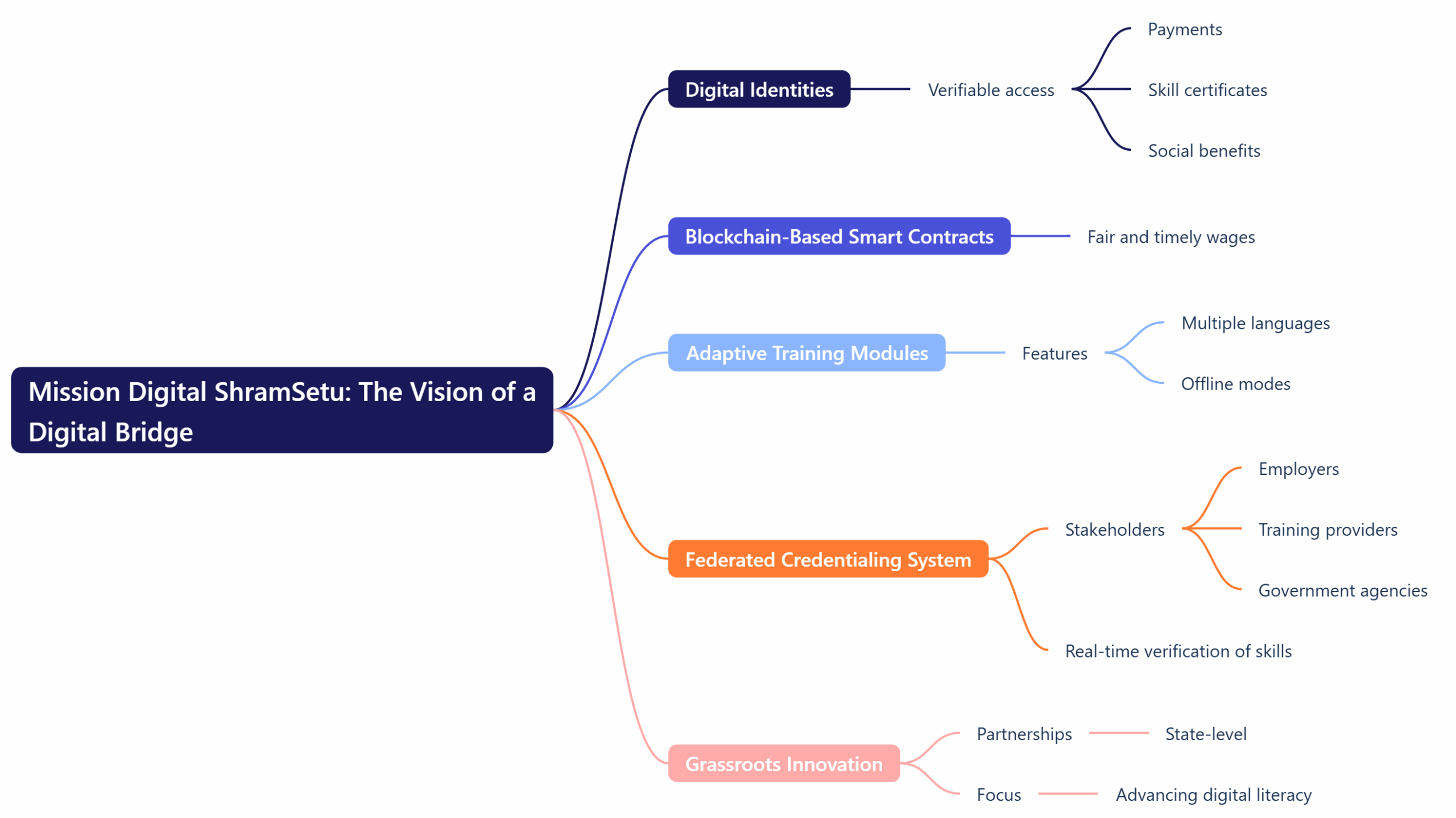
The Context: Technology as a Bridge for Social TransformationIndia stands at a critical crossroads where rapid technological innovation meets deep-rooted social inequality. The release of NITI Aayog’s study, “AI for Inclusive Societal Development,” signals a bold national effort to harness Artificial Intelligence (AI) and frontier technologies for social good. Central to this vision is the proposed Mission Digital ShramSetu, a nationwide initiative designed to digitize and empower India’s vast informal workforce through technology-driven inclusion. For sociologists, this initiative raises compelling questions: Can technology bridge the gap between formal and informal economies? Or does it risk reproducing existing inequalities under a digital guise? To explore these questions, we must understand not only what Digital ShramSetu proposes, but also the social realities it seeks to transform. The Invisible Backbone of India’s EconomyThe informal sector forms the beating heart of India’s labour force, comprising around 490 million workers — nearly 85% of the total. These are the domestic helpers, street vendors, artisans, agricultural labourers, construction workers, and small traders who sustain urban and rural economies alike. Despite contributing approximately 45% of India’s GDP, informal workers remain excluded from the protections, rights, and visibility that define formal employment. Sociologically, this exclusion is not accidental but structural. The informal economy operates in spaces where class, caste, and gender hierarchies intersect. Informal workers often lack written contracts, steady wages, or access to welfare schemes. Women face compounded disadvantages — their participation in informal trade is a mere 15%, compared with the 47% global average. Thus, India’s informal workforce represents not only an economic category but also a social class defined by precarity — a population living without guarantees of stability or recognition. Mission Digital ShramSetu: The Vision of a Digital Bridge
Digital ShramSetu, as envisioned by NITI Aayog, seeks to formalize and uplift informal workers by building a technology-driven bridge between the informal and formal worlds. It proposes to use AI, blockchain, robotics, and immersive learning systems to:
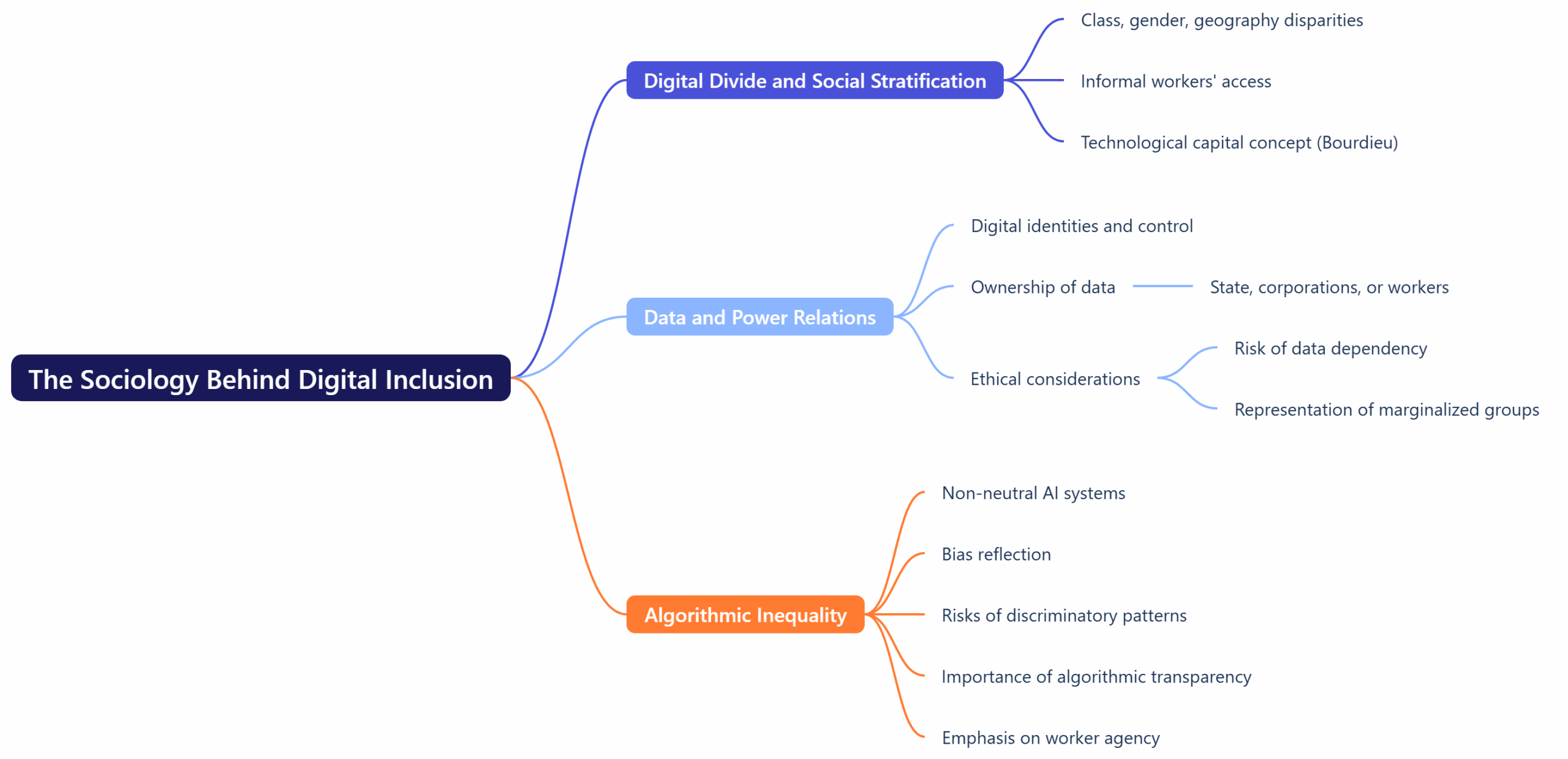
From a sociological standpoint, Digital ShramSetu represents a shift from welfare to empowerment — from seeing informal workers as passive recipients of aid to recognizing them as agents in a digital economy. Insights from Sociological ThinkersThe ambitions of Digital ShramSetu resonate with enduring sociological debates about labour, technology, and power. Karl Marx, in his critique of capitalism, argued that technological advancement often alienates workers by separating them from the fruits of their labour. Yet, he also believed that the same technologies could, in a more equitable system, liberate workers from exploitation. Digital ShramSetu, if implemented ethically, could become such a liberating force — turning technology into a tool for empowerment rather than domination. Max Weber’s idea of rationalization also helps explain this moment. The digital formalization of labour is an example of bureaucratic rationality, where efficiency, record-keeping, and accountability become central. However, Weber warned that excessive bureaucratization can create an “iron cage” — a system so rigid that individuals lose autonomy. Thus, Digital ShramSetu must balance efficiency with empathy, ensuring that data systems serve workers, not control them. Meanwhile, Manuel Castells, a contemporary theorist of the “network society,” reminds us that digital networks can reshape power structures. When informal workers are digitally connected — through online platforms, mobile payments, and AI-based learning — they can gain visibility and collective bargaining power. In this sense, Digital ShramSetu embodies the sociological possibility of transforming networked technology into networked empowerment. The Sociology Behind Digital Inclusion
While Digital ShramSetu’s vision is progressive, sociology reminds us that technology alone cannot produce social transformation. Its impact depends on how it interacts with existing inequalities in power, access, and knowledge.
Technology as Empowerment — If Grounded in Human RealitiesDigital ShramSetu proposes several frontier technologies — AI-driven training, blockchain payments, AR-based skill development, and wearable safety devices. While these tools sound futuristic, their true value depends on how deeply they resonate with local contexts and worker experiences. For instance:
Sociologically, these technologies matter not just as tools of efficiency but as symbols of recognition. They signal that informal workers are no longer invisible in the nation’s digital landscape. Between Utopia and RealityIndia’s goal of formalizing 73% of informal enterprises by 2047 is ambitious and inspiring. But formalization is not merely about digitizing records — it’s about transforming labour relations, social status, and economic security. If implemented without sensitivity to ground realities, Digital ShramSetu could risk becoming a digital bureaucracy that replicates the exclusions of the physical world. True inclusion will require intersectional awareness — policies that recognize how caste, gender, and region shape digital access and labour participation. It will also demand continuous ethical monitoring to ensure that automation enhances, rather than replaces, human labour. Conclusion: Towards a Sociology of Tech-Driven EmpowermentNITI Aayog’s vision recognizes a profound truth: India’s dream of Viksit Bharat 2047 cannot be achieved without its informal workers. These individuals are not relics of a pre-digital age; they are the very foundation on which India’s digital future will stand. AI and frontier technologies, when guided by inclusive ethics and sociological insight, can transform the informal economy from a zone of survival into a space of innovation and dignity. Mission Digital ShramSetu offers a chance to redefine the relationship between work, technology, and citizenship — not by replacing human labour, but by amplifying human potential. As India builds its bridge to a digital tomorrow, the greatest task will be ensuring that no worker is left on the other side. |
To Read more topics, visit: www.triumphias.com/blogs
Read more Blogs:
Cultivating Skills, Cultivating Futures: The Sociology of Agricultural Skill Development in India
Sociology of Employment in India: Demographic Dividend or Social Dilemma?
This piece captures a crucial intersection between technology and sociology that’s often overlooked — how AI can serve as both a tool and a test for social inclusion. The idea of Digital ShramSetu as a ‘bridge’ is powerful, but its success will depend on whether digital literacy and access reach the very workers it aims to empower. It would be interesting to see how sociological frameworks like Giddens’ structuration theory might explain the dynamic between tech innovation and social empowerment here.