|
The launch of the Digital India Mission on 1st July 2015 marked a transformative step in India’s developmental journey. Envisioned as a flagship initiative to prepare India for the knowledge economy, Digital India aimed to create a digitally empowered society and knowledge-based economy. As the mission completes a decade in 2025, it reflects a robust transformation in governance, service delivery, digital access, and citizen empowerment.
Vision and Foundation
Digital India was founded on three core objectives:
- Providing digital infrastructure as a core utility to every citizen
- Ensuring governance and services on demand
- Enabling the digital empowerment of citizens
The initiative was launched to bridge the urban-rural digital divide, promote inclusive growth, and revolutionize public service delivery through technology.
Pillars of Digital India
The Digital India program rests on nine foundational pillars which include:
- Broadband Highways
- Universal Access to Mobile Connectivity
- Public Internet Access Programme
- e-Governance through technology
- e-Kranti – electronic delivery of services
- Information for All
- Electronics Manufacturing
- IT for Jobs
- Early Harvest Programmes
Together, these pillars established a comprehensive digital ecosystem for citizens and businesses.
Major Achievements in a Decade
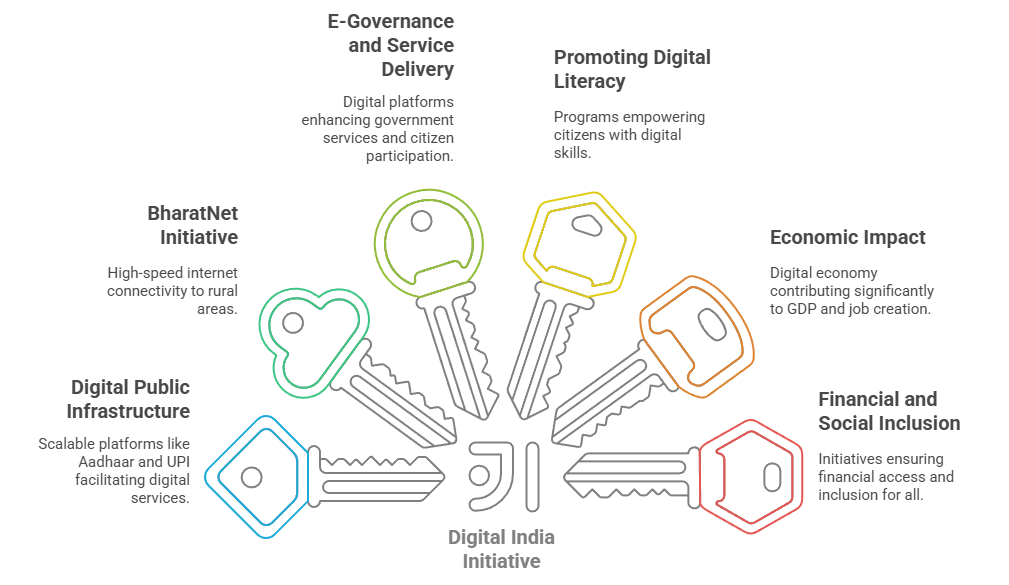
Digital Public Infrastructure
India has developed some of the world’s most scalable and inclusive digital public platforms:
- Aadhaar: With over 1.37 billion enrollees, Aadhaar has been instrumental in identity verification and welfare service delivery.
- Unified Payments Interface (UPI): India’s home-grown instant payment system now processes over 11 billion transactions monthly (as of June 2025).
- Digi Locker: With over 210 million users, it offers secure digital document storage and access.
- CoWIN Platform: This was globally lauded during the COVID-19 pandemic for vaccine registration and certification.
These platforms showcase India’s leadership in digital public goods.
BharatNet Initiative
BharatNet has connected more than 2.1 lakh Gram Panchayats with high-speed optical fiber, bringing digital services to villages and promoting rural development.
E-Governance and Service Delivery
- The UMANG app now hosts over 1,700 services from more than 360 departments.
- The MyGov platform promotes participative governance with over 3 crore users.
- Platforms like eSanjeevani (telemedicine), PM GatiShakti, and GeM (Government e-Marketplace) have further digitized administration.
Promoting Digital Literacy
- The Pradhan Mantri Gramin Digital Saksharta Abhiyan (PMGDISHA) has empowered over 6 crore rural citizens with digital skills.
- Digital literacy programs have focused on including women, SC/ST groups, and persons with disabilities to bridge digital exclusion.
Economic Impact
Digital India has become a catalyst for economic transformation:
- The digital economy is estimated to contribute over $1.5 trillion to India’s GDP.
- Over 5 crore jobs have been created directly and indirectly in the IT and digital sectors.
- A thriving startup ecosystem in fintech, healthtech, agritech, and edtech has emerged with global reach.
Financial and Social Inclusion
- The JAM Trinity (Jan Dhan-Aadhaar-Mobile) has enabled seamless Direct Benefit Transfers (DBT) to over 50 crore beneficiaries.
- Financial inclusion has expanded rapidly with over 50 crore Jan Dhan accounts, most owned by rural and semi-urban citizens.
India’s Global Digital Footprint
India’s digital public infrastructure model, often referred to as India Stack, is being adopted globally.
- UPI has been integrated or linked with payment systems in Singapore, UAE, Bhutan, and France.
- During India’s G20 presidency in 2023, the model was promoted as a blueprint for global South-South cooperation.
- India is now emerging as a digital solutions provider for the Global South.
Persistent Challenges
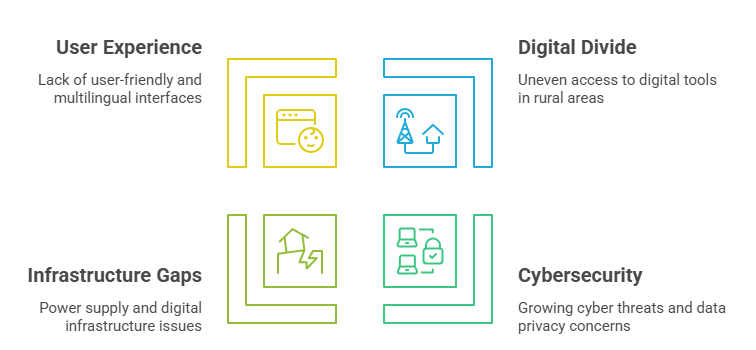
Despite substantial progress, challenges remain that hinder the full realization of Digital India’s potential.
Digital Divide
Access to digital tools remains uneven:
- Rural areas still struggle with connectivity and affordability.
- Only around 37% of rural women have access to mobile internet, according to the GSMA 2023 report.
Cybersecurity and Data Privacy
With growing digitization, there has been a surge in cyber threats:
- Data breaches and privacy concerns call for robust data governance.
- The Digital Personal Data Protection Act, 2023 is a step forward, though institutional enforcement is still evolving.
Infrastructure Gaps
- Power supply issues and lack of digital infrastructure in public institutions like schools and health centers continue to be a barrier.
- Service quality and digital literacy also vary across states and regions.
User Experience and Language Barriers
- Many digital services are not user-friendly for people with low digital skills.
- The absence of multilingual and accessible interfaces affects inclusivity.
Recent Initiatives and Policy Developments
India continues to invest in its digital future through strategic programs and reforms.
- The Digital India Act (Draft 2024) is set to replace the IT Act of 2000, covering areas such as user rights, platform accountability, and AI governance.
- The IndiaAI Mission is backed by a ₹10,000 crore investment to promote indigenous AI development and responsible use.
- The Digital Health Mission enables digital health IDs and centralized health records for citizens.
- The Open Network for Digital Commerce (ONDC) is helping small retailers join the digital marketplace without platform dependency.
- 5G expansion under BharatNet Phase III is targeting remote and rural areas for next-gen connectivity.
The Way Forward
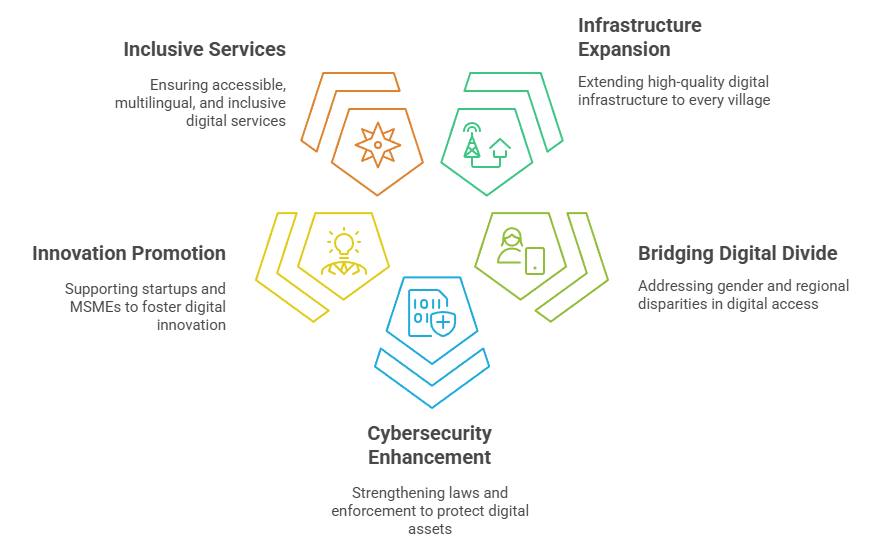
To build on the success of Digital India, the focus must now shift towards:
- Expanding high-quality digital infrastructure to every last village
- Bridging the gender and regional digital divide
- Strengthening cybersecurity laws and enforcement
- Promoting innovation through startups and MSMEs
- Ensuring services are accessible, multilingual, and inclusive
Digital India must continue to evolve with emerging technologies like AI, IoT, and blockchain while upholding democratic values and citizen rights.
Conclusion
As Digital India completes a decade, it has clearly redefined the relationship between the state and its citizens. From governance and welfare delivery to financial inclusion and global diplomacy, the mission has laid the groundwork for India’s digital century. With sustained political will, public-private partnerships, and community participation, Digital India can be the driving force of India’s Amrit Kaal, ensuring prosperity, transparency, and empowerment for all.
|


2 comments