

Data Governance in the Digital Age: Balancing Innovation, Privacy, and Policy
(Relevant for GS paper-2, Governance)
IntroductionIn the digital era, data has emerged as a pivotal asset, driving innovation, economic growth, and governance. India’s rapid digital transformation, propelled by initiatives like Digital India, has led to the generation of vast datasets. Effectively managing this data necessitates robust data governance frameworks that ensure privacy, security, and ethical use. This article delves into the current landscape of data governance in India, highlighting recent developments, challenges, and their relevance to UPSC aspirants. Understanding Data GovernanceData governance encompasses the policies, standards, and practices that ensure the effective management of data assets. It involves establishing frameworks for data quality, security, privacy, and compliance. In the Indian context, data governance aims to balance the benefits of data utilization with the protection of individual rights. Key Legislative Frameworks
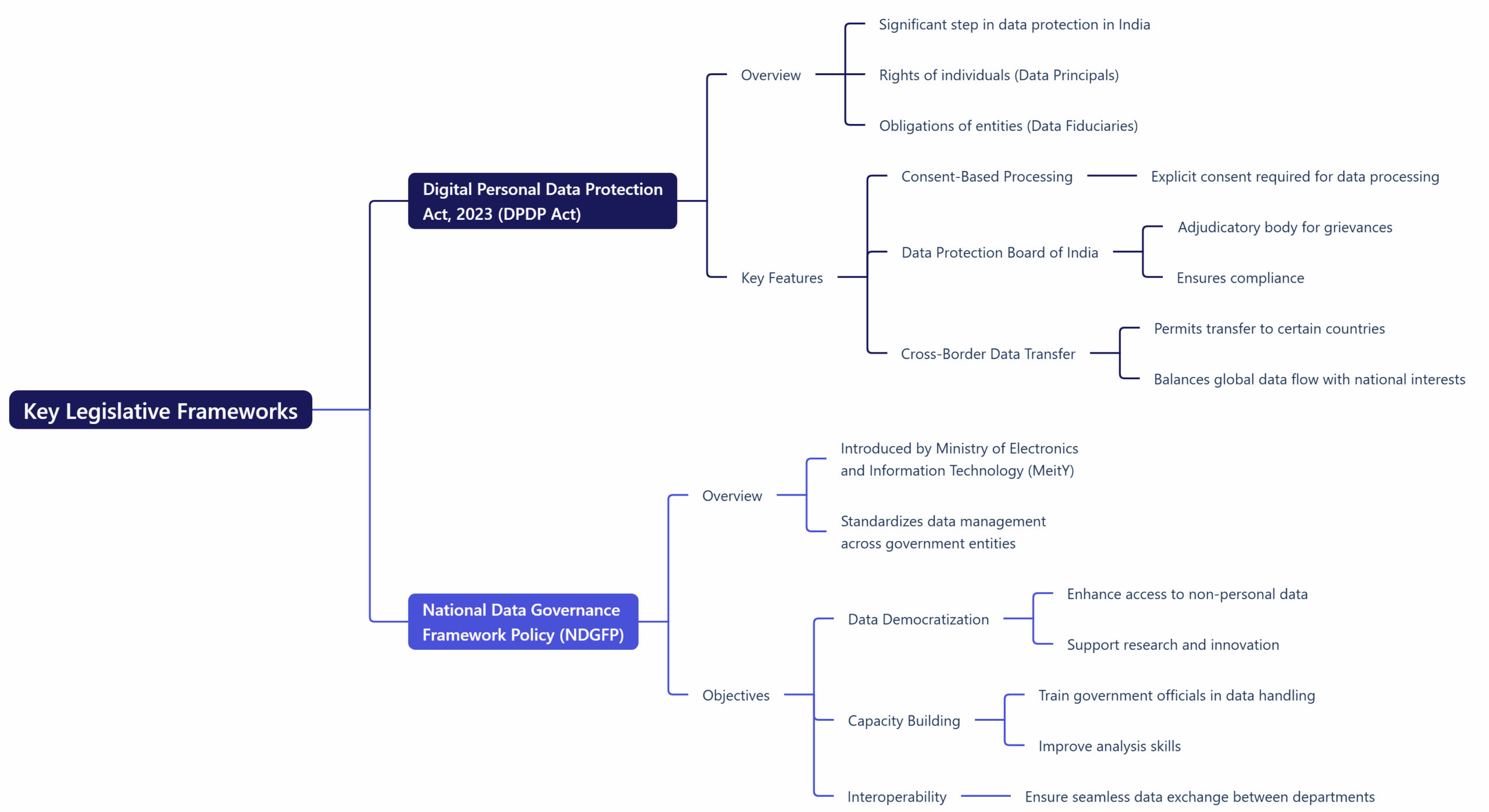
The DPDP Act, enacted in 2023, marks a significant step in India’s journey towards comprehensive data protection. It outlines the rights of individuals (Data Principals) and the obligations of entities processing personal data (Data Fiduciaries). Key features include:
Introduced by the Ministry of Electronics and Information Technology (MeitY), the NDGFP aims to standardize data management across government entities. Its objectives include:
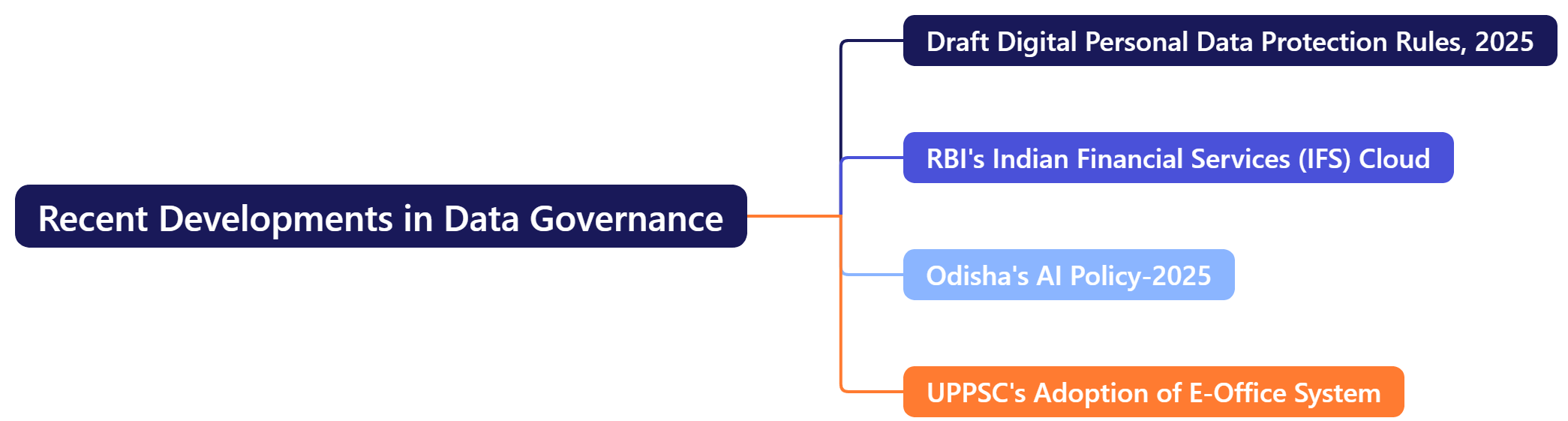
Recent Developments in Data Governance
In early 2025, MeitY released draft rules to operationalize the DPDP Act. These rules detail procedures for data processing, breach notifications, and penalties. However, concerns have been raised regarding potential data localization requirements, which may impact global data flows.
The Reserve Bank of India announced the launch of the IFS Cloud, a centralized data storage solution for financial institutions. This initiative aims to:
Odisha became a pioneer by approving the AI Policy-2025, focusing on responsible AI adoption across sectors like healthcare, agriculture, and education. The policy emphasizes ethical data use and aligns with national data governance standards.
The Uttar Pradesh Public Service Commission (UPPSC) transitioned to an e-office system, digitizing file management to enhance transparency and reduce delays. This move signifies the broader trend of digital governance in administrative processes. Challenges in Data Governance
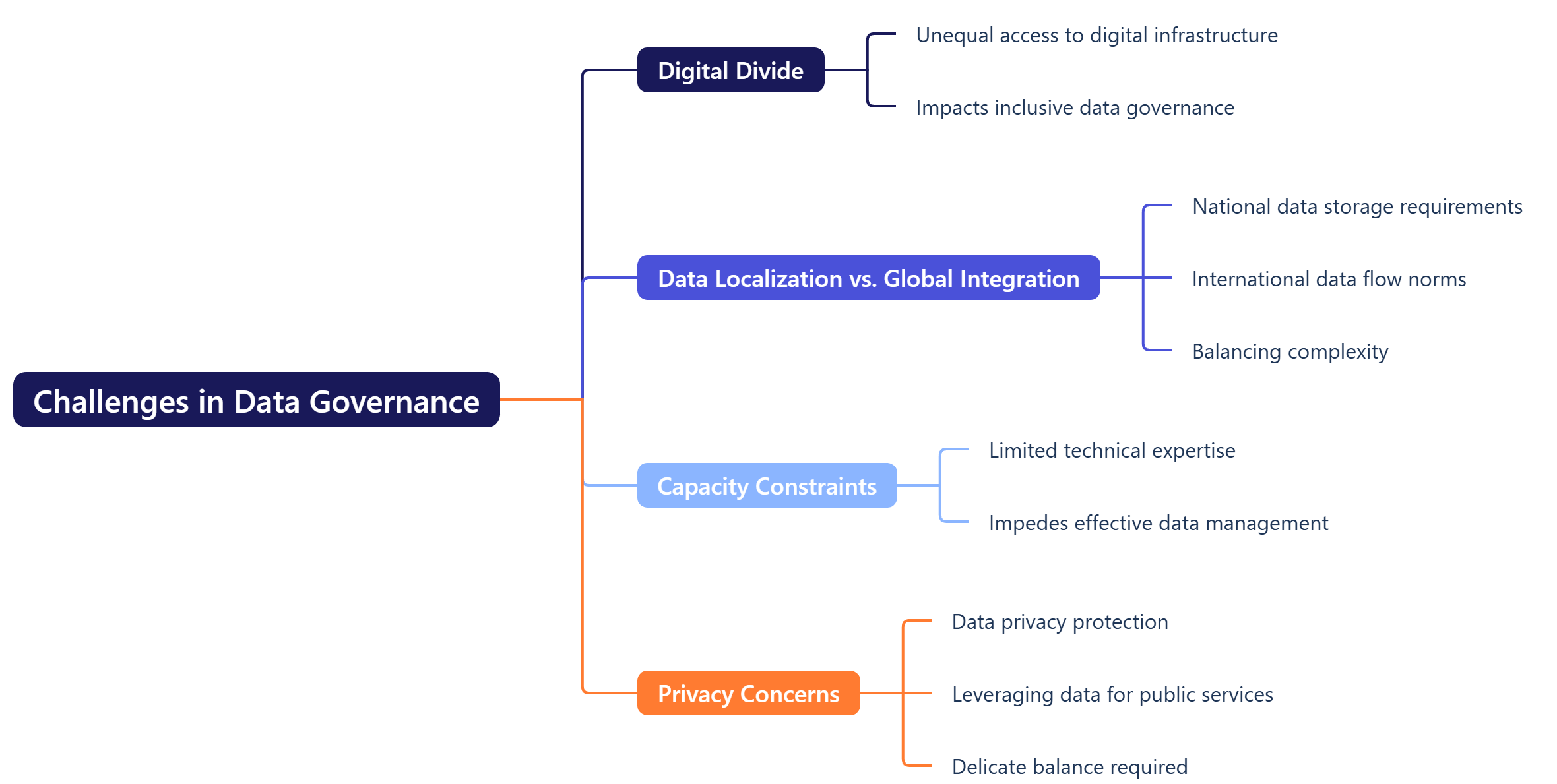
Despite significant progress, India faces several challenges in implementing effective data governance:
ConclusionData governance in India is evolving rapidly, with significant strides made through legislative frameworks and policy initiatives. However, challenges persist in ensuring inclusive, secure, and ethical data management. For UPSC aspirants, a nuanced understanding of these developments is essential to navigate the complexities of governance in the digital age. |


To Read more topics, visit: www.triumphias.com/blogs
While innovation is vital, the article makes a compelling point that privacy and ethics can’t be sidelined. Perhaps we also need more citizen awareness around data rights to truly make governance participatory.