

Criminalization of Marital Rape in India
(Relevant for Sociology Paper I: Family, Gender and Social Stratification, Feminist Theory, Deviance, Social Control and Sociology Paper II: Marriage and Family in Indian Society, Patriarchy in India)
IntroductionIn India, marital rape remains legally non-criminalized, reinforcing an outdated belief that marriage entails permanent and automatic sexual consent. This has profound implications not just legally, but also sociologically. It reflects structural patriarchy, gender-based power hierarchies, and the invisibilization of women’s bodily autonomy within the sacred institution of marriage. Why Marital Rape is a Sociological IssueMarital rape is not just a legal vacuum—it is a sociological symptom of patriarchy embedded within the private sphere of family. Feminist scholars argue that family is both a space of intimacy and control, where women’s sexuality is often regulated through tradition, religion, and obligation. Legal Status of Marital Rape in IndiaUnder Section 375 of the Indian Penal Code, sex by a husband with his wife over 18 is not considered rape—even without consent. This legal exception violates fundamental rights of bodily integrity, equality before law (Article 14), and freedom of expression (Article 19). Notably, the Justice Verma Committee (2013) and multiple UN bodies have recommended criminalization. India remains among a minority of countries—contrary to over 100 nations that criminalize marital rape. Marriage as a Power Structure
Marriage in Indian society is often less about partnership and more about patriarchal hierarchy. It involves:
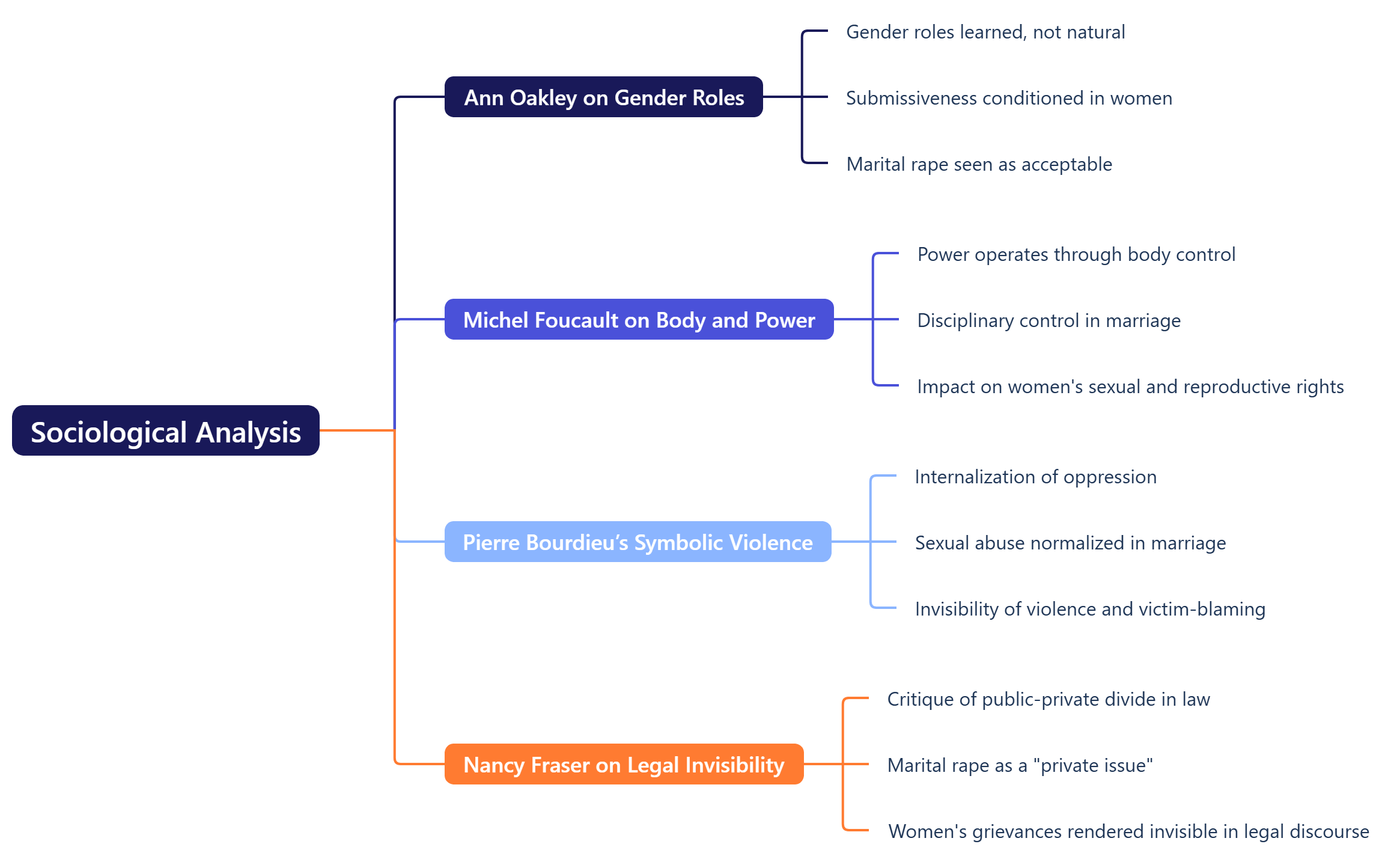
Marital rape reflects how gendered socialization, religious dogmas, and legal invisibility normalize sexual violence within families. Sociological Analysis
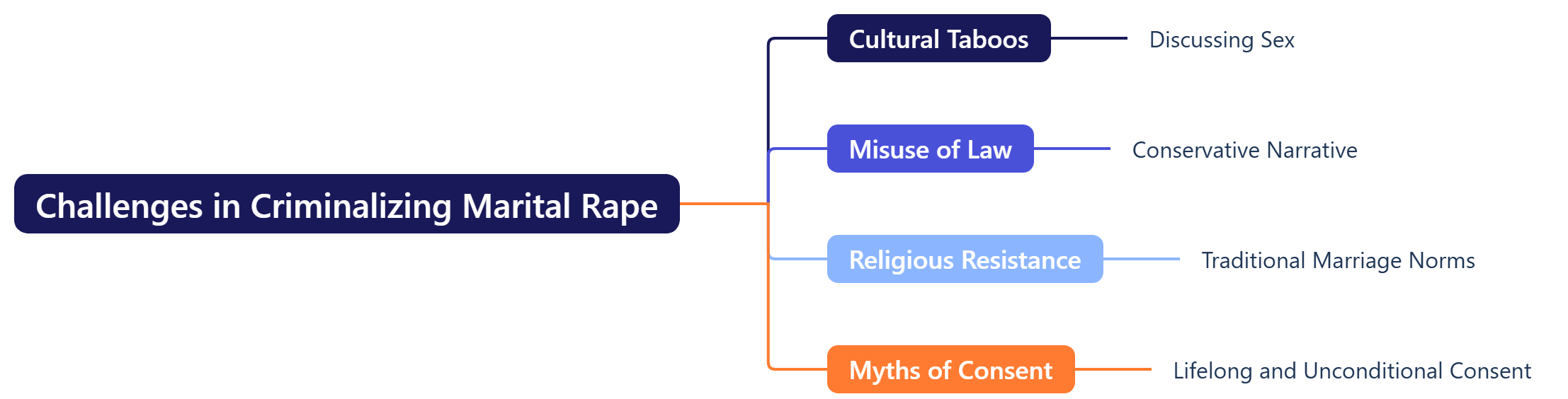
Challenges in Criminalizing Marital Rape
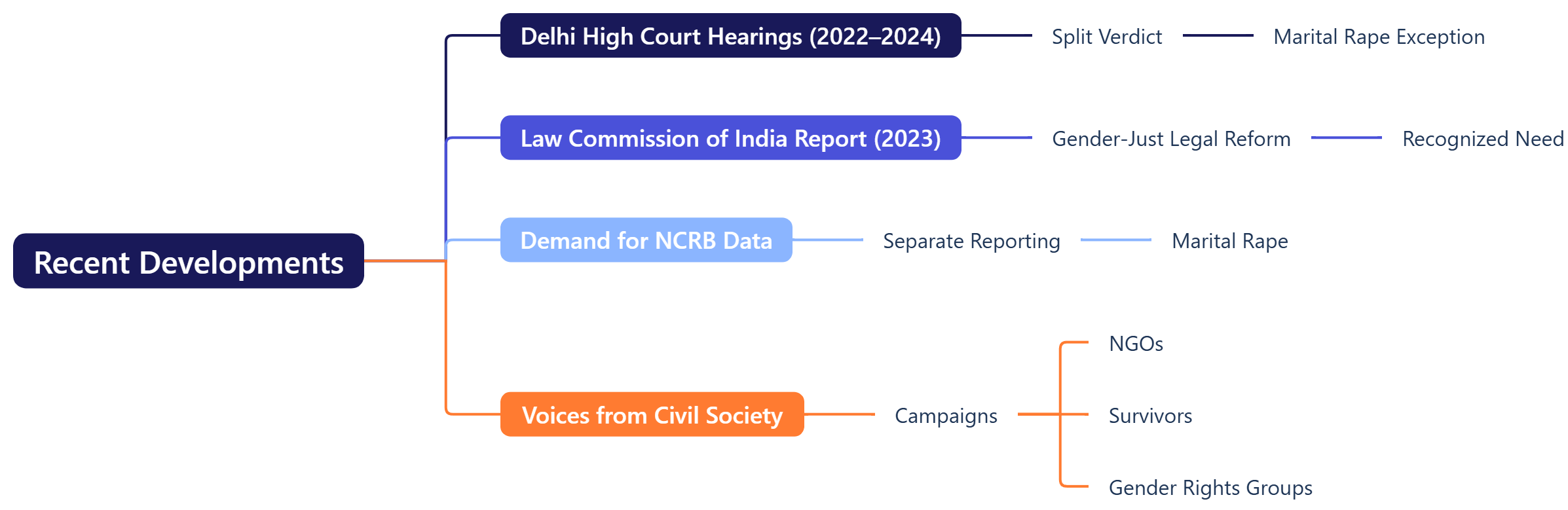
Recent Developments
Way Forward: Legal and Sociological Reforms
ConclusionCriminalizing marital rape is not just a legal reform, but a moral and sociological necessity. It challenges the deep-rooted patriarchal assumptions around marriage and reinforces the right to bodily autonomy and consent. A gender-just India requires confronting the violence embedded within its most intimate institutions. PYQsPaper 1 –Discuss the role of patriarchy in perpetuating gender-based violence in the family. (2023) Examine the feminist perspective on the institution of marriage. (2022) How do different sociological perspectives explain deviant behaviour like domestic violence? (2020) Discuss the sociological relevance of sexuality and the control over women’s bodies in patriarchal societies. (2017) Explain how violence is institutionalized within family structures. (2015) How does gender socialization normalize unequal power relations in marriage? (2014) Paper 2 –Discuss the sociological implications of the legal debate around marital rape in India. (2023) Why is marital rape not criminalized in India? Evaluate with reference to patriarchy and cultural norms. (2022) Discuss how marriage as a social institution can become a site of gender oppression. (2021) Examine the effectiveness of existing laws in addressing violence against women in India. (2020) How does the Indian family structure contribute to the invisibility of domestic violence? (2017) How far has the Indian legal system succeeded in safeguarding women within the institution of marriage? (2014) |


To Read more topics like Criminalization of Marital Rape in India in Public Posts, visit: www.triumphias.com/blogs
Read more Blogs:
On the Occasion of Teachers Day | Ethics for UPSC Civil Services Examination | Triumph IAS
2 comments