

Corporate Social Responsibility
(Relevant for Sociology Paper II: Rural and Agrarian Transformation in India)
Introduction: Corporate Social ResponsibilityCorporate Social Responsibility (CSR) refers to the self-regulated business practices that promote social good beyond the interests of the firm and legal requirements. In the Indian context, CSR gained legal recognition with the Companies Act, 2013, making India the first country to mandate CSR spending. From a sociological perspective, CSR is a significant interface between economy and society, raising important questions about development, inequality, ethics, and accountability. Understanding CSR in India
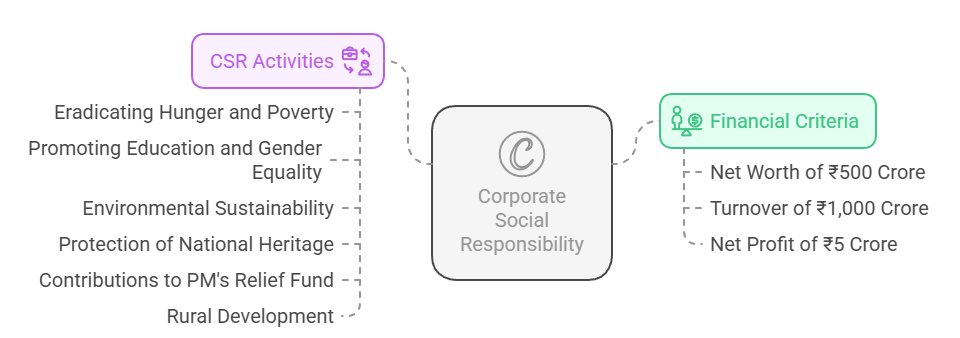
Section 135 of the Companies Act, 2013 mandates that companies with:
CSR Activities as per Schedule VII include:
Sociological Analysis of CSR
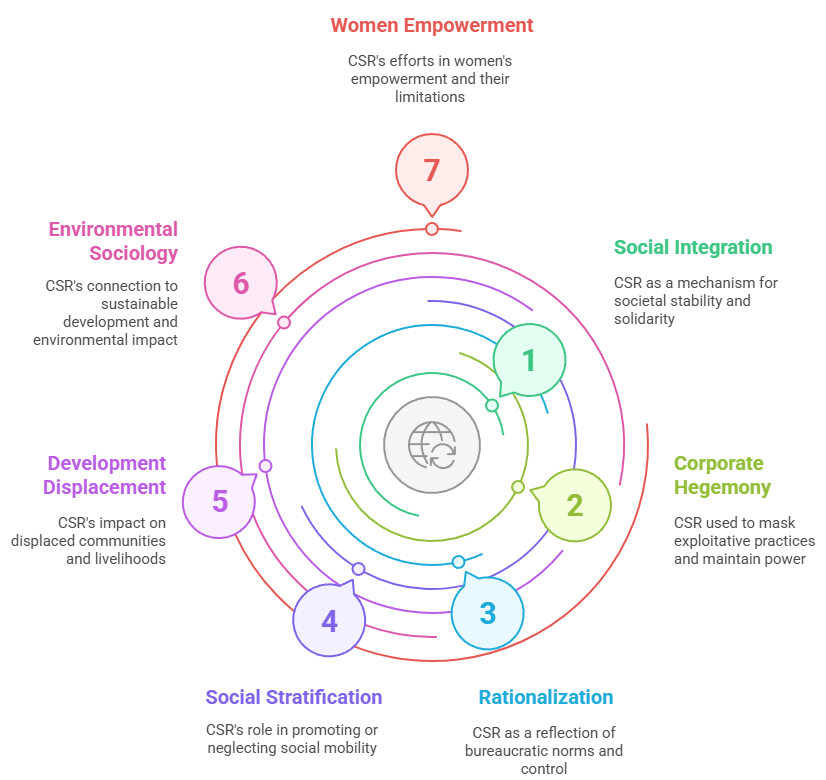
From the functionalist school (Émile Durkheim), CSR can be seen as a mechanism of social integration. Corporations act as social institutions contributing to the stability and solidarity of society. CSR initiatives such as building schools or hospitals help fill gaps left by the state, reinforcing the organic solidarity of modern industrial societies.
Karl Marx’s conflict theory highlights how CSR can be used as a tool for corporate legitimation rather than genuine transformation. CSR becomes a way to mask exploitative labor practices and minimize state regulation, allowing capitalists to maintain hegemony under the garb of philanthropy. Example: CSR by mining companies in tribal areas may include building schools or clinics, but these actions might simultaneously displace local communities and exploit resources—a classic contradiction.
According to Max Weber, modern societies are governed by rational-legal authority and bureaucratic norms. CSR is a reflection of this rationalization of ethics, where morality is institutionalized in codes and compliance norms. CSR reporting, auditing, and impact assessments reflect Weberian bureaucracy aimed at ensuring legitimacy and control.
CSR plays a paradoxical role in social stratification:
Example: Dalit communities may remain excluded from CSR programs due to social invisibility and lack of institutional representation.
CSR must also be examined in the context of development-induced displacement, especially in tribal and forested areas. While companies may invest in CSR after acquiring land, such activities often fail to compensate for the loss of livelihoods, culture, and identity of displaced populations. Walter Fernandes has documented such “development victims”, showing how CSR becomes a reactive rather than proactive measure in addressing social loss.
CSR is closely linked with environmental sociology, especially in debates around sustainable development, green capitalism, and climate justice. CSR initiatives in areas like afforestation, waste management, and clean energy must be critically evaluated for their actual environmental impact versus public relations. Example: Coca-Cola’s CSR efforts in water conservation contrast with accusations of water depletion in rural areas like Plachimada, Kerala.
CSR programs often focus on women’s empowerment by supporting:
However, feminist sociologists critique such initiatives as tokenistic, arguing they don’t challenge patriarchal structures in corporate governance or address intersectionality in women’s lived experiences. Patricia Hill Collins’ theory of matrix of domination can be applied here, illustrating how CSR programs ignore the overlap of caste, class, and gender in rural women’s oppression. Role of CSR in Promoting Social ChangeCSR is not merely charity; it has the potential to:
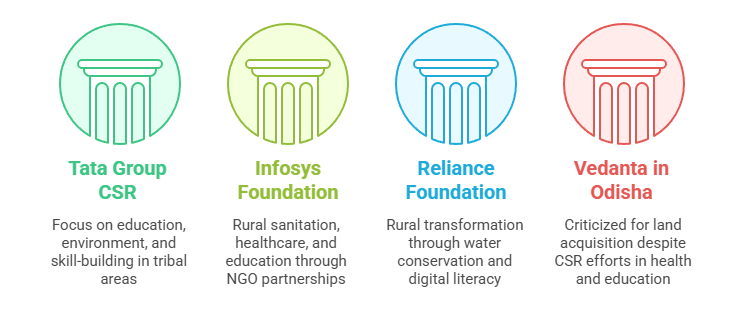
But for this potential to be realized, transparency, community participation, and impact-based assessment are essential. Case Studies
Challenges in Implementation of CSR
Government and Policy Support for CSR
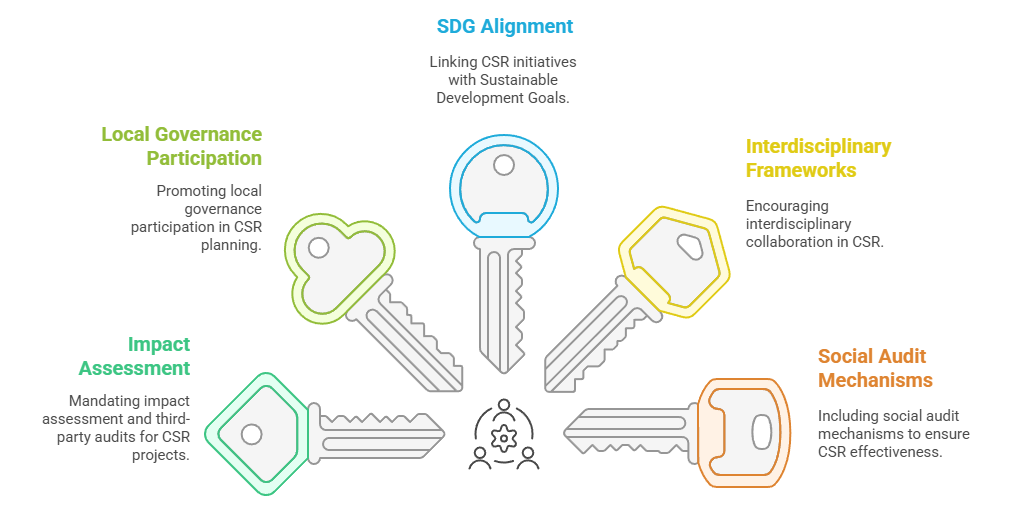
Suggestions for Reform
ConclusionCorporate Social Responsibility is a powerful tool for corporate citizenship and ethical development. However, its success depends on how well it aligns with the real needs of the community, transcends mere tokenism, and challenges structural inequalities. Sociology offers critical insights into how CSR can move from surface-level welfare to transformative social change. PYQsPaper II
|

To Read more topics, visit: www.triumphias.com/blogs