
China Mega Dam on the Brahmaputra and the Sociology of Environmental Power
(Relevant for Sociology Paper I and II)
Introduction: Rivers, Power, and SocietyRivers are not merely physical channels carrying water; they are deeply social entities shaped by politics, culture, economy, and power. Among Asia’s great rivers, the Brahmaputra stands out for its ecological richness, cultural centrality, and geopolitical sensitivity. Originating in the Tibetan Plateau (where it is known as the Yarlung Tsangpo), flowing through India and Bangladesh, the river sustains millions of people through agriculture, fisheries, and everyday livelihoods. China’s construction of a massive hydropower dam on the upper reaches of the Brahmaputra has triggered intense debate in South Asia. While Beijing frames the project as a clean-energy and development initiative, India and Bangladesh have expressed concerns about water security, ecological disruption, and downstream vulnerability. Beyond strategic and diplomatic anxieties, this development offers a critical case study for environmental sociology, revealing how control over nature becomes a form of power and how environmental risks are unevenly distributed across societies. This blog examines China’s mega dam on the Brahmaputra through sociological lenses such as hydro-hegemony, political ecology, environmental justice, and risk society, highlighting how large-scale infrastructure transforms rivers into instruments of environmental power. The Brahmaputra River: An Ecological and Social LifelineThe Brahmaputra is one of the world’s most dynamic rivers. Its seasonal floods deposit fertile silt across Assam and Bangladesh, sustaining agrarian economies and rich biodiversity. The river also holds cultural and symbolic significance for indigenous communities, shaping identities, rituals, and collective memory. However, the same ecological dynamism that sustains life also makes the river fragile. Any upstream intervention—such as dams, diversions, or embankments—can have cascading downstream effects. From a sociological perspective, rivers like the Brahmaputra are socio-natural systems, where human actions and natural processes are inseparably linked. China dam project thus represents not just an engineering intervention, but a reconfiguration of social relations around water, power, and survival. Mega Dams and the Logic of DevelopmentMega dams are often justified in the language of development: electricity generation, flood control, and economic growth. China, as the world’s largest builder of dams, has positioned hydropower as a cornerstone of its energy transition and national modernization. From a modernization theory perspective, large infrastructure projects symbolize progress and state capacity. However, environmental sociology challenges this narrative by asking: development for whom, and at what cost? Historically, mega dams—from the Three Gorges in China to the Narmada Valley in India—have displaced millions, disrupted ecosystems, and concentrated benefits among urban-industrial elites while marginalizing rural and indigenous populations. The Brahmaputra dam follows this global pattern, raising concerns about unequal development and ecological sacrifice zones. Hydro-Hegemony: Water as a Tool of Power
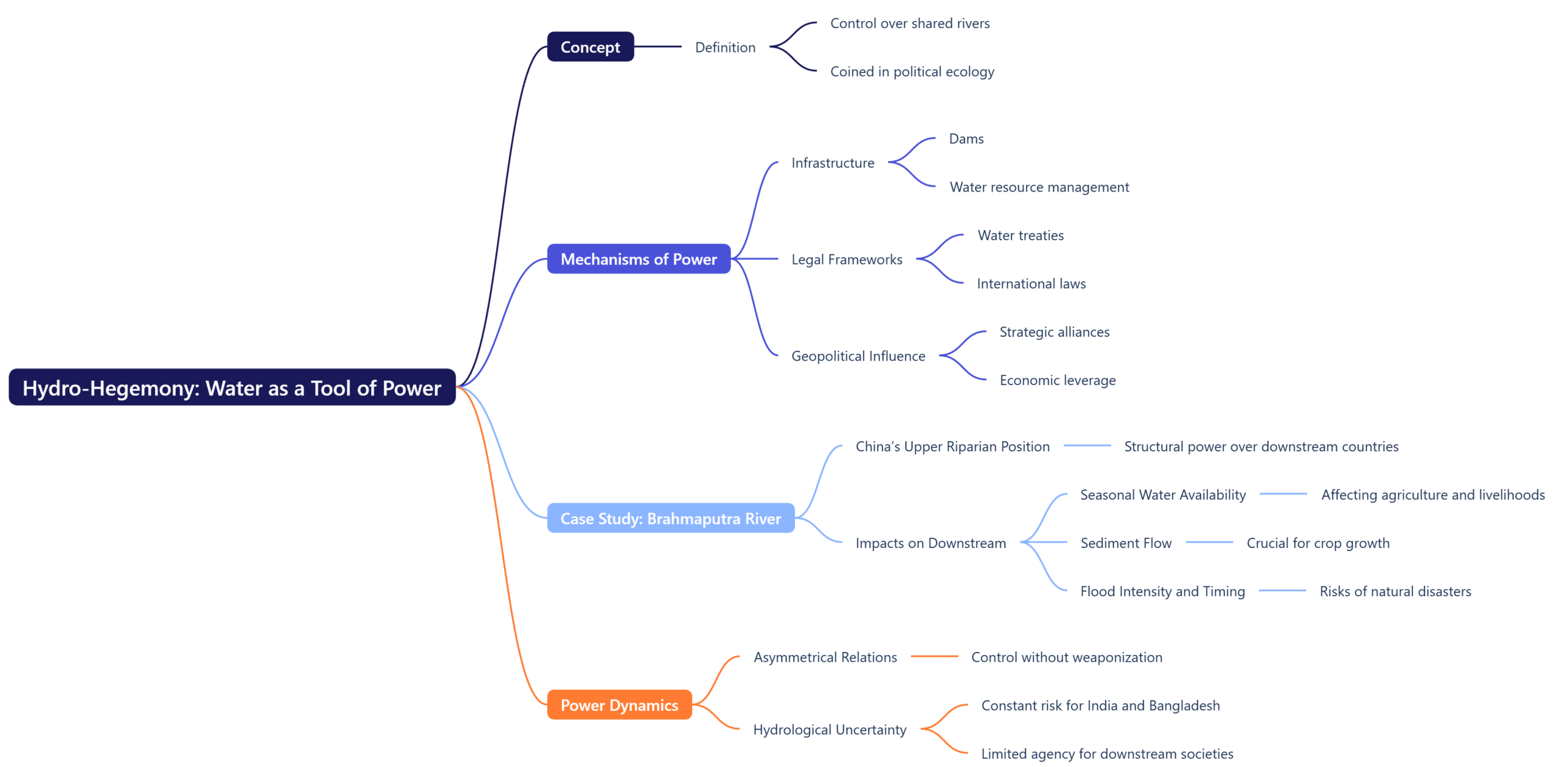
Environmental sociologists use the concept of hydro-hegemony to explain how states exert control over shared rivers. Coined within political ecology, hydro-hegemony refers to the ability of upstream countries to dominate water resources through infrastructure, legal frameworks, and geopolitical influence. China’s geographic position as the upper riparian gives it structural power over the Brahmaputra. By controlling dams and water flows, China can influence:
Even without deliberate water weaponization, the potential for control creates asymmetrical power relations. For India and Bangladesh, this generates a condition of hydrological uncertainty, where downstream societies live with constant risk but limited agency. Environmental Risk and Ulrich Beck’s “Risk Society”Sociologist Ulrich Beck’s theory of the risk society is particularly relevant here. Beck argued that modern societies increasingly produce risks—such as nuclear accidents, climate change, or ecological collapse—that are global, unpredictable, and unequally distributed. China’s mega dam exemplifies manufactured environmental risk. Potential dam failures, altered flood regimes, or seismic vulnerabilities in the Himalayan region pose transboundary threats. While the benefits of hydropower accrue largely to the Chinese state, the risks are disproportionately borne by downstream communities in India and Bangladesh. This creates what Beck called organized irresponsibility, where no single actor is held accountable for transnational environmental harm. Impact on Indigenous and Agrarian CommunitiesPerhaps the most critical sociological dimension of the Brahmaputra dam is its impact on local communities. In Assam and Bangladesh, millions depend on the river for farming, fishing, and transportation. Indigenous groups such as the Mishing, Bodo, and other riverine communities have developed adaptive livelihoods closely attuned to the river’s rhythms. Disruptions to water flow and sediment patterns threaten:
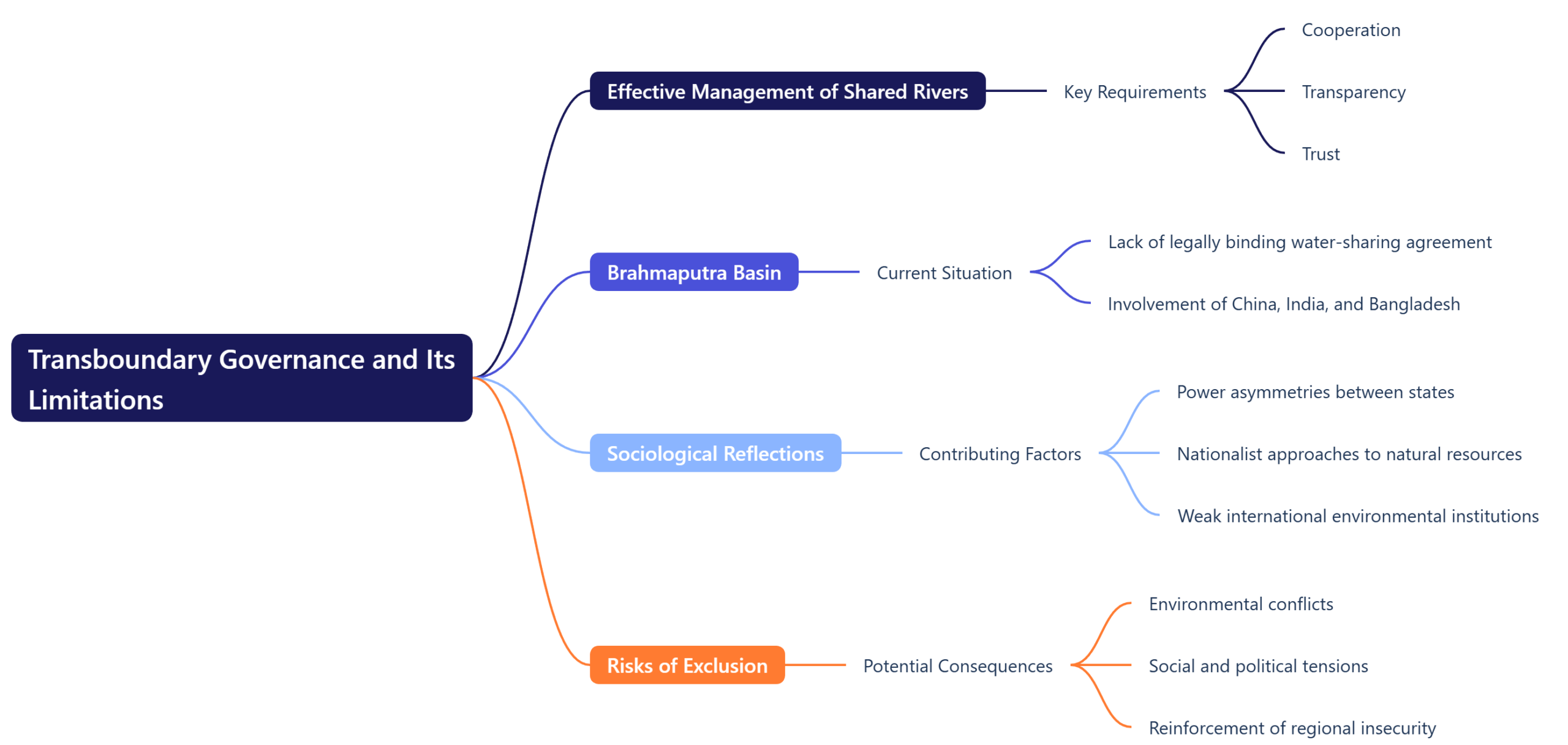
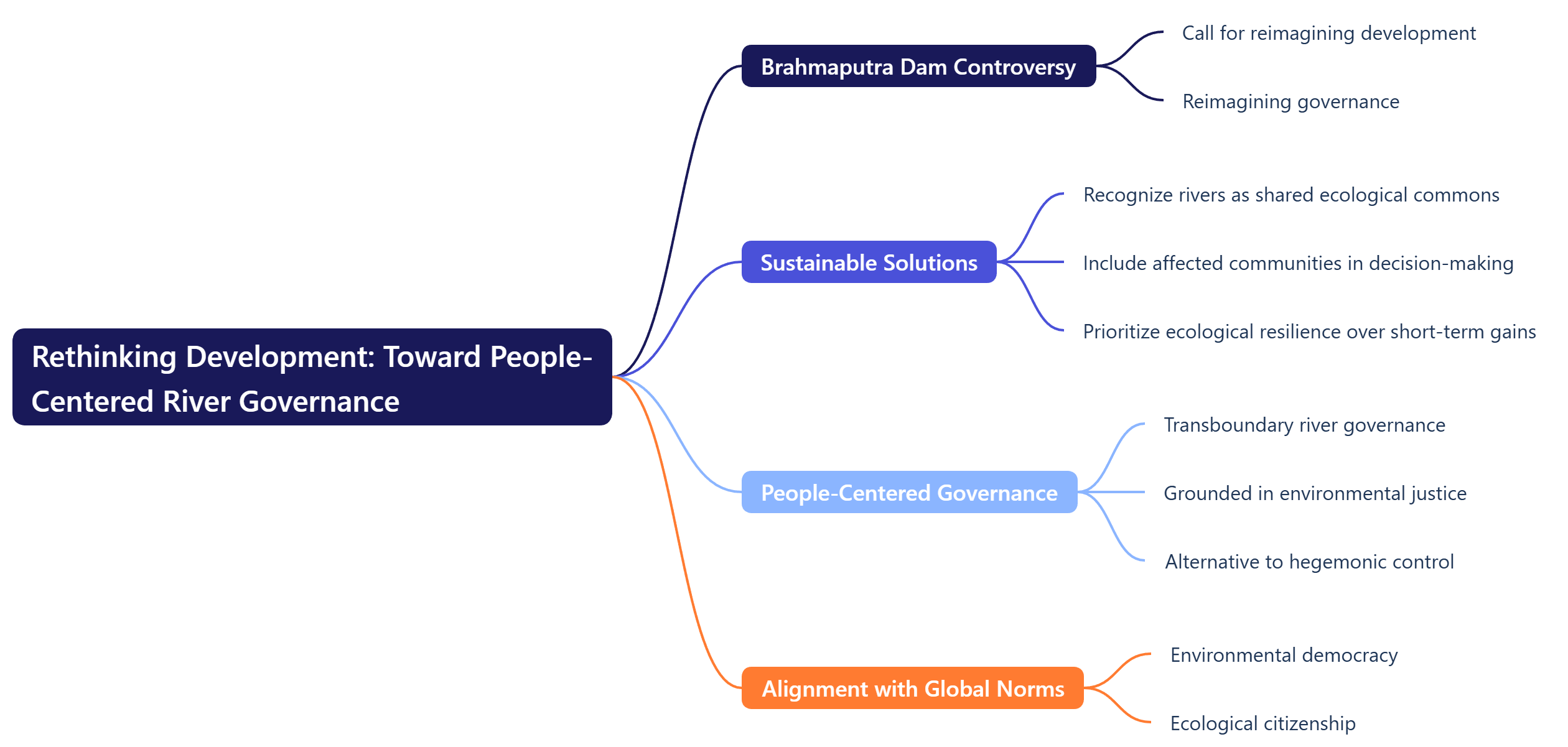
From an environmental justice perspective, these communities experience what sociologists call double marginalization: they contribute least to large-scale development decisions yet suffer the most from ecological consequences. Political Ecology: Who Controls Nature?Political ecology focuses on how environmental issues are shaped by power, inequality, and historical context. Applying this framework, the Brahmaputra dam can be seen as a continuation of state-centric control over nature, where rivers are treated as economic resources rather than living ecosystems. China’s centralized political system enables rapid decision-making with limited public consultation. Downstream populations, lacking institutional voice in transboundary governance, are excluded from decisions that directly affect their survival. This reflects a broader global trend where environmental governance privileges state sovereignty over ecological interdependence. Transboundary Governance and Its Limitations
|
To Read more topics, visit: www.triumphias.com/blogs
Read more Blogs:
Consumer Justice and the Sociology of Delay: Rethinking Consumer Commissions in India
One comment