Introduction: Caste Discrimination
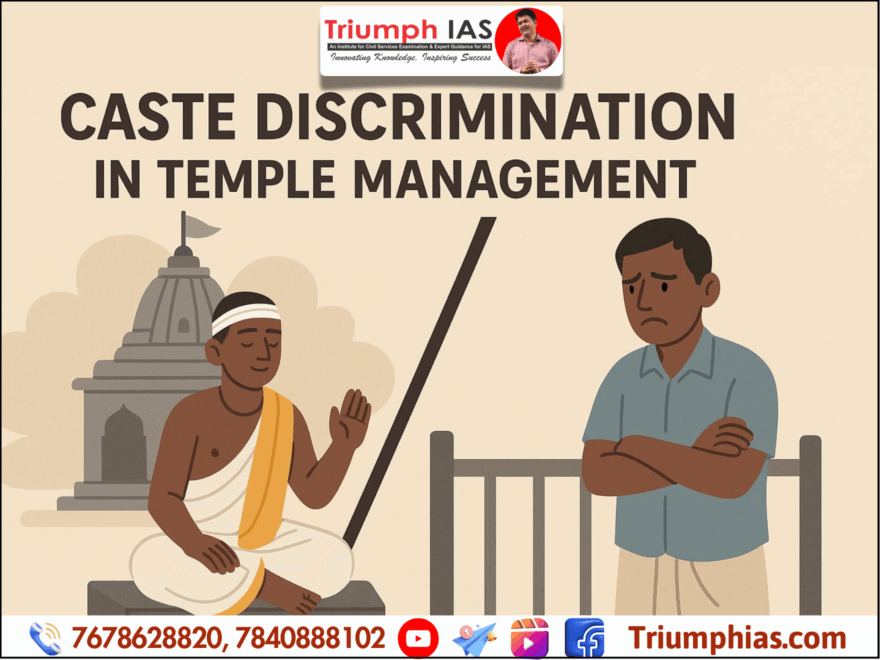
Scheduled Caste (SC) residents of Thittanimuttam village in Tiruvarur district, Tamil Nadu, staged a sit-in protest at the Sri Koothaiyanar Temple, demanding equal participation in temple rituals and administrative management. Their exclusion by dominant Backward Classes (BC) and Most Backward Classes (MBC) reflects deeper structural inequalities in Indian society — an issue critical for understanding caste, religion, and power in the sociology of India.
What Happened in Tiruvarur?
105 SC families have been seeking representation in the temple management committee for over five years. They are excluded from religious rituals (e.g., carrying milk pots during festivals) and denied temple access, despite contributing to temple taxes.
Sociological Analysis
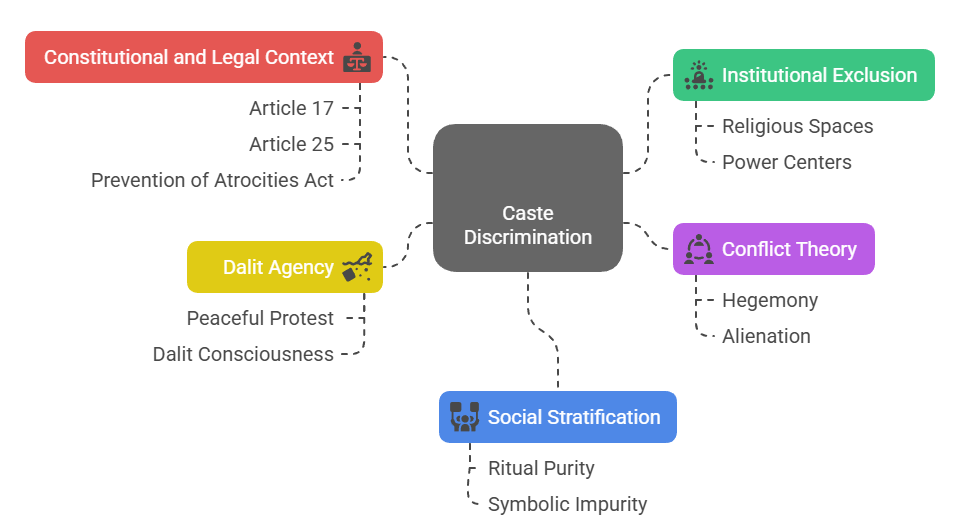
- Caste and Institutional Exclusion: This incident is an example of institutionalised caste discrimination, where religious spaces become instruments of social exclusion. As Ambedkar argued, temples are not just religious institutions but also caste-based power centers. Exclusion from temple rituals denies SCs not only religious identity but symbolic equality in the village social order.
- Conflict Theory (Karl Marx & A.R. Desai): According to conflict theory, dominant castes maintain hegemony over religious and economic institutions to preserve their power. The control of temple management by BC/MBC groups reflects class and caste domination in rural power structures, reinforcing alienation and social marginalisation of the SCs.
- Social Stratification and Ritual Purity: Louis Dumont, in Homo Hierarchicus, explained how ritual purity and pollution sustain caste hierarchy. Denial of access to temple rituals for SCs reaffirms their symbolic ‘impurity’ in traditional caste ideology, showing that despite legal protections, ritual discrimination persists.
- Assertion and Dalit Agency: The SC community’s peaceful sit-in protest signifies growing Dalit consciousness and resistance. This aligns with Gail Omvedt’s perspective on Dalit assertion — where grassroots movements challenge entrenched hierarchies and demand space in mainstream socio-religious institutions.
- Constitutional and Legal Context: The exclusion violates Article 17 of the Indian Constitution, which abolishes untouchability, and Article 25, which ensures freedom of religion for all. It also contradicts the Scheduled Castes and Scheduled Tribes (Prevention of Atrocities) Act, 1989, which prohibits denial of access to public religious places.
Implications
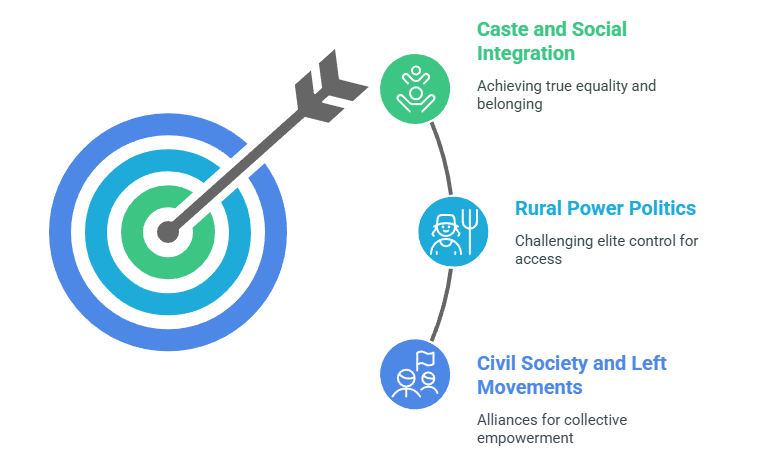
- Caste and Social Integration: The incident shows that social integration remains superficial unless ritual and symbolic equality is achieved. Participation in temple festivals is not just cultural but also represents acceptance and belonging in the collective village identity.
- Rural Power Politics: Despite reservations and welfare schemes, rural caste elites maintain control over key institutions, including temples. These structures are less accessible to state regulation, making grassroots resistance and collective protest crucial tools for empowerment.
- Role of Civil Society and Left Movements: Support from organizations like the Tamil Nadu Agricultural Workers Union and CPM shows that caste issues intersect with class and land struggles, and alliances with progressive political groups remain essential for SC empowerment.
Conclusion
The Thittanimuttam temple protest reflects how caste continues to shape access to religious, social, and symbolic resources in India. While legal provisions exist, social practices and power dynamics on the ground often undermine them. This protest is not merely about temple entry — it’s about claiming dignity, equality, and democratic participation in public life.
As India aspires toward an egalitarian society, it must address not just economic inequalities, but also cultural and ritual exclusions that persist in its villages.
PYQs
Paper I:
- Discuss how caste continues to influence social life in contemporary India despite constitutional guarantees. (2019)
- Explain Louis Dumont’s perspective on purity and pollution in the context of caste-based temple discrimination. (2022)
Paper II:
- Examine the role of grassroots Dalit movements in challenging social exclusion in rural India. (2023)
- Discuss the interplay of caste and religion in rural power structures with reference to recent incidents in Tamil Nadu. (2024)
|