
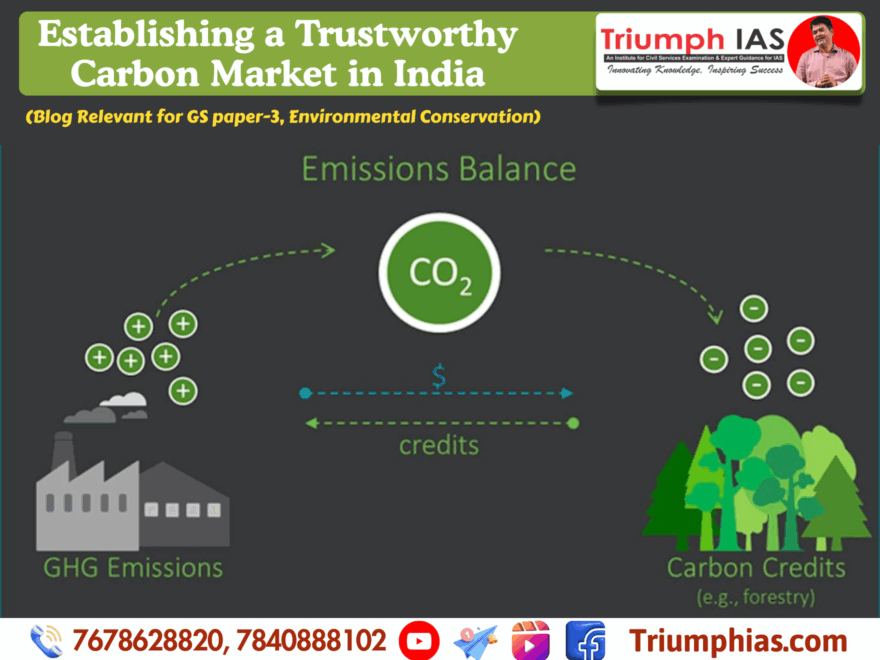
Establishing a Trustworthy Carbon Market in India
(Relevant for GS paper-3, Environmental Conservation)
|
As India intensifies efforts towards its global climate commitments—targeting net-zero emissions by 2070 and a 50% cut by 2030—establishing a robust carbon market is essential. Rooted in the Energy Conservation (Amendment) Act, 2022, the proposed Carbon Credit Trading Scheme (CCTS) aims to foster a credible pricing mechanism for greenhouse gas reductions. This transition from energy-efficiency mandates to greenhouse gas trading will demand strategic policy, clarity, and strong institutional checks—a comprehensive transformation central to the UPSC framework. Evolution of Carbon Market in India
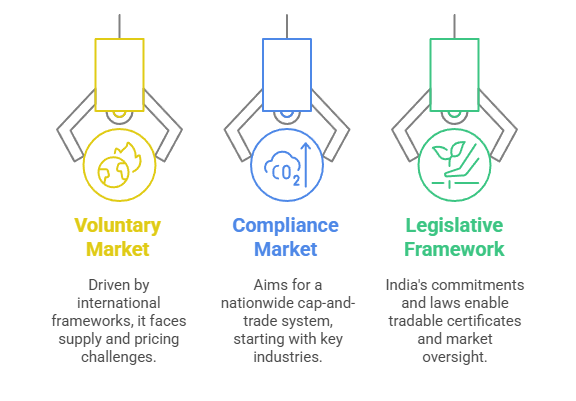
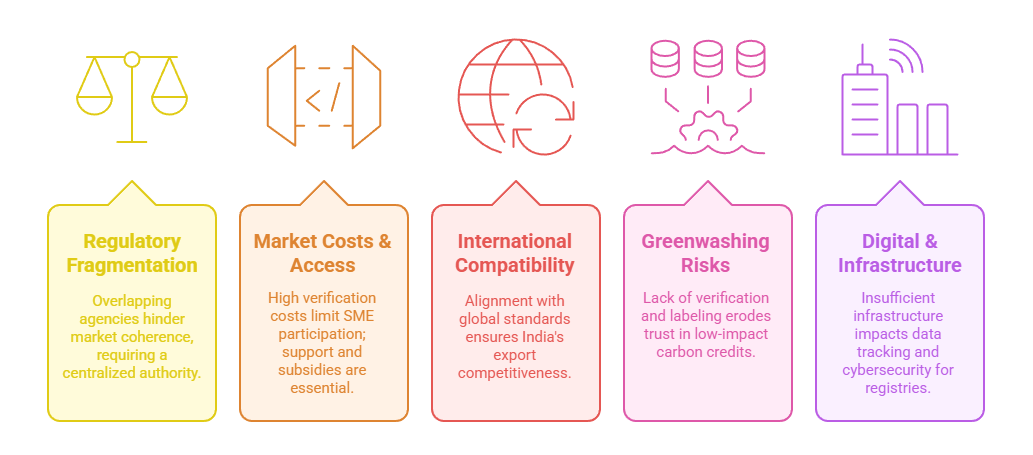
Voluntary Carbon Market (VCM)India has been an exporter of carbon credits globally, generating 17% of the world’s voluntary credits (≥ 278 million since 2010), with market value rising from USD 520 million in 2020 to USD 2 billion in 2021. Although India’s voluntary trade market—led by International REC (I-REC) frameworks—has flourished preemptively, it mirrors global trends of excess supply and low prices (e.g., I-REC prices fell ~8% in Jan 2024). Compliance Carbon MarketUnder CCTS, India plans a nationwide compliance-based cap-and-trade regime. The Bureau of Energy Efficiency (BEE) drafted policies in late 2022; the CCTS was legally notified by mid-2023. Phase I (2025–26) will cover 11 industrial sectors—including cement, steel, refineries, and power—gradually transitioning from performance certificates (PAT/RECs) to formal carbon credits. Driving Forces & Legislative FrameworkIndia’s updated Nationally Determined Contributions (2023) underline the need for a credible domestic carbon market. Through the 2022 amendment to the Energy Conservation Act and Environment Protection Act, BEE is empowered to issue tradable certificates, with trading via power exchanges and CERC oversight. Designing a Credible MarketStructural IntegrityA unified regulator—possibly under the National Steering Committee—must guide transparent issuance, trading, and tracking via a central registry hosted by the Grid Controller Rigorous MRV SystemsRobust monitoring, reporting, and verification (MRV) are vital. High transaction costs and inconsistencies can discourage smaller projects—especially in agriculture and renewables. VCM trading has been criticized for greenwashing and weak additionality. The Green Credit Programme, meanwhile, has drawn expert criticism for lax carbon estimation methods. Integrity and QualityCredible credits must meet strict additionality, permanence, and anti double-counting protocols. Rigorous audits, registry disclosures, and alignment with global standards (e.g., Gold Standard, VCS) are essential. Core Challenges
Opportunities and Momentum
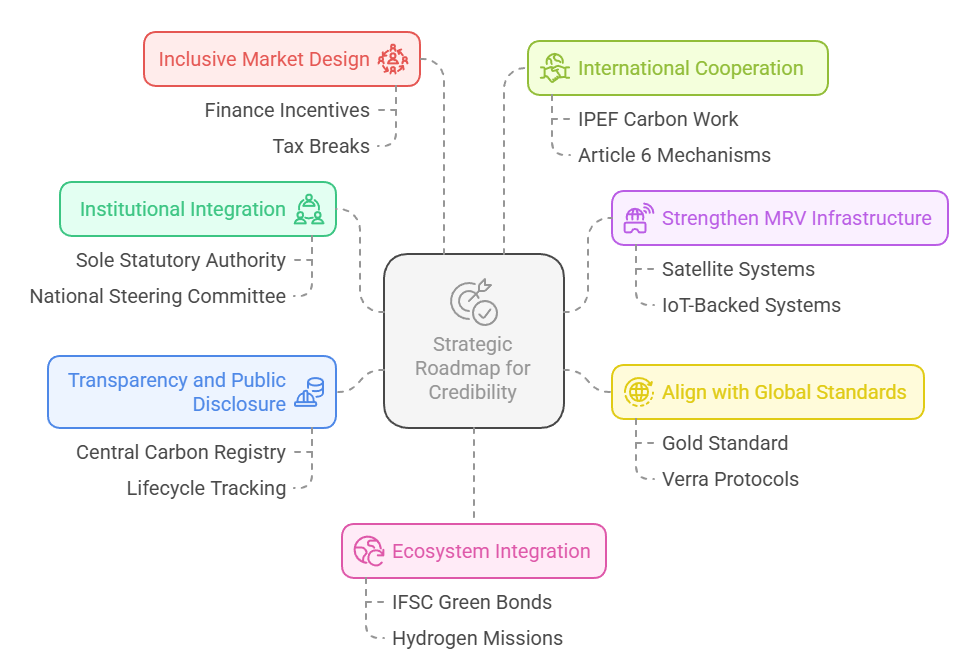
Strategic Roadmap for Credibility
ConclusionIndia’s carbon market journey—from voluntary credits to a regulated compliance regime—signals both opportunity and complexity. To succeed, it must prioritize transparency, robust MRV, institutional efficiency, and international compatibility. With these foundations, carbon markets can become pillars of India’s climate strategy, domestic emission reduction, export readiness, and sustainable development. |

To Read more topics, visit: www.triumphias.com/blogs
One comment