
Reinforcing India’s Capacity for Water Sustainability
(Relevant for GS paper-3, Water resources)
|
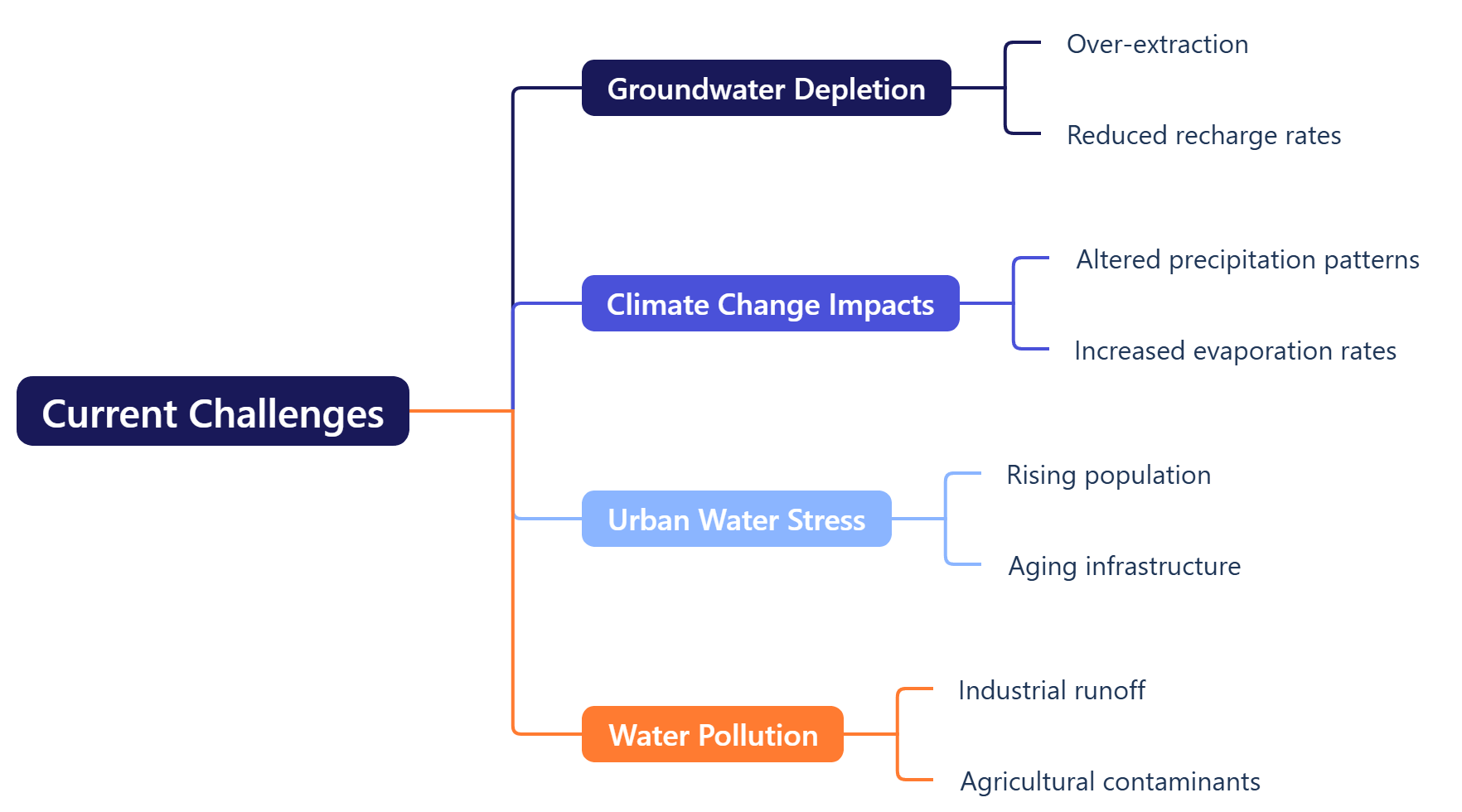
India, home to over 1.4 billion people, is grappling with a severe water crisis that threatens its socio-economic stability and environmental sustainability. Despite possessing only about 4% of the world’s freshwater resources, India supports nearly 18% of the global population, leading to immense pressure on its water systems. The situation is exacerbated by factors such as climate change, rapid urbanization, and inefficient water management practices. Current Challenges
India is the world’s largest extractor of groundwater, accounting for approximately 25% of global usage. Over-extraction, particularly in states like Punjab, Haryana, and Uttar Pradesh, has led to a significant decline in water tables, with some regions experiencing a drop of up to 4 meters. This unsustainable practice threatens agricultural productivity and drinking water availability.
Erratic monsoon patterns, increasing temperatures, and glacial melt in the Himalayas are altering the hydrological cycle. These changes result in frequent floods and droughts, affecting both water availability and quality. For instance, the Indo-Gangetic plain is experiencing severe water stress due to declining river flows and overuse.
Rapid urbanization has outpaced the development of water infrastructure in cities. Bengaluru, for example, faces acute water shortages, with residents relying heavily on borewells that are depleting rapidly. In March 2024, India’s main reservoirs hit their lowest levels in five years, indicating a looming crisis in urban water supply.
Approximately 70% of India’s surface water is contaminated due to industrial discharge, agricultural runoff, and inadequate sewage treatment. This pollution poses serious health risks and degrades aquatic ecosystems. Government Initiatives
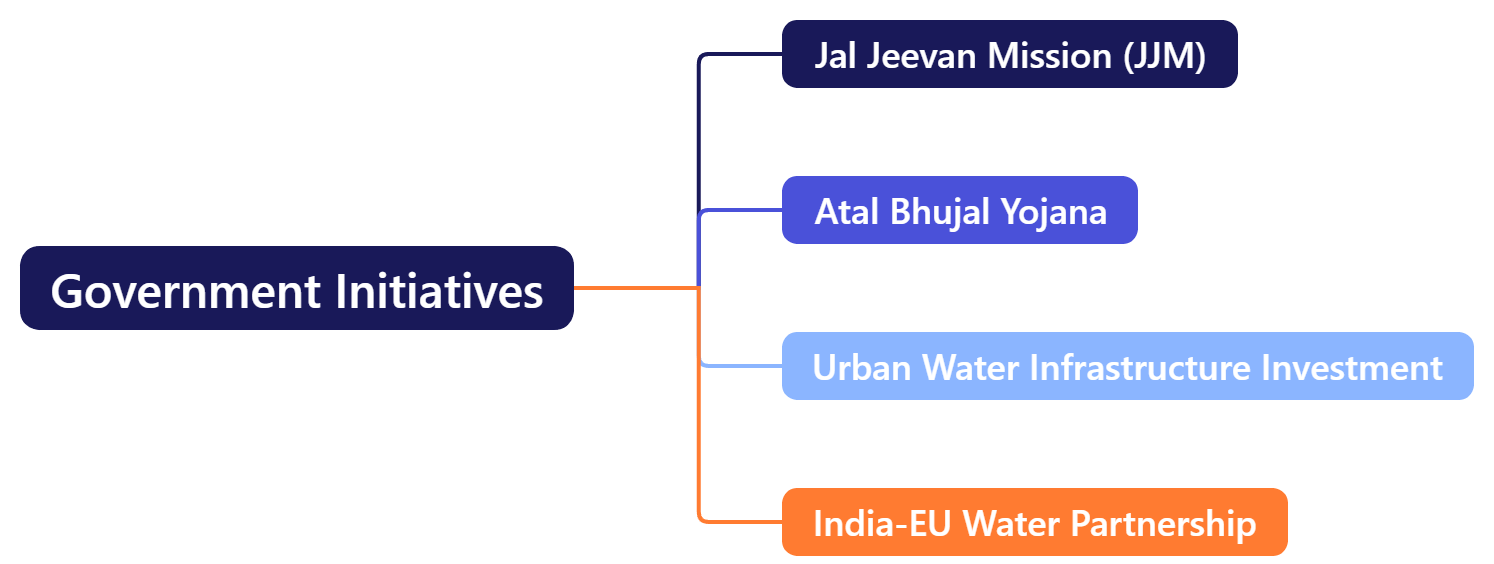
Launched in 2019, JJM aims to provide piped water supply to every rural household by 2024. As of April 2024, 75.97% of rural households have been covered under this mission.
This scheme focuses on sustainable groundwater management through community participation and data-driven approaches. It aims to improve groundwater levels in water-stressed areas.
In August 2024, the Indian government approved a $300 million investment to mitigate urban flooding and conserve water in seven major cities, including Mumbai, Chennai, and Bengaluru. The project includes expanding water bodies and building new drainage systems.
The ongoing India-EU Water Initiative, commenced in March 2024, focuses on sustainable water management in northeastern India, particularly the Brahmaputra Basin. This collaboration emphasizes knowledge exchange and capacity building. Recommendations for Enhancing Water Resilience
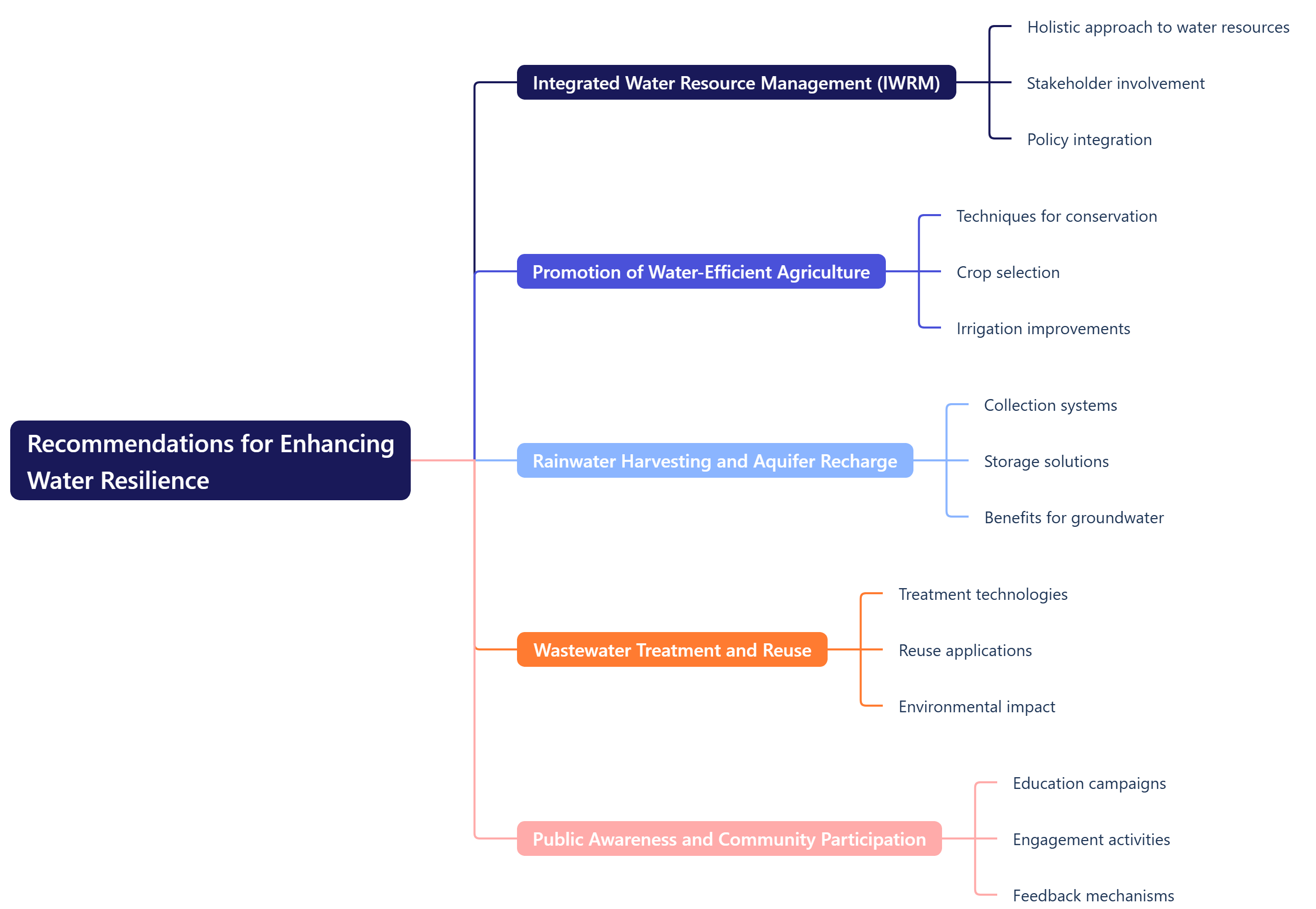
Establishing State Integrated Water Resources Management Authorities can streamline water governance by consolidating various existing frameworks. This approach ensures coordinated planning and sustainable management of water resources.
Encouraging the adoption of micro-irrigation techniques, such as drip and sprinkler systems, can significantly reduce water usage in agriculture. Additionally, promoting crop diversification to less water-intensive crops can alleviate pressure on water resources.
Implementing rainwater harvesting structures in urban and rural areas can augment water availability. Recharging aquifers through managed aquifer recharge techniques helps in restoring groundwater levels.
Investing in wastewater treatment infrastructure enables the reuse of treated water for non-potable purposes, such as agriculture and industrial processes, thereby conserving freshwater resources.
Educating citizens about water conservation practices and involving communities in water management decisions foster a sense of ownership and responsibility towards sustainable water use. ConclusionRebuilding India’s water resilience requires a multifaceted approach involving policy reforms, technological innovations, community engagement, and international cooperation. By addressing the current challenges and implementing the recommended strategies, India can secure its water future, ensuring sustainable development and improved quality of life for its citizens. |

One comment