Introduction
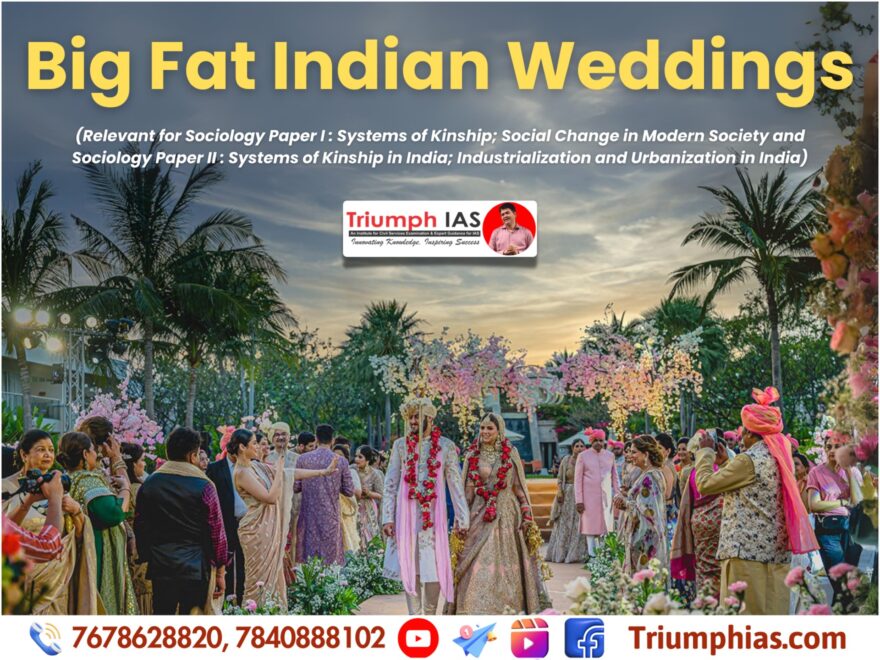
The “Big Fat Indian Wedding” has become a cultural phenomenon symbolizing more than just the union of two individuals — it is a grand celebration of family prestige, socio-economic status, and community values. With lavish decor, celebrity performances, destination venues, and extravagant rituals, Indian weddings reflect deep-seated cultural traditions as well as modern consumerist trends. But what lies beneath this glittering surface? This blog explores the sociological dimensions of big fat Indian weddings, highlighting the intersections of caste, class, patriarchy, status display, and globalization. It is especially relevant for Sociology optional aspirants.
Cultural Significance of Indian Weddings
Indian weddings are ritualistic social institutions. They serve as a rite of passage, reaffirming cultural values, kinship ties, and social roles. Ceremonies like haldi, mehendi, sangeet, and baraat symbolize not just tradition but also group identity and continuity.
Sociological Analysis
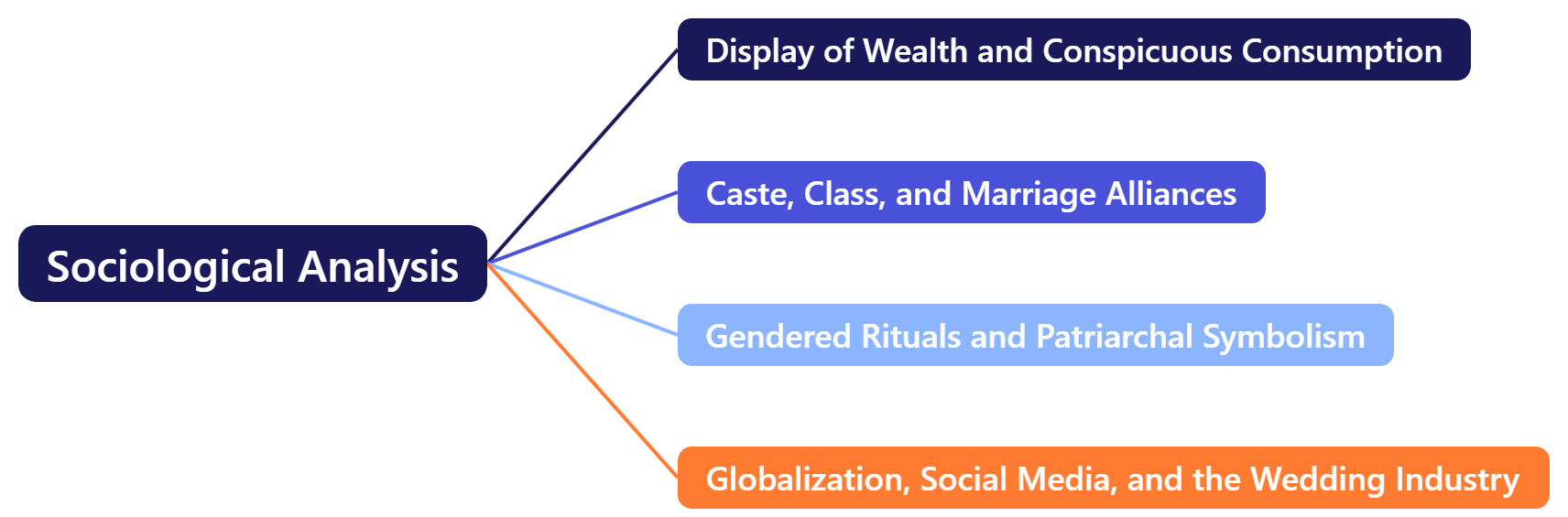
- Display of Wealth and Conspicuous Consumption: The big fat wedding is often a status symbol, especially among India’s emerging middle and elite classes. Sociologist Thorstein Veblen’s theory of “conspicuous consumption” is apt here — where expenditure on weddings is used to flaunt social mobility and prestige. According to a KPMG report, the Indian wedding industry is worth over $50 billion, ranking as the second largest in the world after the U.S.
- Caste, Class, and Marriage Alliances: Despite modernization, Indian weddings remain endogamous, reinforcing caste hierarchies and class structures. The marriage market is still largely governed by jati, gotra, and socio-economic background. Matrimonial platforms often filter matches based on caste and income, showcasing the persistence of social stratification. Sociologist André Béteille noted that caste endogamy sustains social inequality even in urban India.
- Gendered Rituals and Patriarchal Symbolism: From kanyadaan (giving away the daughter) to sindoor daan, many wedding rituals symbolize patriarchal norms. Women’s roles are often defined as passive receivers in marriage, reinforcing gender inequality. Feminist sociologists argue that weddings glorify traditional gender roles, where the bride is objectified through dowry expectations, expensive trousseaus, and beautification rituals.
- Globalization, Social Media, and the Wedding Industry: Globalization has turned weddings into highly curated media events. With Instagram hashtags, pre-wedding shoots, and destination weddings, marriage ceremonies are now spectacles for digital consumption. Anthony Giddens’ theory of reflexive modernity explains how couples now design weddings to reflect self-identity and individual taste, influenced by global wedding trends.
Social Critique and Sustainability Concerns
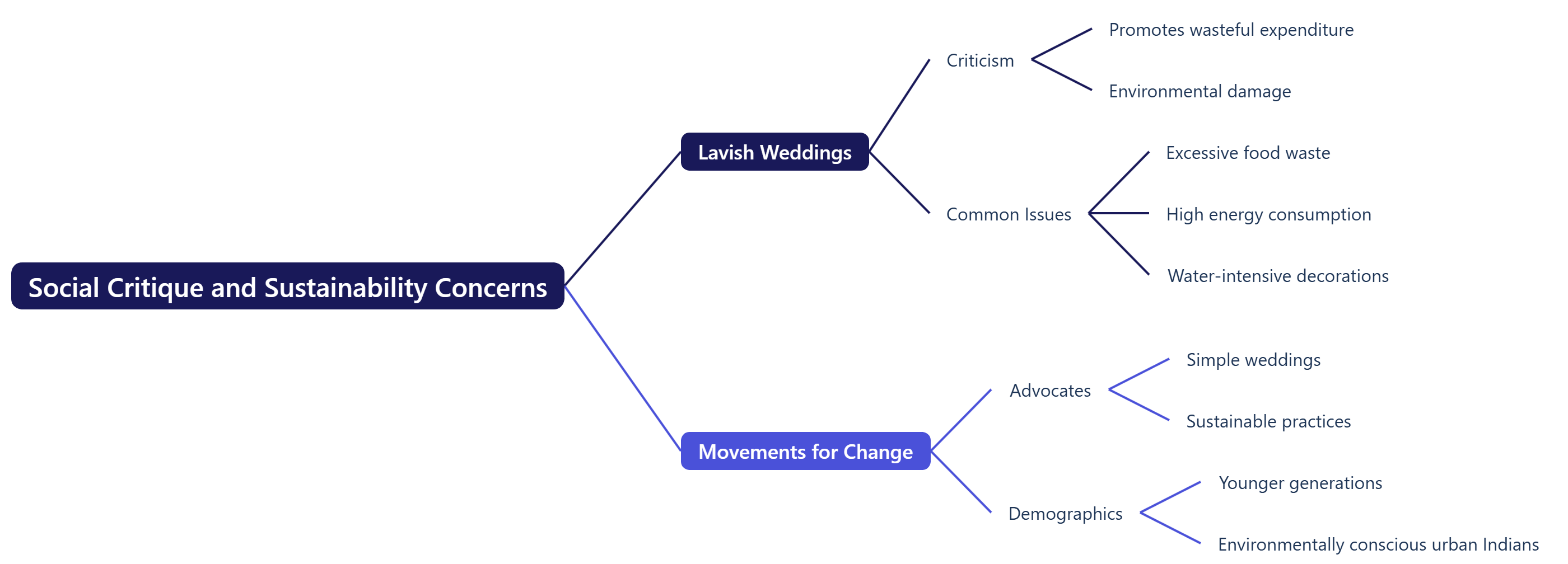
Lavish weddings often draw criticism for promoting wasteful expenditure and environmental damage. Excessive food waste, lavish use of energy, and water-intensive decorations are common.
Movements advocating for simple and sustainable weddings are gaining ground, particularly among younger and environmentally conscious urban Indians.
Conclusion
The Big Fat Indian Wedding is a powerful sociological mirror reflecting India’s cultural richness and its enduring social inequalities. As sociology students and civil service aspirants, it is essential to analyze how traditions adapt to modernity, how status is performed, and how gender and caste persist subtly in celebrated spaces.
PYQs
Paper I
- Discuss the changing structure of family and marriage in modern society. (2022)
- How does patriarchy manifest in interpersonal relations in the contemporary Indian family system? (2021)
- Distinguish between family and household. Examine whether joint family is still a reality in Indian society. (2020)
- Discuss the impact of globalization on the institution of marriage and family. (2019)
- Marriage as a social institution is on the verge of losing its relevance. Discuss. (2018)
- Examine the role of consumption in the construction of social identity in contemporary society. (2018)
- How do symbolic interactionists explain the changing nature of marriage and family? (2017)
- Discuss how the concept of ‘cultural capital’ is used to explain social mobility. (2016)
- How are marriage and kinship systems undergoing transformation in modern India? (2016)
- How does the notion of ‘conspicuous consumption’ help us understand status display in social life? (2015)
Paper II
- Discuss the changing patterns of marriage and family in India. (2023)
- Is the institution of marriage losing its relevance in urban India? Comment with examples. (2022)
- Explain how caste continues to influence marriage choices in contemporary India. (2021)
- How does class and caste interplay in shaping the marriage market in India? (2020)
- Analyze the growing trend of inter-caste and inter-religious marriages in the context of social change. (2019)
- Discuss the impact of globalization on Indian culture, particularly with reference to marriage rituals and youth aspirations. (2018)
- Examine the persistence of dowry in contemporary Indian society despite legal prohibitions. (2017)
- Describe the emerging trends in the institution of marriage in urban India. (2016)
- Write a short note on the commodification of marriage in Indian society. (2015)
- How do family and kinship systems reinforce patriarchy in India? (2014)
|

One comment