
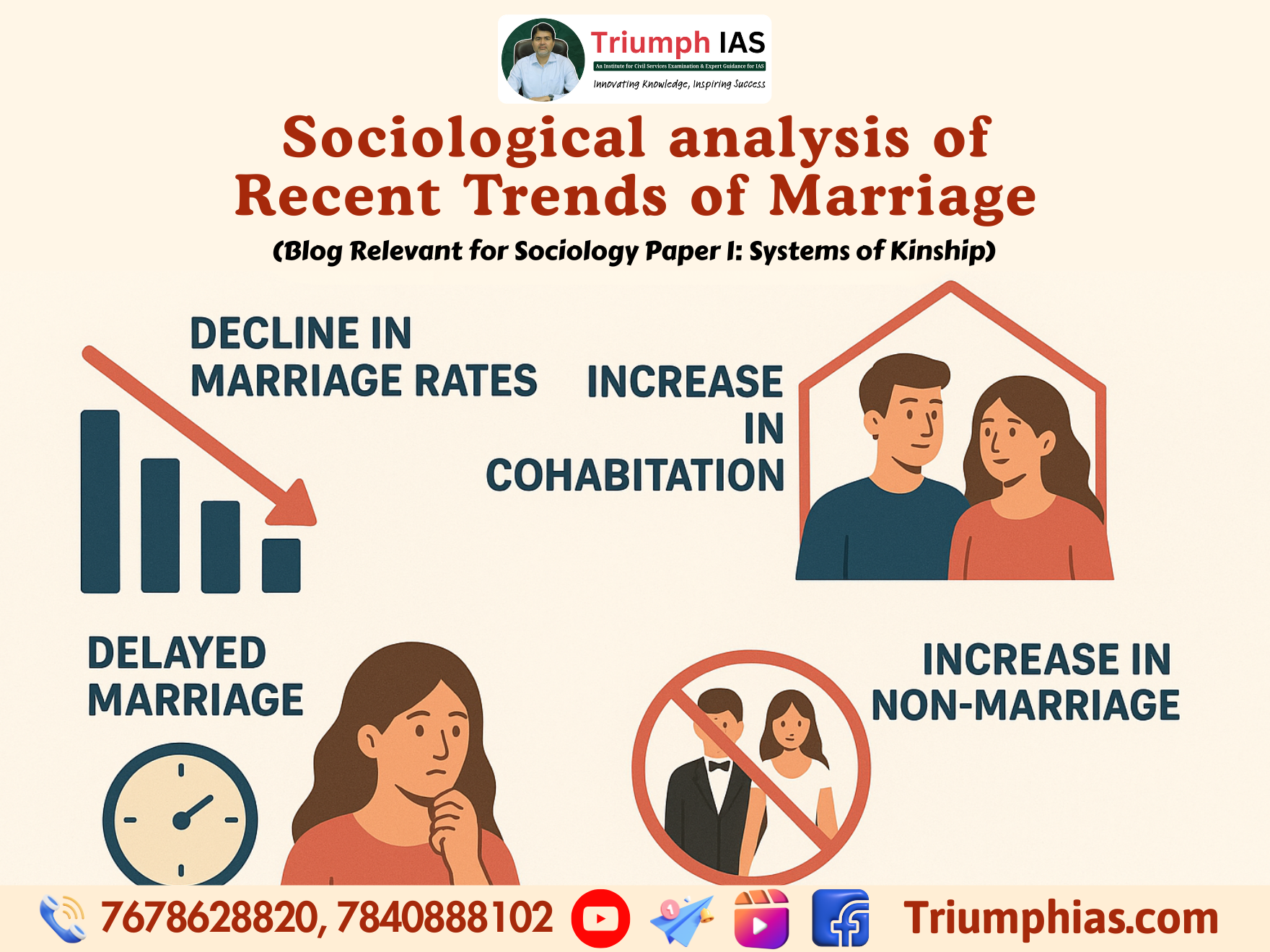
Sociological analysis of Recent Trends of Marriage
(Relevant for Sociology Paper I: Systems of Kinship)
IntroductionMarriage has long been considered a universal institution, central to the social fabric of every culture. Yet, in today’s world, marriage is not what it used to be. It has shifted from being an inevitable social duty to a matter of personal choice, shaped by education, economy, and cultural transformations. Understanding these recent trends in marriage is crucial, as they highlight broader themes like family transformation, gender relations, social mobility, and individual autonomy. Delayed MarriagesOne of the most visible trends today is postponement of marriage. Rising education levels, especially among women, have pushed marriage to the late twenties or even thirties. In urban India, careers, higher education, and financial stability take priority.
Decline in Marriage RatesGlobally, and increasingly in India, marriage rates are falling. In developed countries like Japan, South Korea, and even China, young adults are choosing singlehood or cohabitation instead.
This can be read through Ulrich Beck’s idea of individualization, where personal goals override collective social norms. Rise of Cohabitation and Live-in RelationshipsAnother trend is the rise of live-in relationships. Once stigmatized in Indian society, they are slowly gaining acceptance, particularly among urban youth. Courts have also extended certain legal protections to such unions.
Parsons’ theory of the “nuclear family as a functional unit” is challenged here, as new forms of family emerge beyond the conventional husband-wife model. Inter-caste and Inter-religious Marriages
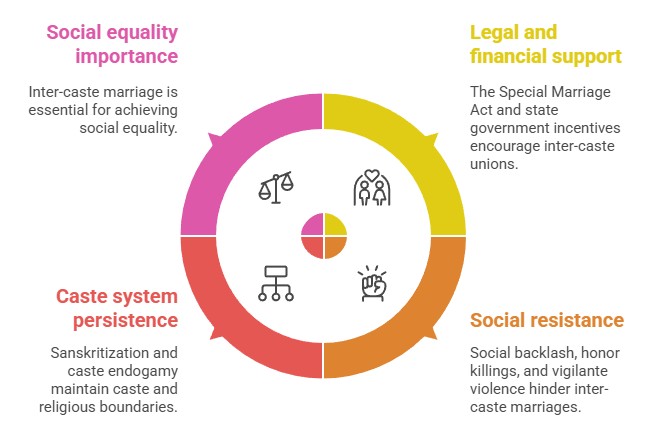
With modernization, urbanization, and the spread of education, inter-caste and inter-religious marriages are slowly increasing. According to a 2018 Pew Research survey, only about 5% of Indians marry outside their caste or religion, but the number is rising, particularly among younger, urban populations.
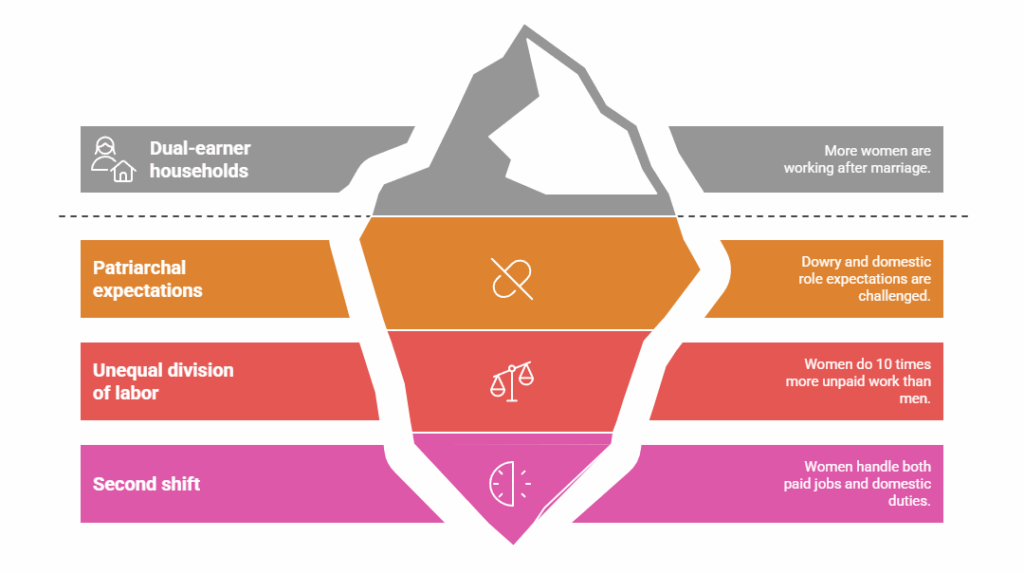
Changing Gender Dynamics in Marriage
Marriage today reflects shifting gender roles:
Same-Sex Marriages and LGBTQ+ PartnershipsGlobally, many nations have legalized same-sex marriage. India, while decriminalizing homosexuality (2018, Navtej Singh Johar vs Union of India), is still debating same-sex marriage.
Late-Life Marriages and RemarriagesAnother emerging trend is marriages among older adults—often widows, widowers, or divorcees. These are based more on companionship than duty.
Marriage and Technology:Marriage arrangements have gone digital. Matrimonial apps like Shaadi.com, Bharat Matrimony, and Tinder blend tradition with technology. Algorithms now play the role of matchmakers, reducing reliance on kin networks. Sociological Impact:
Marriage and Class DivideMarriage increasingly mirrors class inequality. Weddings have become a display of status, with extravagant ceremonies for the rich and financial burdens for the poor.
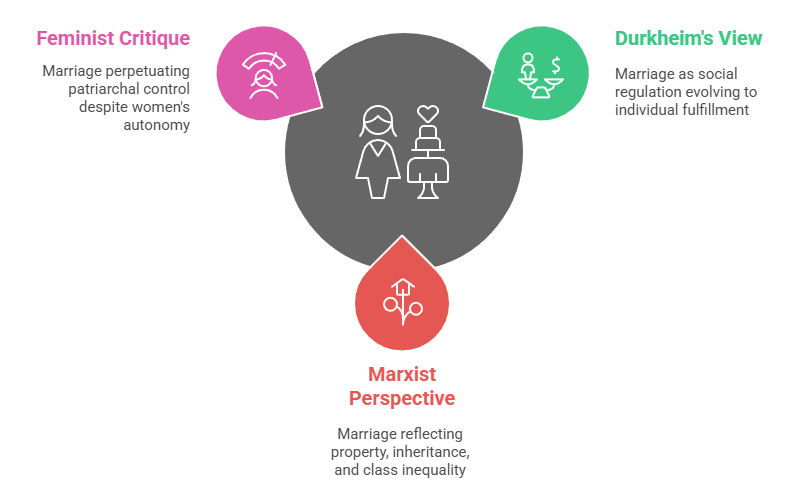
A Sociological Synthesis
The recent trends of marriage show how the institution is adapting to modernization, globalization, and individualization.
ConclusionMarriage is no longer a one-size-fits-all institution. Its meaning now varies by class, gender, sexuality, and culture. From delayed marriages to live-in relationships, from same-sex unions to digital matchmaking, the story of marriage is a story of society in transition. Understanding these recent marriage trends is not just about memorizing data—it’s about linking them with theory, seeing how personal choices reflect wider social structures, and analyzing how age-old institutions adapt to modern realities. PYQsPaper I –
Paper II –
|
To Read more topics, visit: www.triumphias.com/blogs
Read more Blogs:
Sociology Optional Paper 2025 Questions Related to Triumph IAS Resources (Paper-1 & Paper-2)
2 comments