
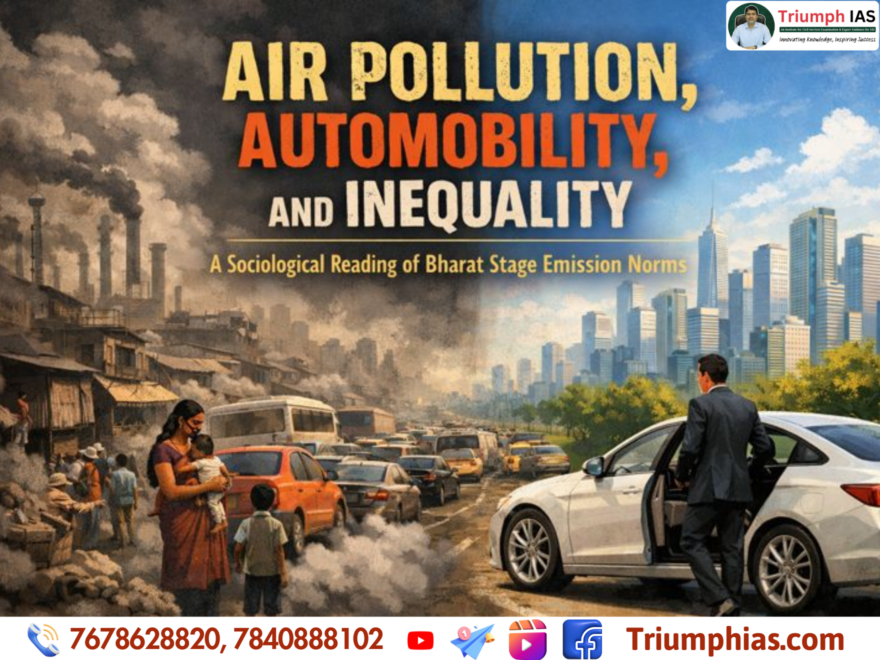
Air Pollution, Automobility, and Inequality: A Sociological Reading of Bharat Stage Emission Norms
(Relevant for Sociology Paper 2: Industrialization and Urbanisation in India and Politics and Society)
|
The Delhi government’s decision to restrict the entry of non-BS VI vehicles registered outside the Capital amid worsening air quality is often framed as a technical or environmental policy response. However, from a sociological perspective, this intervention reveals much deeper dynamics of urban modernity, risk governance, social inequality, and the politics of mobility. Vehicular pollution is not merely a mechanical failure of engines but a social outcome shaped by patterns of development, consumption, and power. Automobility and the Logic of Modernity
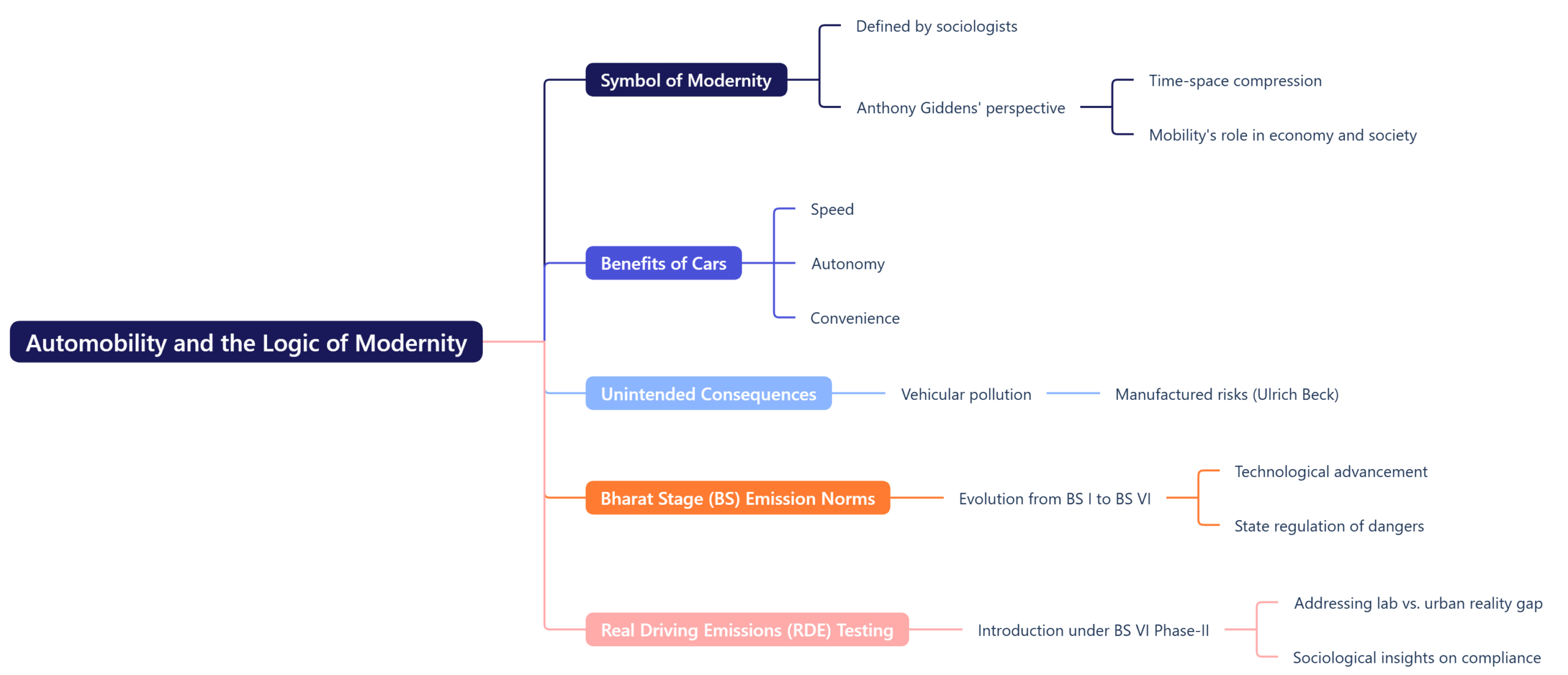
Sociologists have long viewed the automobile as a defining symbol of modernity. Anthony Giddens describes modern societies as driven by time–space compression, where mobility becomes essential to economic and social life. Cars promise speed, autonomy, and convenience, but they also generate unintended consequences. Vehicular pollution is one such consequence of what Ulrich Beck famously termed manufactured risks—hazards produced by industrial and technological progress itself. The evolution of Bharat Stage (BS) emission norms reflects India’s attempt to manage these risks. Moving from BS I to BS VI represents not just technological advancement but a shift in how the state acknowledges and regulates the dangers created by modern transport systems. The introduction of Real Driving Emissions (RDE) testing under BS VI Phase-II is particularly significant, as it recognises the gap between laboratory compliance and lived urban reality—an insight sociologists have long emphasised. Risk Society and the Politics of Air PollutionUlrich Beck’s concept of the risk society is central to understanding contemporary air pollution. In risk societies, threats like smog do not respect class boundaries, yet exposure and coping capacity remain deeply unequal. While polluted air affects all residents of Delhi, its impact is unevenly distributed. The urban poor—street vendors, construction workers, delivery personnel, and traffic police—experience prolonged exposure without access to protective measures. Older, more polluting vehicles are often owned by lower-income groups who cannot afford frequent upgrades. Thus, policies banning older vehicles may reduce emissions but also raise sociological questions about environmental justice. Environmental Inequality and Class DimensionsPierre Bourdieu’s concept of economic and social capital helps explain differential responses to BS norms. Wealthier households can transition to BS VI vehicles, absorb higher fuel costs, and access cleaner transport alternatives. In contrast, small traders, migrants, and informal workers often depend on older vehicles for livelihood. This reflects what sociologists call the class bias of environmental regulation, where ecological responsibility is individualised rather than structurally addressed. The problem is not merely that older vehicles pollute more, but that economic inequality limits people’s capacity to comply with cleaner technologies. The State, Surveillance, and Bureaucratic RationalityMax Weber’s theory of bureaucratic rationality offers insights into the implementation of emission norms. BS standards rely on formal rules, certification (PUCC), and monitoring mechanisms. While necessary, such systems often struggle with real-world enforcement due to corruption, weak institutional capacity, and fragmented governance. The move towards RDE testing signals an attempt to correct what Weber called the “iron cage” of formalism—where compliance on paper masks non-compliance in practice. However, uneven enforcement risks reinforcing public distrust in institutions, especially when restrictions appear selective or episodic. Delhi as a Sociological LaboratoryDelhi’s early adoption of stricter BS norms illustrates how cities become laboratories of governance in response to crisis. The city’s mixed vehicle fleet is a product of rapid urbanisation, migration, and uneven regional development. Rural-to-urban migrants often bring older vehicles registered in other states, revealing how environmental regulation intersects with federalism and mobility. From a Durkheimian perspective, the tightening of vehicular norms reflects a shift in the collective conscience—air pollution is no longer tolerated as an inevitable cost of development but seen as a moral and public health crisis demanding collective restraint. Technology, Consumption, and the Culture of Convenience
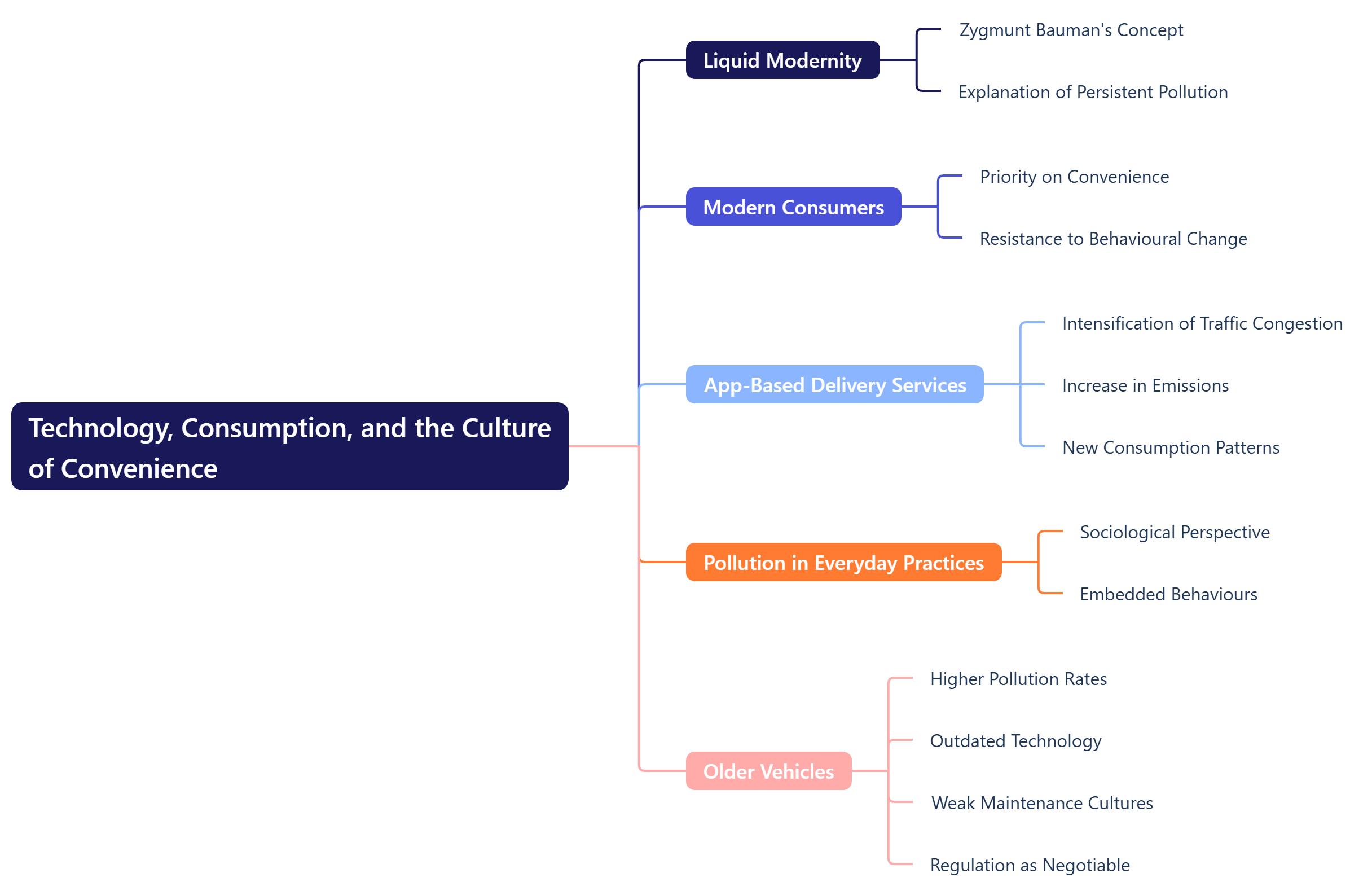
Zygmunt Bauman’s idea of liquid modernity helps explain why vehicular pollution persists despite awareness. Modern consumers prioritise convenience and speed, often resisting behavioural change. The proliferation of app-based delivery services has intensified traffic congestion and emissions, illustrating how new consumption patterns create fresh environmental risks. Sociologically, pollution is embedded in everyday practices rather than exceptional behaviour. Older vehicles pollute more not only due to outdated technology but also because maintenance cultures remain weak in a society where regulation is often viewed as negotiable. Symbolic Meanings of VehiclesVehicles also carry symbolic value. Thorstein Veblen’s concept of conspicuous consumption is evident in the preference for large, fuel-intensive vehicles even in congested urban spaces. Environmental costs are externalised, while status benefits are privatised. Conversely, older vehicles are often stigmatised as symbols of backwardness, masking the structural reasons why people continue to use them. This symbolic divide risks moralising pollution rather than addressing its systemic roots. Law, Social Control, and Behavioural ChangeFrom a sociological perspective, emission norms function as tools of social control, shaping behaviour through regulation rather than persuasion. Travis Hirschi’s social control theory suggests that compliance improves when individuals feel socially integrated and supported. Without affordable public transport, scrappage incentives, and livelihood safeguards, coercive bans may generate resistance rather than cooperation. Environmental governance, therefore, must balance enforcement with inclusion, recognising that sustainable transitions require social legitimacy. Conclusion: Towards Socially Just Environmental GovernanceThe tightening of BS norms in Delhi reflects India’s growing recognition that unchecked automobility threatens public health and ecological stability. However, sociology reminds us that pollution is not merely an engineering problem but a social one—rooted in inequality, consumption patterns, institutional capacity, and urban governance. Effective air pollution control must integrate technological regulation with social policy: affordable public transport, economic support for vehicle transitions, and shared responsibility across classes. Without addressing the social foundations of pollution, emission norms risk becoming technocratic solutions to deeply sociological problems. Ultimately, cleaner air is not just a matter of better engines, but of reimagining mobility, development, and justice in urban India. |
To Read more topics, visit: www.triumphias.com/blogs