

Advancing India Industrial Future
(Relevant for GS paper-3, Industrial Growth)
|
India stands at a pivotal juncture in its economic journey, with the industrial sector poised to play a transformative role in propelling the nation towards becoming a global manufacturing powerhouse. The “Make in India” initiative, launched in 2014, has been instrumental in revitalizing the industrial landscape, attracting investments, fostering innovation, and generating employment. As we delve into 2025, it’s imperative to assess the strides made, the challenges ahead, and the roadmap for unlocking India’s full industrial potential. The Industrial Landscape: A Decade of TransformationManufacturing Growth and Economic ContributionOver the past decade, India’s manufacturing sector has witnessed significant growth. The Production Linked Incentive (PLI) schemes, introduced in 2020, have been a catalyst, attracting investments worth ₹1.32 lakh crore ($16 billion) and boosting manufacturing output by ₹10.90 lakh crore ($130 billion) as of June 2024. These initiatives have generated over 8.5 lakh jobs, underscoring the sector’s role in economic development. Foreign Direct Investment (FDI) InflowsIndia’s commitment to improving the ease of doing business has yielded positive results. FDI equity inflows into the manufacturing sector from 2014 to 2024 reached $165.1 billion, marking a 69% increase compared to the previous decade. This surge reflects global confidence in India’s industrial policies and investment climate Sectoral Highlights: Driving Industrial Momentum
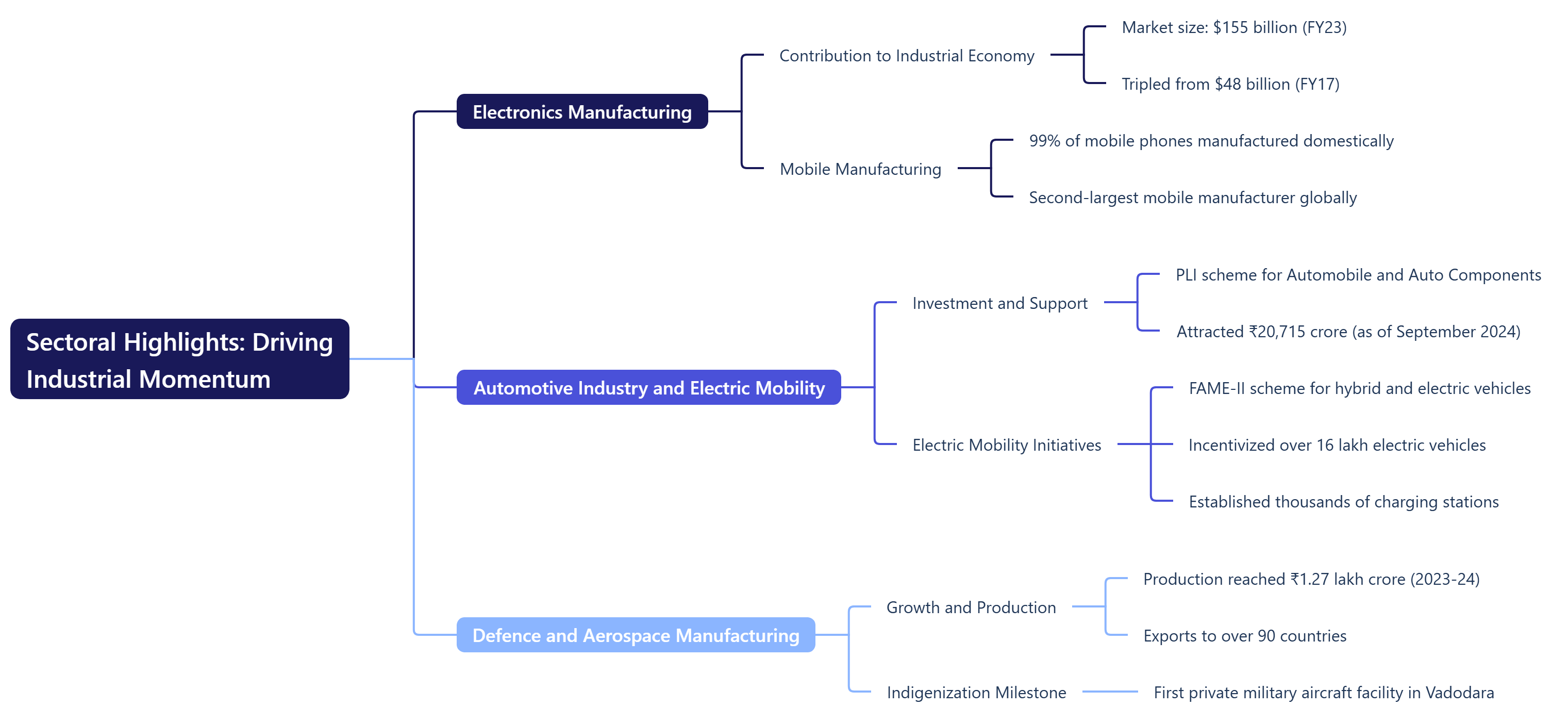
Electronics ManufacturingIndia’s electronics sector has emerged as a significant contributor to the industrial economy. The sector’s market size reached $155 billion in FY23, nearly tripling from $48 billion in FY17. Notably, 99% of mobile phones used in India are now manufactured domestically, positioning the country as the second-largest mobile manufacturer globally. Automotive Industry and Electric MobilityThe automotive sector, bolstered by the PLI scheme for Automobile and Auto Components Industry, has attracted investments of ₹20,715 crore as of September 2024. The Faster Adoption and Manufacturing of Hybrid and Electric Vehicles (FAME-II) scheme has further accelerated electric mobility, incentivizing over 16 lakh electric vehicles and supporting the establishment of thousands of charging stations. Defence and Aerospace ManufacturingIndia’s defence manufacturing has seen remarkable growth, with production reaching ₹1.27 lakh crore in 2023-24 and exports to over 90 countries. The inauguration of India’s first private military aircraft facility in Vadodara marks a significant milestone in the sector’s indigenization efforts. Infrastructure and Policy Reforms: Enabling Industrial GrowthPM GatiShakti: Enhancing ConnectivityLaunched in 2021, the PM GatiShakti initiative aims to achieve multimodal connectivity through the integration of transportation, energy, and communication networks. By evaluating over 434 projects and identifying 156 critical infrastructure gaps, the program is set to drive infrastructure investments, predicted to grow at a 15.3% compound annual growth rate (CAGR) over the next five years, reaching $1.45 trillion. Ease of Doing Business and Regulatory ReformsIndia’s rank in the World Bank’s Ease of Doing Business Index improved from 142 in 2014 to 63 in 2019, reflecting streamlined processes in business registration, permits, and tax compliance. Labor reforms, consolidating 29 labor laws into four codes, and tax simplifications under the Goods and Services Tax (GST) have created a more unified market, facilitating business operations across state lines. Challenges and the Road Ahead
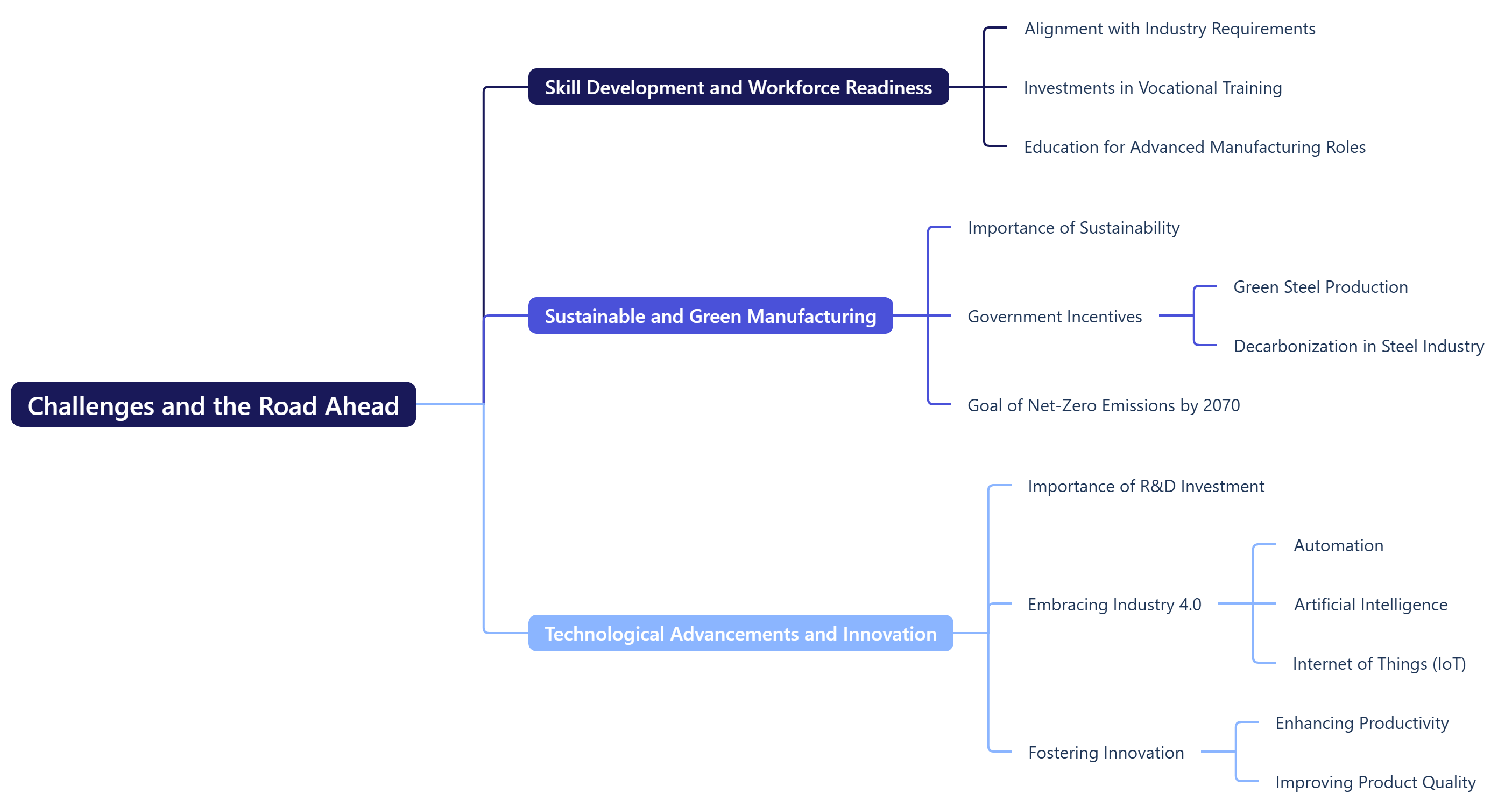
Skill Development and Workforce ReadinessWhile industrial growth has created employment opportunities, there’s a pressing need to align workforce skills with industry requirements. Investments in vocational training and education are essential to equip the labor force for advanced manufacturing roles. Sustainable and Green ManufacturingAs India advances industrially, sustainability becomes paramount. The government is developing incentives to encourage the production of green steel and support decarbonization in the steel industry, aiming for net-zero emissions by 2070. Technological Advancements and InnovationTo remain competitive, India must invest in research and development, embracing Industry 4.0 technologies such as automation, artificial intelligence, and the Internet of Things (IoT). Fostering innovation will be key to enhancing productivity and product quality. ConclusionIndia’s industrial sector has made significant strides over the past decade, driven by strategic initiatives like “Make in India,” robust policy reforms, and infrastructure development. As the nation moves forward, addressing challenges related to skill development, sustainability, and technological innovation will be crucial. With continued focus and investment, India is well-positioned to unlock its full industrial potential, contributing to economic growth and global manufacturing leadership. |

One comment