Introduction
In a heartening turn of events, Chennai’s senior citizens are rewriting the narrative of ageing by reclaiming their time through hobbies, traditional learning, and community participation. At the Tamil Nadu Government Music College, a vibrant group of elderly learners are enrolling in courses on Tamil folk arts like Silambam, Oyilattam, and Thappattam—marking a shift from conventional post-retirement inactivity to active ageing and cultural revival. This initiative, made possible by a relaxation in age restrictions for students, not only promotes the preservation of indigenous knowledge systems but also becomes a shining example of inclusive social policy and cultural empowerment.
Sociological Analysis
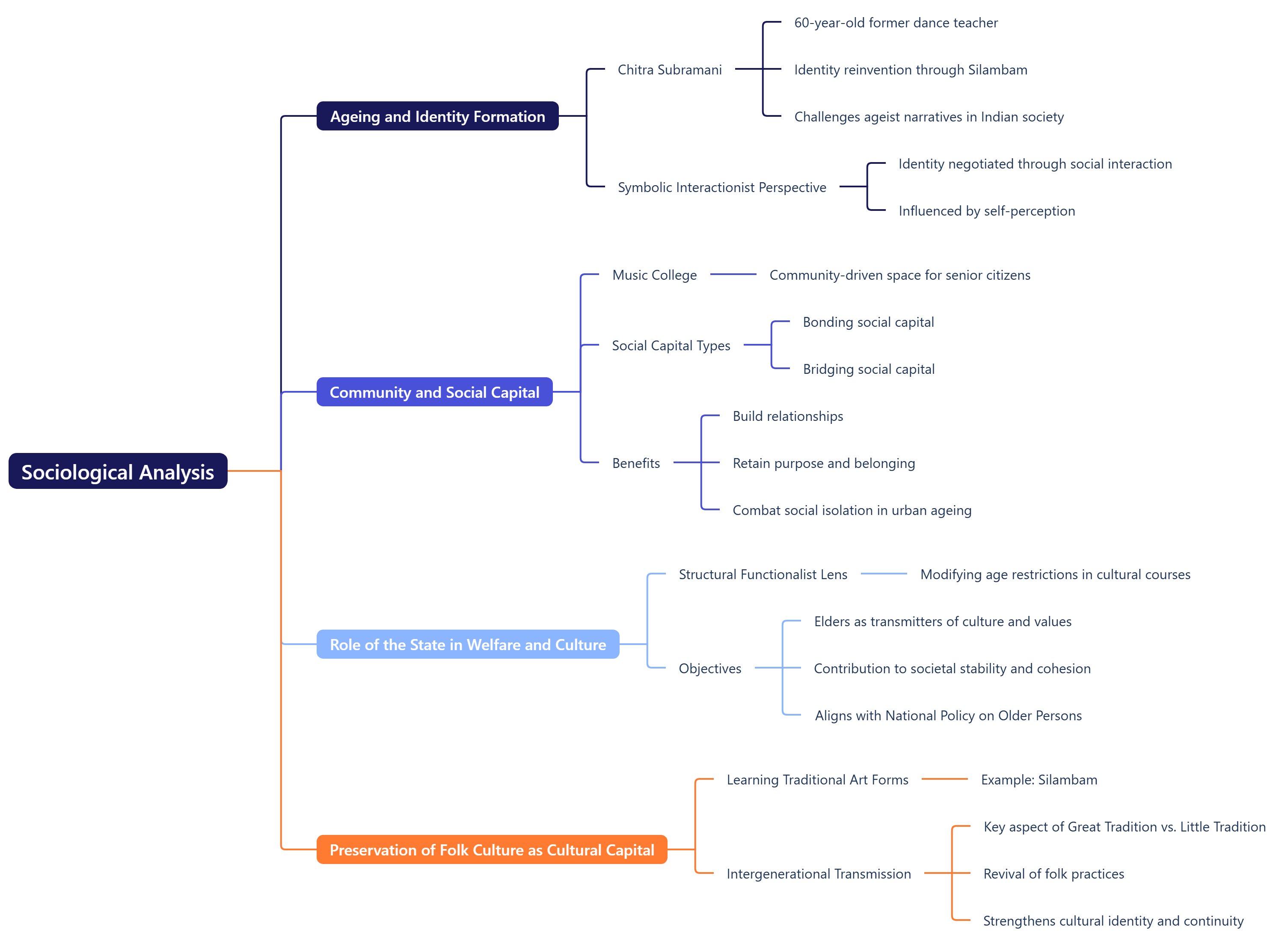
- Ageing and Identity Formation: Chitra Subramani, a 60-year-old former dance teacher, embodies the transformation of ageing from a phase of decline to one of identity reinvention. As she pursues Silambam, her engagement challenges the ageist narrative often prevalent in Indian society. This aligns with the symbolic interactionist perspective, where identity is constantly negotiated through social interaction and self-perception.
- Community and Social Capital: Community-driven spaces such as the Music College create bonding and bridging social capital for senior citizens. Through shared cultural practices, elders build new relationships and retain a sense of purpose and belonging, combating social isolation, which is a common issue in urban ageing populations.
- Role of the State in Welfare and Culture: From a structural functionalist lens, the state’s role in modifying age restrictions for these cultural courses ensures that the elderly continue to serve as transmitters of culture and values. This contributes to the stability and cohesion of society, while also aligning with welfare state objectives under the National Policy on Older Persons.
- Preservation of Folk Culture as Cultural Capital: Learning traditional art forms like Silambam fosters intergenerational transmission of folk culture, a key aspect of Great Tradition and Little Tradition debate in Indian sociology (Milton Singer, McKim Marriott). These folk practices are part of the Little Tradition, and their revival strengthens cultural identity and continuity.
Significance: Breaking Age-Based Stereotypes
Chitra Subramani, a 60-year-old former dance teacher, embodies the new elderly identity—dynamic, curious, and socially involved. This contradicts traditional stereotypes of older adults being dependent or passive. Through such programs, senior citizens are not only redefining leisure and productivity but also reclaiming their social agency.
Policy Implications and the Way Forward
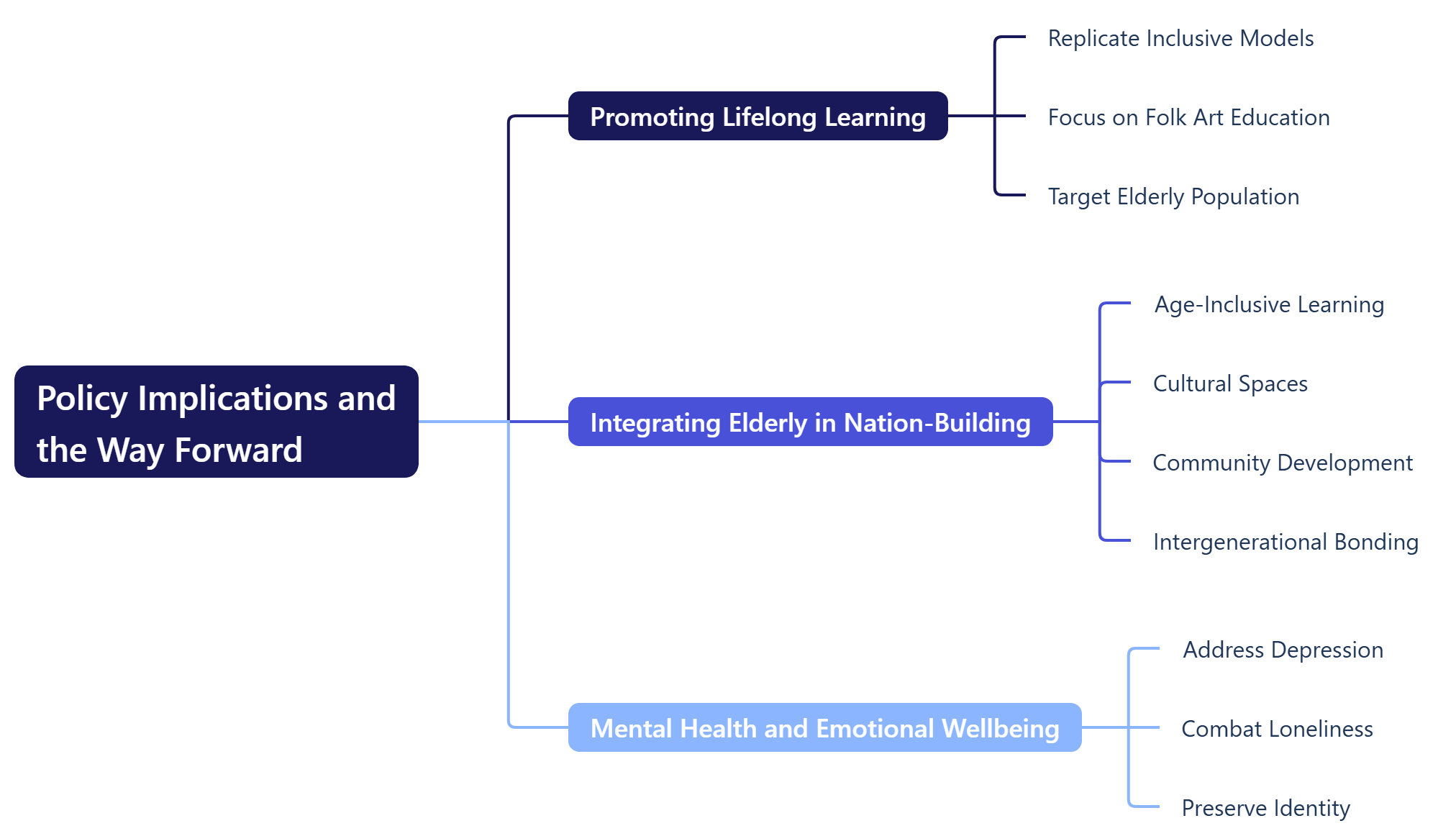
- Promoting Lifelong Learning: Government institutions across India should replicate such inclusive models of folk art education for the elderly.
- Integrating Elderly in Nation-Building: Age-inclusive learning and cultural spaces contribute to community development and promote intergenerational bonding.
- Mental Health and Emotional Wellbeing: These activities significantly address issues like depression, loneliness, and identity loss among the elderly.
Conclusion
The resurgence of interest in traditional art forms like Silambam among Chennai’s senior citizens is more than a cultural revival—it’s a sociological movement. It signifies empowerment through community participation, respect for indigenous knowledge, and a model of active and dignified ageing that aligns with both sociological theories and sustainable development goals (SDG 3, SDG 11).
PYQs
Paper 1
- Explain how social roles and statuses change in later life stages. (2014)
- Examine the relevance of Durkheim’s theory of collective conscience in understanding modern-day community participation. (2017)
- Explain the sociological significance of leisure in post-industrial societies. (2020)
- How does the concept of active ageing challenge traditional theories of ageing in sociology? (2021)
Paper 2
- Critically examine the impact of changing family structures on the care of the elderly in India. (2015)
- How is the Indian concept of ageing different from the Western concept? Discuss with reference to family and community roles. (2016)
- Examine the impact of urbanization on the lifestyle and support systems of the elderly. (2019)
- Examine the role of NGOs and community-based organizations in addressing the issues faced by the elderly. (2021)
- How do community-driven initiatives empower the elderly in urban India? (2022)
- Examine the significance of government interventions in promoting inclusiveness and dignity for the elderly. (2023)
|

One comment