
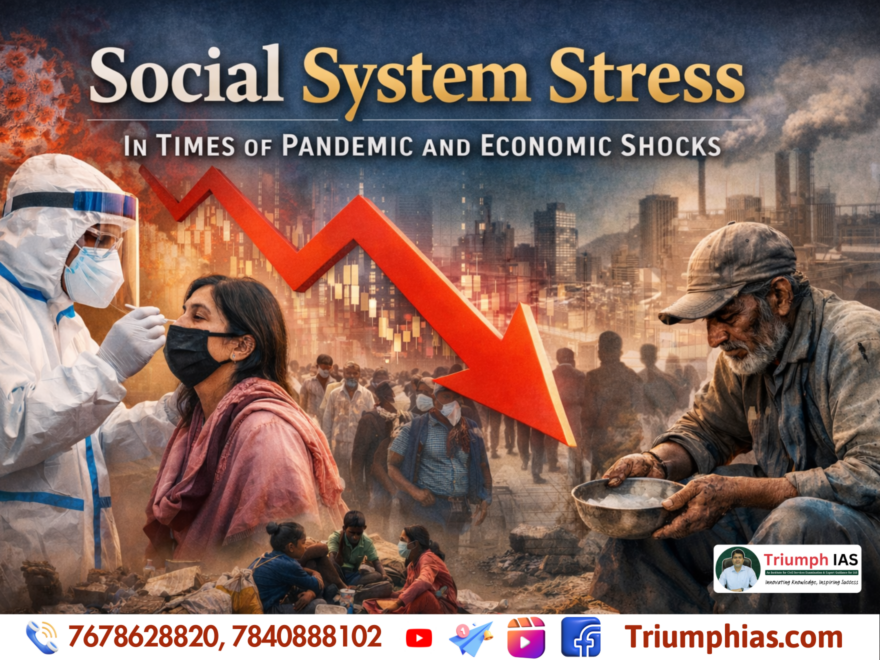
Social System Stress in Times of Pandemic and Economic Shocks
(Relevant for Sociology Paper 1, Paper 2 , GS Society )
IntroductionThe COVID-19 pandemic was not merely a public health crisis; it was a profound sociological event that exposed the structural vulnerabilities of modern social systems. In sociology, a social system refers to the patterned network of social relationships, institutions, norms, and roles that sustain societal order. When a pandemic coincides with economic shocks—such as job losses, supply chain disruptions, and fiscal instability—the equilibrium of this system is severely tested. The resulting condition may be described as social system stress, where institutions struggle to maintain integration, regulation, and adaptation. Dimension:From a structural–functionalist perspective associated with Talcott Parsons, society survives through functional prerequisites—adaptation, goal attainment, integration, and latency (AGIL framework). During a pandemic, the adaptive capacity of economic institutions weakens as production halts and informal labour markets collapse. Goal attainment becomes blurred when political leadership prioritizes electoral considerations over public health or vice versa. Integration declines due to social distancing, isolation, and distrust. Latency, which involves cultural reproduction and value maintenance, is disturbed when schools close and digital divides widen educational inequality.
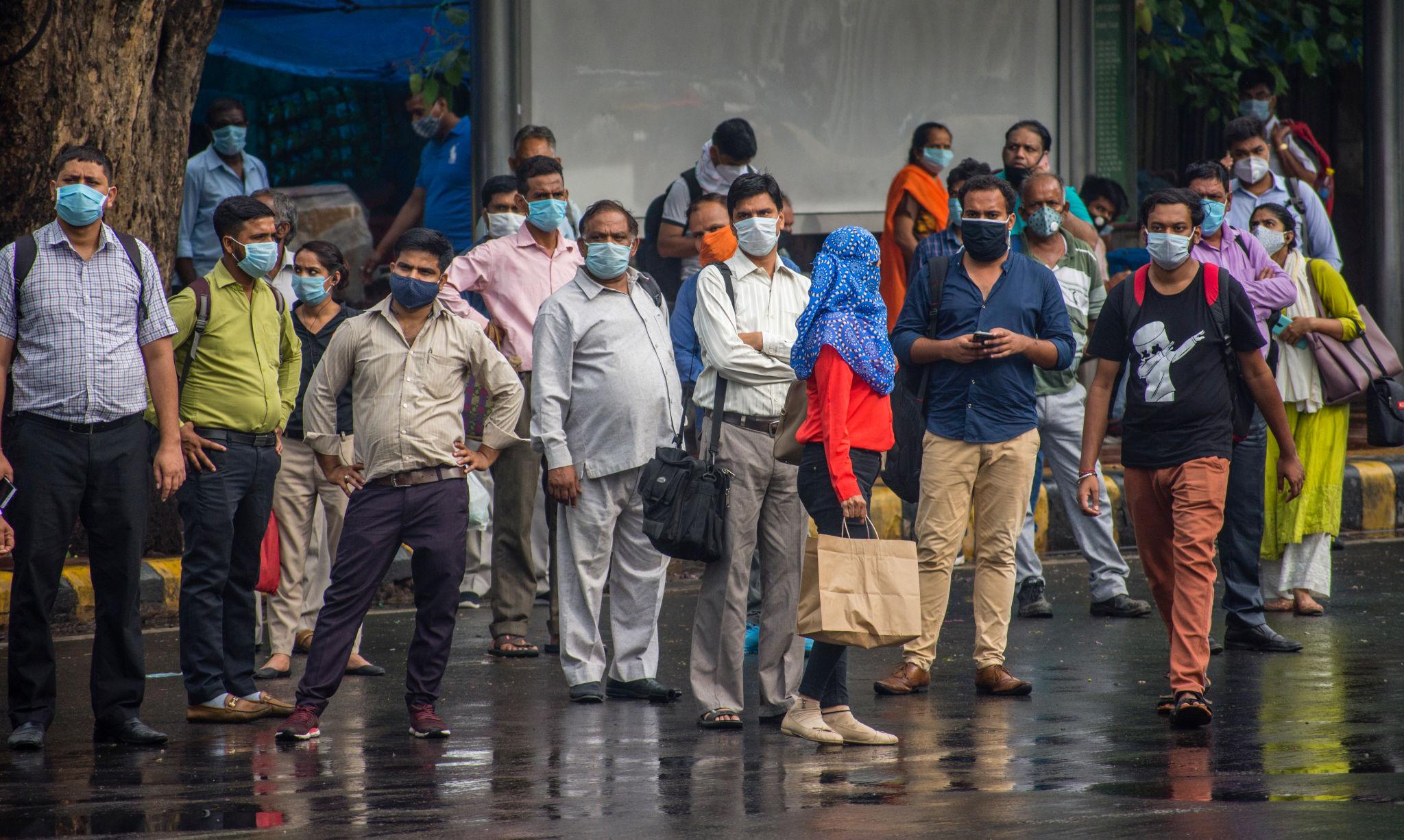
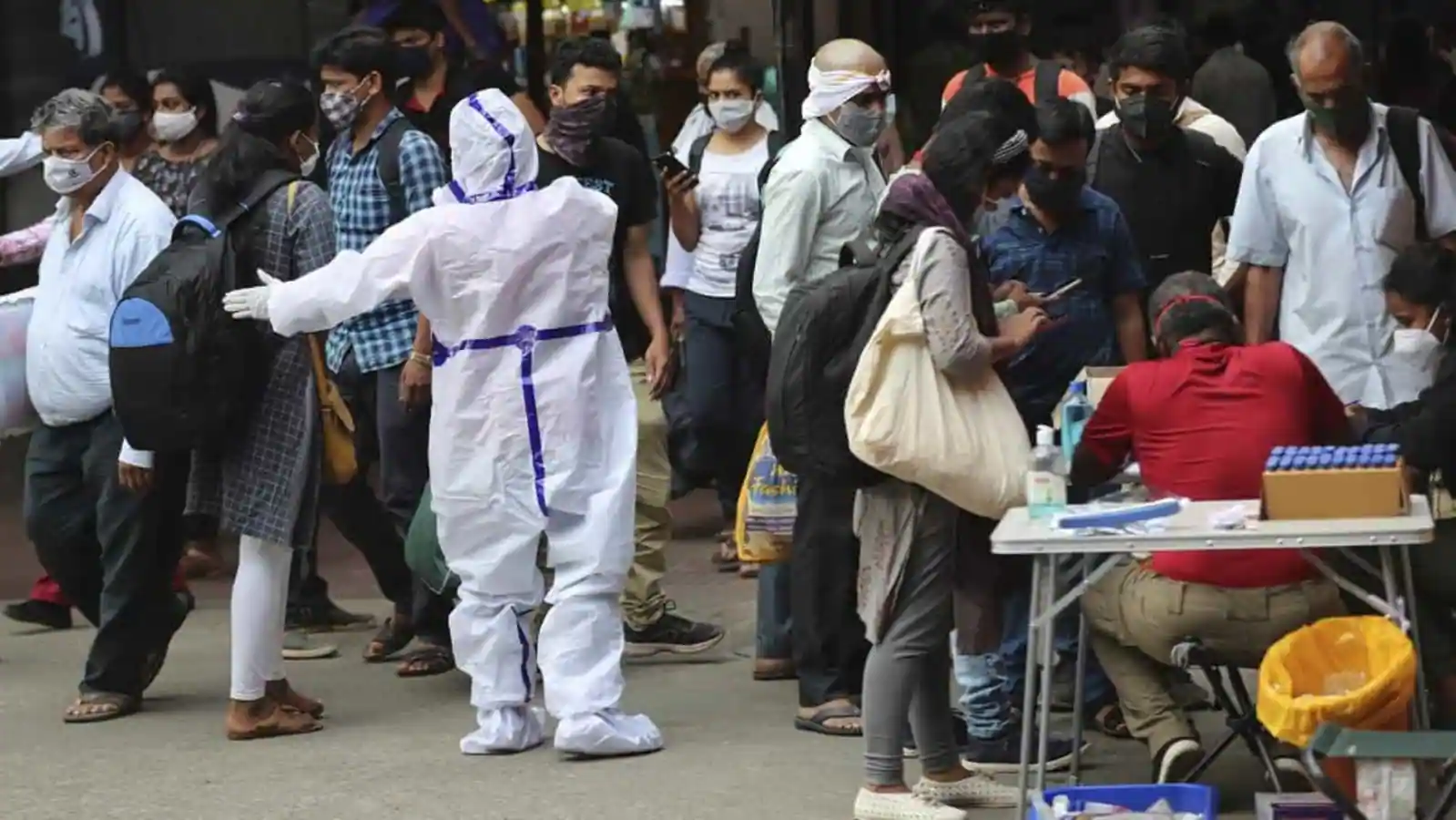
Conflict theorists inspired by Karl Marx would interpret pandemic-induced stress as intensifying class contradictions. Lockdowns disproportionately affected migrant workers, informal sector labourers, and marginalized communities. Economic shocks magnified pre-existing inequalities, revealing how structural disadvantages—caste, class, gender, and region—shape differential vulnerability. The crisis exposed the fragility of neoliberal welfare models where market efficiency often overrides social security. Relief measures, though necessary, also highlighted the dependency of labour on state intervention in times of systemic breakdown. From a symbolic interactionist angle, everyday interactions were transformed. Mask-wearing, social distancing, and remote communication altered the symbolic codes of social life. Trust became mediated by digital platforms. Stigma against infected individuals illustrated how illness is socially constructed, echoing Erving Goffman’s insights on stigma and identity. Thus, the pandemic was not only epidemiological but also deeply cultural. Economic shocks accompanying pandemics create what sociologists call anomie, a breakdown of normative regulation—a concept developed by Émile Durkheim. Rising unemployment, uncertainty, and sudden mobility restrictions disrupt collective conscience. When social norms lose clarity, deviant behaviors—hoarding, black marketing, misinformation—proliferate. Mental health crises and increased suicides in several societies further reflect normative disorientation. The role of the state becomes central in mitigating social system stress. Welfare policies, public distribution systems, and digital cash transfers function as stabilizing mechanisms. In India, for instance, the expansion of food security schemes and vaccination drives illustrated the resilience of bureaucratic institutions. However, bureaucratic red tape and governance deficits sometimes slowed relief, demonstrating how institutional inefficiencies compound systemic stress.
Another significant dimension is the digital divide. Remote work and online education privileged urban, middle-class populations while excluding rural and economically weaker sections. Sociologically, this reflects Pierre Bourdieu’s concept of cultural and social capital: access to technology becomes a form of capital that reproduces inequality. Thus, pandemics do not create inequalities; they amplify them. Civil society and community networks also play a vital integrative role. Religious institutions, NGOs, and volunteer groups acted as intermediaries between state and citizen, reinforcing what Durkheim called social solidarity. In times of crisis, collective rituals—applause for frontline workers, online religious gatherings—served symbolic functions that restored morale and social cohesion. Ultimately, pandemics and economic shocks act as stress tests for social systems. They reveal the tension between structure and agency, inequality and solidarity, governance and populism. For sociology, such crises are laboratories of social change. They compel societies to rethink welfare models, public health infrastructure, labour protections, and digital inclusion. The resilience of a social system depends not only on economic recovery but also on its capacity to restore trust, normative stability, and institutional legitimacy. Conclusion:In conclusion, social system stress during pandemics is multidimensional—structural, cultural, economic, and psychological. The sociological lens helps us move beyond medical statistics to understand how crises reshape institutions, deepen inequalities, and redefine collective life. A resilient society is one that strengthens institutional coordination, expands inclusive welfare, and fosters social solidarity in the face of systemic shocks. |
UPSC Civil Services Mains – Sociology Optional Question
“Pandemics and economic shocks expose structural inequalities embedded in social systems.” Discuss with reference to sociological theories. (250 words)
To Read more topics, visit: www.triumphias.com/blogs
Read more Blogs:
2 comments