Equal Parental Leave: A Step towards Gender Equality

Equal Parental Leave: A Step towards Gender Equality

Equal Parental Leave: A Step towards Gender Equality

(Relevant for Sociology Paper I: Work and Economic Life and Sociology Paper II: Social Change in India; Women and Development; Role of State)

Introduction

As societies evolve toward gender equality, the idea of equal parental leave for both mothers and fathers is gaining global momentum. Traditionally, childcare responsibilities have disproportionately fallen on women, reinforcing gender stereotypes and limiting female participation in the workforce. Equal parental leave policies challenge this norm, aiming to create a more balanced division of labor at home and promote gender-just work environments.

In India, however, maternity leave is available for 26 weeks, while paternity leave remains largely absent or informal in most sectors, especially the private sector. This disparity not only burdens mothers but also reinforces outdated patriarchal structures.

Global Examples

Global Examples

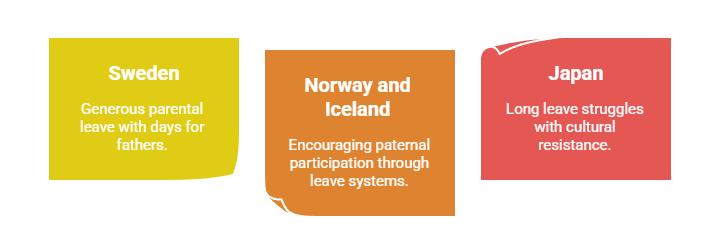
  • Sweden offers 480 days of paid parental leave, with 90 days reserved exclusively for fathers.
  • Norway and Iceland also follow “use-it-or-lose-it” leave systems to encourage paternal participation.
  • Japan, despite having one of the longest paternity leaves on paper (52 weeks), struggles with cultural resistance to its use.

Indian Context

  • Maternity Benefit (Amendment) Act, 2017: Provides 26 weeks of paid leave to women in the organized sector.
  • Paternity leave: No statutory law exists; government employees get 15 days. The Paternity Benefit Bill, 2017 remains pending in Parliament.

Sociological Analysis

Sociological Analysis

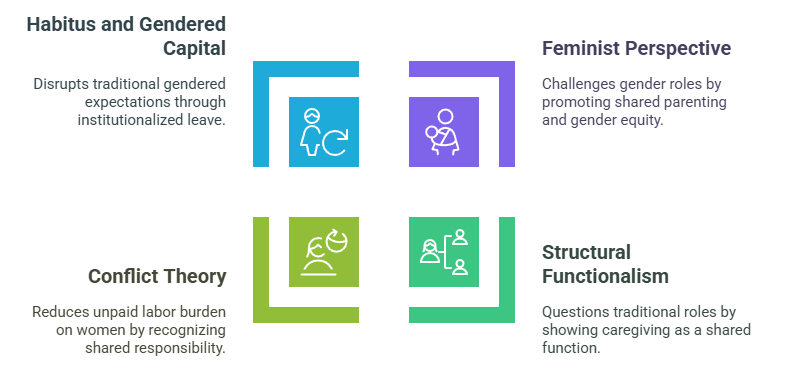
  1. Feminist Perspective: Feminist sociologists argue that the lack of paternity leave perpetuates gender roles by making women the default caregivers. This reflects Ann Oakley’s theory of gendered division of labor and reinforces the ideology of separate spheres — men as breadwinners and women as homemakers.Equal parental leave can disrupt this norm and foster shared parenting, which leads to greater gender equity in both public and private spheres.
  1. Structural Functionalism: From a structural-functional view, family serves as a unit for childrearing and socialization. Talcott Parsons argued that women are naturally suited for expressive roles (nurturing) while men take on instrumental roles (economic). Equal parental leave challenges this view, showing that caregiving can be a shared, non-biological function.
  2. Conflict Theory: According to Marxist and conflict theorists, the division of labor within households mirrors capitalist exploitation, where women’s unpaid domestic work supports the paid labor economy. Equal parental leave recognizes caregiving as a shared responsibility, reducing the unpaid labor burden disproportionately borne by women.
  3. Habitus and Gendered Capital: Pierre Bourdieu’s concept of habitus helps explain how cultural practices — like mother-only leave — shape and reinforce gendered expectations. By institutionalizing equal parental leave, states can disrupt traditional gendered habitus and redistribute symbolic capital associated with caregiving.

Why India Needs Equal Parental Leave

Low female labor force participation: Enables women to return to work earlier with shared responsibilities

Gender pay gap: Encourages employers to view men and women equally for hiring

Paternal engagement: Improves father-child bonding and emotional development

Workplace stereotypes: Breaks the myth of women being “less committed” due to childbearing

Dual burden on women: Eases the pressure of managing work and childcare alone

Policy Suggestions and Way Forward

Policy Suggestions and Way Forward

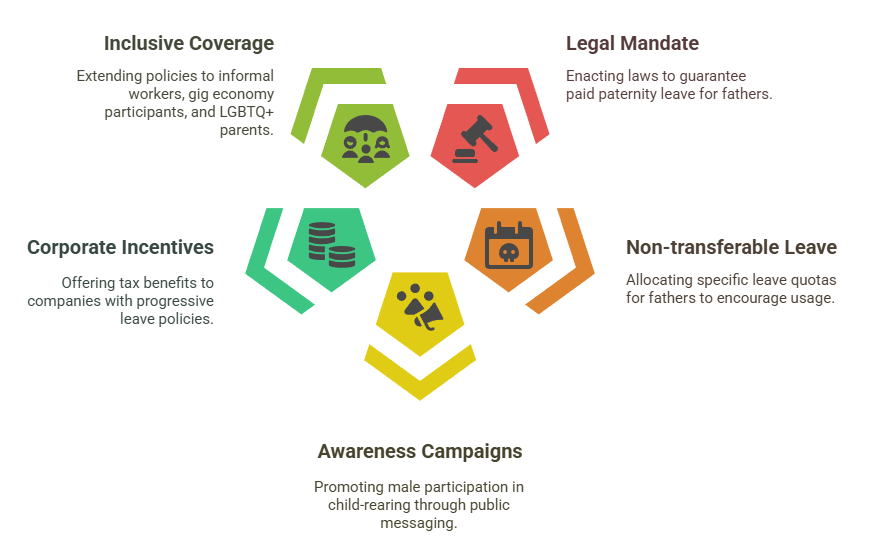
Legal Mandate: Pass the Paternity Benefit Bill ensuring at least 3 months paid paternity leave.

Non-transferable Leave Quotas: Allocate specific leave for fathers (like Nordic countries) to encourage usage.

Awareness Campaigns: Normalize male participation in child-rearing through public messaging.

Corporate Incentives: Offer tax benefits or recognition to companies with progressive leave policies.

Inclusive Coverage: Extend parental leave policies to informal sector workers, gig economy participants, and LGBTQ+ parents.

Conclusion

Equal parental leave is not merely a family welfare policy — it is a structural tool for social transformation. It can break gender stereotypes, foster workplace equality, and promote emotional well-being for children and parents alike. As India debates gender parity, equal parental leave must move from policy proposals to institutional reality.

True gender equality begins when caregiving is recognized as a shared human responsibility — not a woman’s duty.

PYQs

Paper I

  • Discuss the role of parental leave policies in addressing gender inequality in modern societies. (2022)
  • Analyze the impact of unpaid domestic work on women’s position in the labor market. (2020)

Paper II

  • Evaluate how state policies like maternity and paternity leave affect the status of women in Indian society. (2021)
  • Discuss the implications of equal parental leave for gender roles in Indian families. (2023)

To Read more topicsvisit: www.triumphias.com/blogs

Read more Blogs:

Raja Raghuvanshi and Sonam Raghuvanshi: A Crime, a Culture, and the Claustrophobia of Conformity

Empowering the Economy Through MSMEs

One comment

Leave a Reply

Your email address will not be published. Required fields are marked *