
UPSC Prelims 2025 Question Paper PDF – Free Download & Detailed Subject-Wise Analysis
By Triumph IAS | Published on
The UPSC Civil Services Prelims 2025 was held on May 26, 2025. Triumph IAS brings you an in-depth review and complete access to the original question paper PDFs. Understand the paper trends, topic weightage, and how you can improve your preparation for the next phase – UPSC Mains 2025.
📥 UPSC Prelims 2025 Question Paper PDF |
Prelims General Studies Paper I 2025
Preview of the actual GS Paper I conducted on May 26, 2025.
Prelims CSAT Paper II 2025
CSAT remained tricky with time-consuming comprehension and reasoning questions.
📈 Expected Cutoff for UPSC Prelims 2025 (Based on Last year Assumptions) |
Based on analysis and aspirant feedback, our team estimates the expected cutoffs to be:
- General Category: 85–90 marks
- OBC: 82–86 marks
- SC/ST: 74–78 marks
Note: CSAT continues to be qualifying but had a noticeable increase in difficulty.
Analysis by Vikash Ranjan sir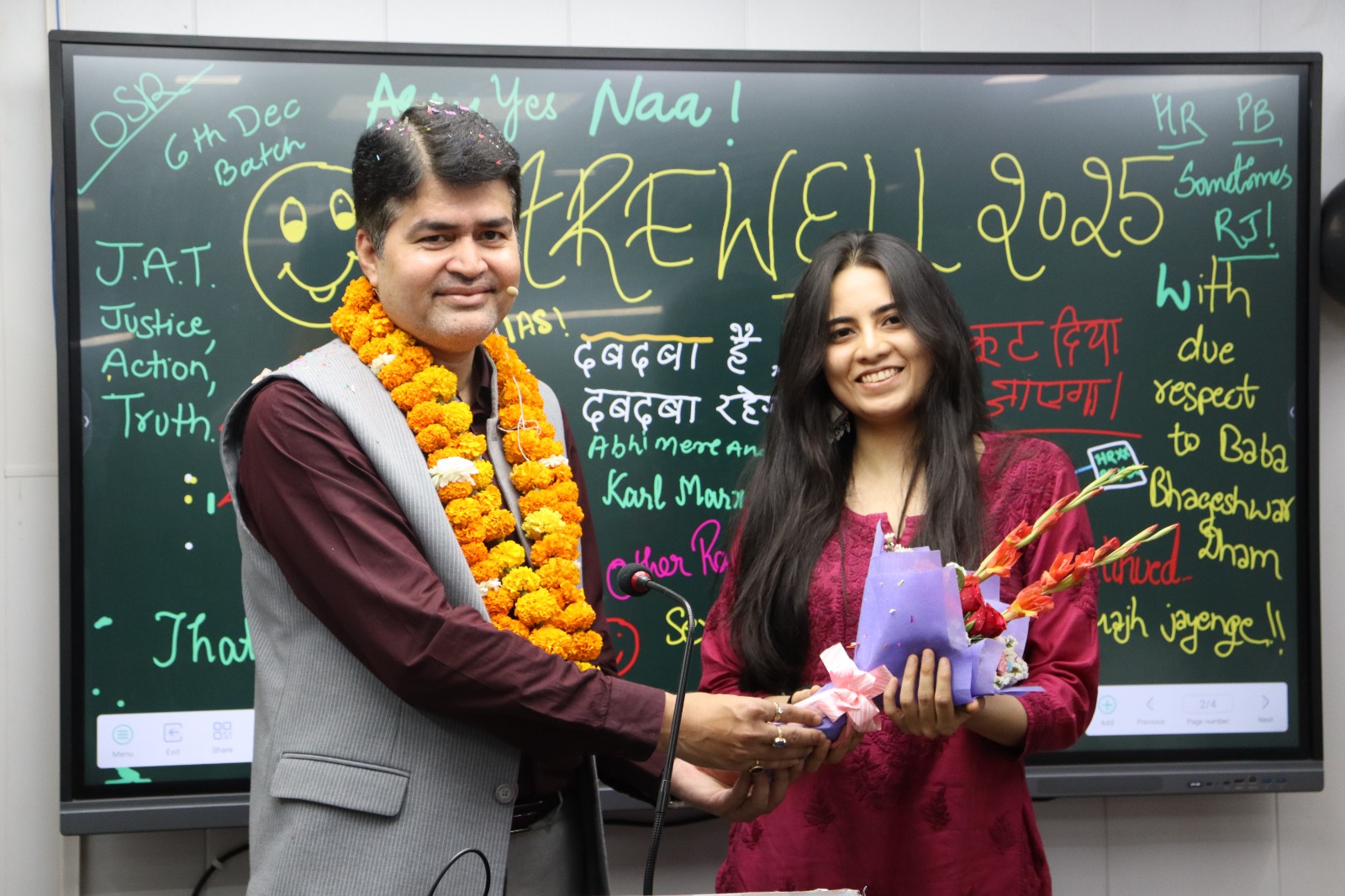 UPSC Prelims 2025 Question Paper PDFThe UPSC Civil Services Preliminary Examination 2025 presented a paper that leaned toward the difficult side of the spectrum, challenging aspirants on both factual precision and applied conceptual understanding.
The static section drew heavily from the patterns of previous year question papers, rewarding those who had systematically engaged with PYQs. Meanwhile, the dynamic section — especially questions rooted in current affairs, economics, and international relations — tested aspirants’ ability to interpret, apply, and analyze, rather than simply recall facts.
In terms of subject-wise distribution, POLITY stood out as the most approachable segment. Questions were largely constitution-based, with themes revolving around fundamental rights, parliamentary procedures, and recent legal developments. The nature of the questions reaffirmed that standard texts like Laxmikanth, when coupled with clarity on case laws and constitutional interpretation, remain indispensable for success.
Economics, on the other hand, brought a fair share of complexity. The questions leaned toward the application of static concepts—especially related to monetary policy, fiscal management, inflation trends, and economic indicators. A superficial understanding of current affairs was insufficient; aspirants needed to correlate them with concepts from Budget, Economic Survey, and RBI updates. This section clearly demanded deeper economic reasoning, not just rote learning.
Geography maintained its conventional static core, with questions covering climatology, geomorphology, soil types, and Indian drainage systems. There was a continued presence of 2–3 mapping-based questions, reaffirming the trend observed since 2023. Those with strong NCERT foundations and regular atlas practice had a notable edge.
History, as always, was a wide net. Modern History questions were predictable, mainly derived from trusted sources like Spectrum. However, what surprised many was the increased weightage of Ancient and Medieval history — accounting for nearly 6–7 questions.
In Environment & Ecology, the paper continued the recent trend of moderate-level questions based on biodiversity, international conventions, and key environmental reports. The integration of climate-related developments and government schemes highlighted the need for updated knowledge from sources like Shankar book, PIB, and Down To Earth.
Science and Technology questions remained balanced, focusing more on applied understanding than on technical detail. Aspirants were quizzed on the practical relevance of Technology. Those who understood the ‘why’ and ‘how’ behind technology – and not just the ‘what’ – had a better chance at cracking these questions.
A small but consistent section was International Relations and Mapping, which contributed about 3–4 questions. These covered India’s global partnerships, strategic groupings, and institutions like the UN. This reinforces the importance of linking geography with international developments, especially regions frequently in the news.
Looking at the overall structure, no single subject overwhelmingly dominated the paper, which reflects UPSC’s balanced paper-setting philosophy. However, there was a visible push toward application, interlinking of concepts, and smart elimination. The prominence of areas like Medieval History and Mapping served as a reminder that neglected topics can often become game-changers.
The 2025 paper reinforced a few timeless truths for UPSC aspirants. First, PYQ mastery is non-negotiable—they’re not just a source of questions but a guide to UPSC’s mind. Second, preparation must be integrated, where static concepts are understood in the context of todays developments.
Third, aspirants must refine their ability to use logical reasoning, especially when complete knowledge isn’t available.
Fourth, areas like ancient-medieval history, mapping, and IR must not be left to chance. Finally, test practice needs to be smart—focusing not just on Number of Tests, All India Test or marks but on pattern recognition, topic revision, and error analysis based on PYQ based Self Prepared Tests.
The UPSC CSE Prelims 2025 underlined a powerful message: Preparation is not about studying more, but studying smart. Those who relied solely on telegram channels, toppers’ talks, or headline-based current affairs found themselves cornered. The ones who trusted a structured, conceptually strong, and Self Designed preparation were able to navigate the difficulty with confidence. As always, the exam rewards clarity, consistency, and calm execution—not panic or patchwork learning.
Based on the exam’s difficulty level, previous trends, and my analyses, the expected cutoff marks for UPSC Prelims 2025 are estimated as follows:
|
| Category | Expected Cutoff Range |
|---|---|
| General | 78 – 83 |
| OBC | 76 – 81 |
| EWS | 74 – 79 |
| SC | 68 – 73 |
| ST | 63 – 72 |
| PwBD – Category 1 | 58 – 63 |
| PwBD – Category 2 | 54 – 59 |
| PwBD – Category 3 | 40 – 45 |
| PwBD – Category 5 | 40 – 40 |
🎯 How Triumph IAS Can Help You SucceedTriumph IAS, under the mentorship of Vikash Ranjan Sir, offers a comprehensive roadmap to success with Mains Examination, Answer Writing Practice, Mains Enrichment Programs, and Interview Guidance.  📚 Choose Sociology as Your Optional SubjectIf you’re aiming for a high score in UPSC Mains, Sociology is one of the most scoring and manageable optional subjects. Vikash Ranjan Sir, India’s leading mentor for Sociology Optional at Triumph IAS, offers a result-oriented, structured and personalized approach through:
Tags: UPSC 2025, IAS Prelims 2025, Triumph IAS, GS Paper Analysis, UPSC CSAT 2025, Civil Services Exam© 2025 Triumph IAS. All rights reserved. |
UPSC Prelims 2025 Question Paper PDF, UPSC Prelims 2025, UPSC Prelims 2025 Question Paper, Prelims 2025 Question Paper PDF, UPSC Prelims 2025 Question