Introduction:
India’s Sample Registration System (SRS) Statistical Report 2021, released by the Registrar-General of India, confirms a significant demographic milestone — the Total Fertility Rate (TFR) has remained stable at 2.0 in both 2020 and 2021. This rate is below the replacement level of 2.1, indicating a slowdown in population growth, even as India continues to grapple with regional fertility disparities and an increasing elderly population.
Key Highlights of the SRS Report 2021
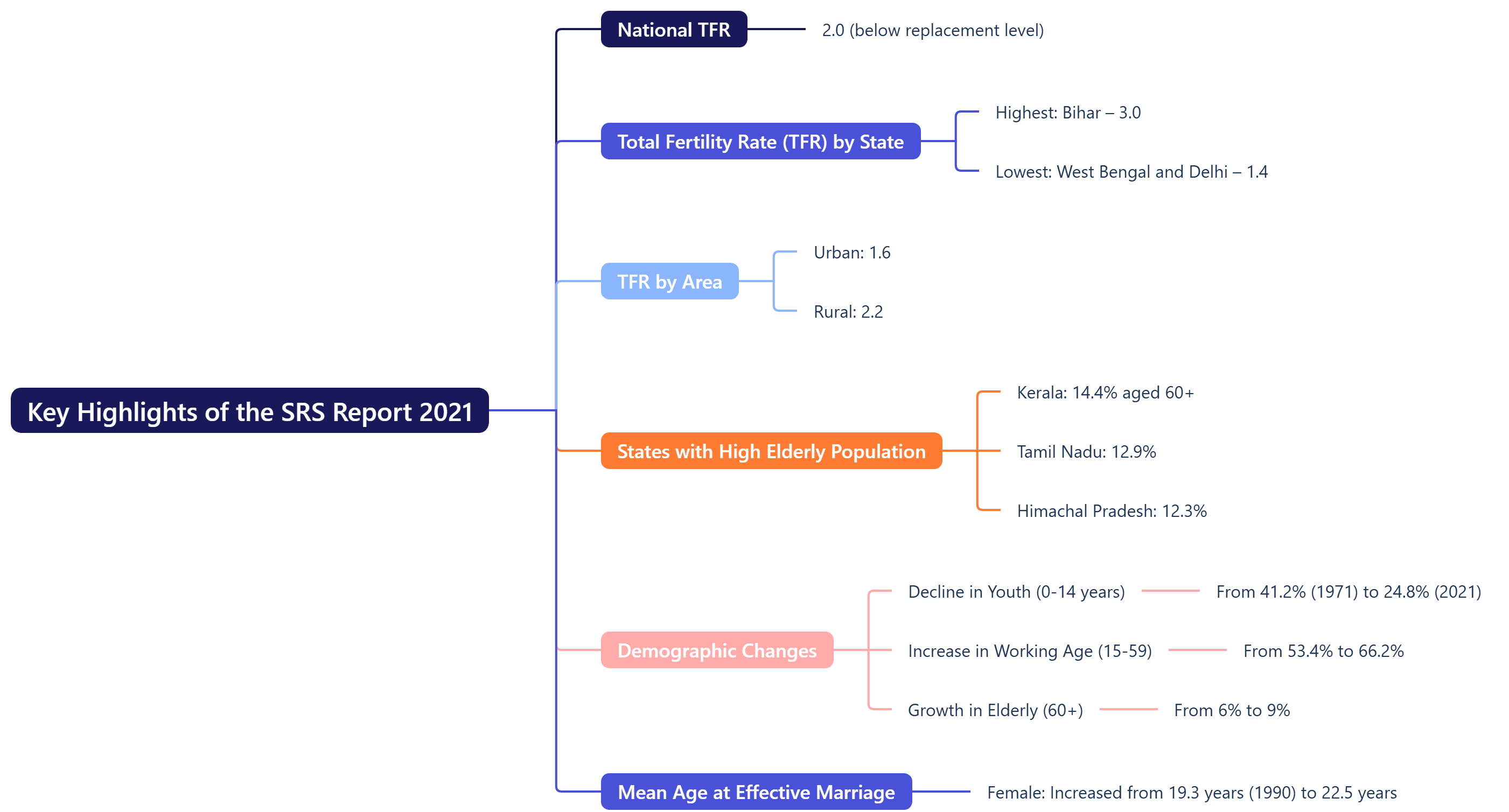
- National TFR: 2.0 (below the replacement level)
- Highest TFR: Bihar – 3.0
- Lowest TFR: West Bengal and Delhi – 1.4
- Urban vs Rural TFR: Urban – 1.6, Rural – 2.2
- States with High Elderly Population:
- Kerala – 14.4% aged 60+
- Tamil Nadu – 12.9%
- Himachal Pradesh – 12.3%
- Decline in Youth (0–14 years): From 41.2% (1971) to 24.8% (2021)
- Increase in Working Age (15–59): From 53.4% to 66.2%
- Growth in Elderly (60+): From 6% to 9%
- Mean Age at Effective Marriage (Female): Increased from 19.3 years (1990) to 22.5 years
Sociological Analysis:

- Demographic Transition Theory (DTT): India appears to be entering Stage 3 of DTT, marked by declining birth and death rates. The TFR of 2.0 suggests a move toward population stabilization, a hallmark of modern societies.
- Aging Society and Structural Functionalism: Emile Durkheim and Talcott Parsons emphasized role differentiation in society. The growing elderly population will require new institutional adaptations like robust healthcare, social security systems, and elderly care infrastructure.
- Gender Empowerment and Fertility: The rise in the mean age of marriage for women and increased female literacy and workforce participation reflect changing gender roles. This supports feminist sociologists like Sylvia Walby who connect women’s empowerment with lower fertility trends.
- Regional Inequality and Population Sociology: Bihar’s TFR of 3.0 versus West Bengal’s 1.4 highlights spatial disparities. Bourdieu’s concept of social capital can help explain how access to education, healthcare, and family planning differs across regions, reinforcing unequal demographic patterns.
Implications for Policy and Planning
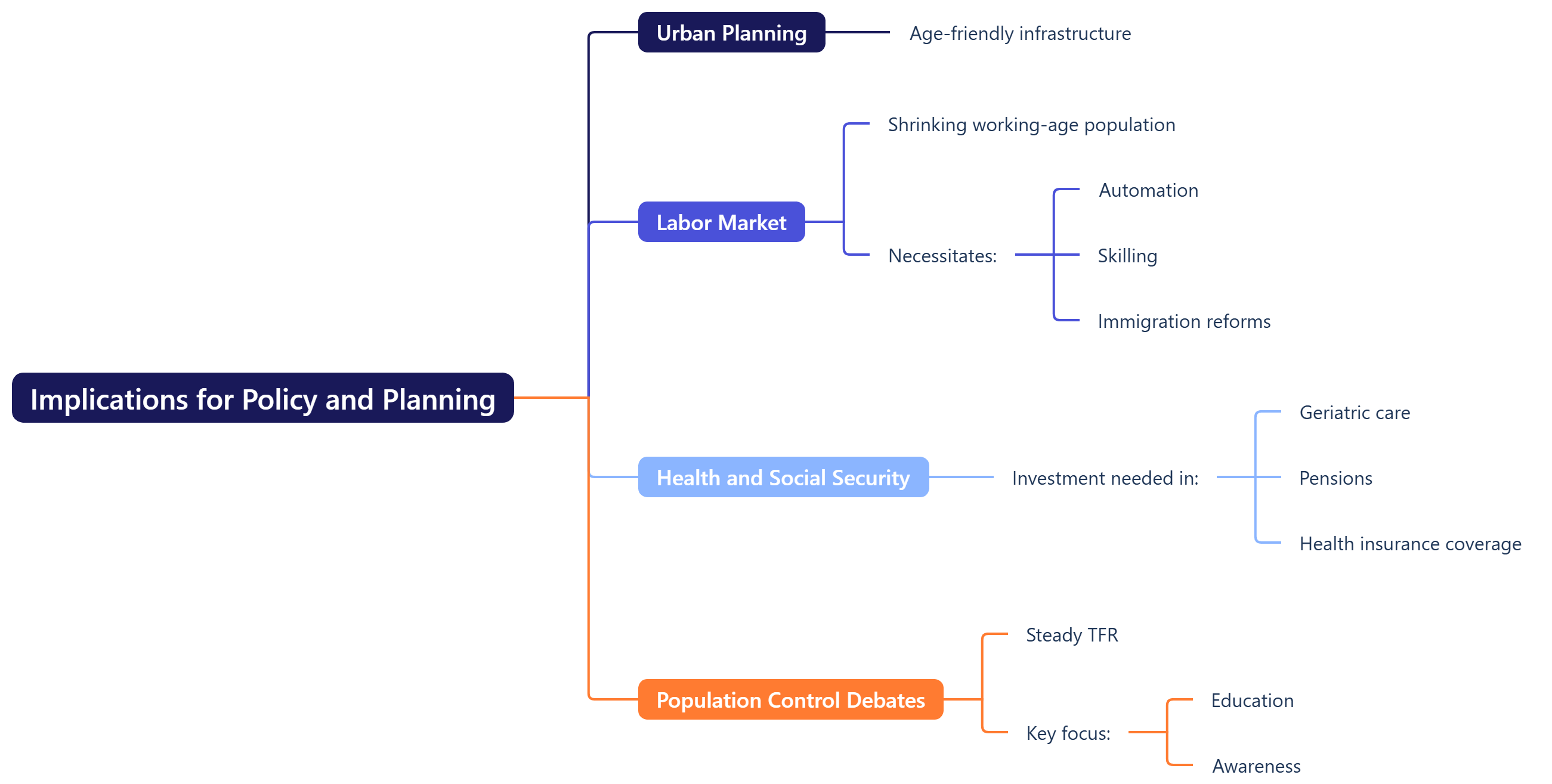
- Urban Planning: With more elderly people, cities need age-friendly infrastructure.
- Labor Market: The working-age population may shrink in coming decades, necessitating automation, skilling, and possibly immigration reforms.
- Health and Social Security: A larger 60+ population requires investment in geriatric care, pensions, and health insurance coverage.
- Population Control Debates: The steady TFR negates the need for coercive population control policies; instead, investment in education and awareness is a key.
Conclusion:
India’s fertility stabilization marks a crucial turning point in its demographic journey. While the fear of overpopulation has shaped national policies for decades, the latest data points toward an emerging concern of aging and shrinking youth base.
Previous Year Questions
Paper I
- Discuss the theory of demographic transition and assess its relevance for developing countries like India. (2022)
- Examine the interrelationship between fertility, mortality and migration in the context of population dynamics. (2020)
- How does ageing affect the institution of family and kinship in modern society? (2019)
- Critically analyse the impact of population growth on social development. (2018)
- Explain how demographic factors influence social mobility. (2017)
- Discuss the sociological perspectives on population control with reference to India. (2016)
- What is the impact of declining birth rates on the social structure? (2015)
- Examine the relationship between fertility and status of women. (2014)
- Analyse how changing age structure of population affects social institutions. (2013)
- Discuss the implications of ageing society on social policy. (2012)
Paper II
- Discuss the emerging challenges of ageing population in India. (2020)
- Examine the regional variations in fertility and mortality trends in India. (2019)
- Population growth and economic development: Is India facing a demographic dividend or burden? (2018)
- Evaluate the success and limitations of India’s population policy since Independence. (2017)
- How does female education influence fertility behaviour in India? (2016)
- Discuss the role of family planning programmes in transforming the Indian family structure. (2015)
- Analyse the impact of urbanisation on fertility and family norms in India. (2014)
- How has the postponement of marriage influenced fertility rates in Indian society? (2013)
- Discuss the role of Panchayats and local governance in promoting population control. (2012)
- Critically examine the social implications of regional imbalances in India’s demographic profile. (2011)
|