
75 Years of the National Sample Survey (NSS): A Sociological Reflection on Empirical Research, Social Science & Democratic Knowledge Production
(Relevant for Sociology Paper 1: Research Methods and Analysis)
|
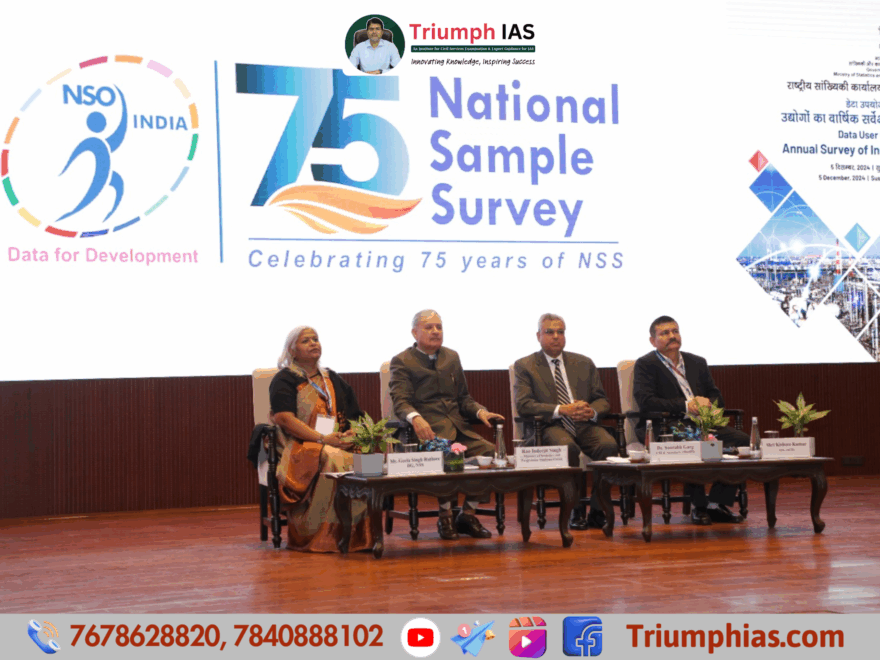
The 75th anniversary of the National Sample Survey (NSS) marks more than a statistical milestone—it reflects the evolution of India’s commitment to evidence-based governance, socio-economic inclusion, and scientific social inquiry. The NSS, founded in 1950 on the recommendation of Professor P.C. Mahalanobis, emerged at a time when newly independent India urgently needed reliable data to understand poverty, employment, agriculture, inequality, and living standards. Over the past seven decades, NSS has become a cornerstone of social statistics and sociological research, shaping policy decisions and deepening the democratic responsibility of the state toward citizens. The release of the National Industrial Classification (NIC) 2025 during the culmination ceremony symbolizes the ongoing effort to modernize data systems in line with global standards (ISIC Rev. 5), enabling increased transparency and comparability in economic and social research. But the true significance of this moment lies not only in classification or numbers—it lies in the sociological importance of research as a scientific tool to understand society. The NSS as a Foundation of Empirical SociologyÉmile Durkheim, the founding father of sociology, viewed empirical data as essential for understanding what he called social facts—the patterns and forces outside individuals that shape behaviour. He emphasized that sociology must be based on systematic observation, evidence and measurement, not speculation. NSS embodies Durkheim’s scientific vision by providing:
In Durkheim’s words, society must be studied “like things”—systematically and objectively. NSS enables this scientific study of society through structured surveys. P.C. Mahalanobis & the Birth of Statistical Sociology in IndiaOften called the father of modern Indian statistics, Mahalanobis believed that planned development must be grounded in large-scale surveys. He introduced random sampling, crop surveys, and multi-stage sampling, influencing data systems in more than 100 countries. His work aligns with Auguste Comte’s positivism, which argued that societies progress by adopting scientific and empirical methodology. Mahalanobis argued that policy without data is blind—a principle that remains central today. Surveys such as consumption expenditure, employment, health, and education continue to shape five-year plans, poverty measurement, and welfare schemes. NSS and the Sociology of InequalityKarl Marx asserted that society must be studied through the lens of class relations and material inequality. NSS data on wages, landholding, ownership, and living standards reveals structural inequality and exploitation. It exposes disparities between:
Without NSS surveys, the reality of poverty or unemployment would remain invisible, enabling what Marx called the false consciousness of progress. Max Weber and the NSS: Understanding Social ActionMax Weber emphasized interpretive understanding of social action through qualitative and quantitative methods. NSS provides crucial insights into:
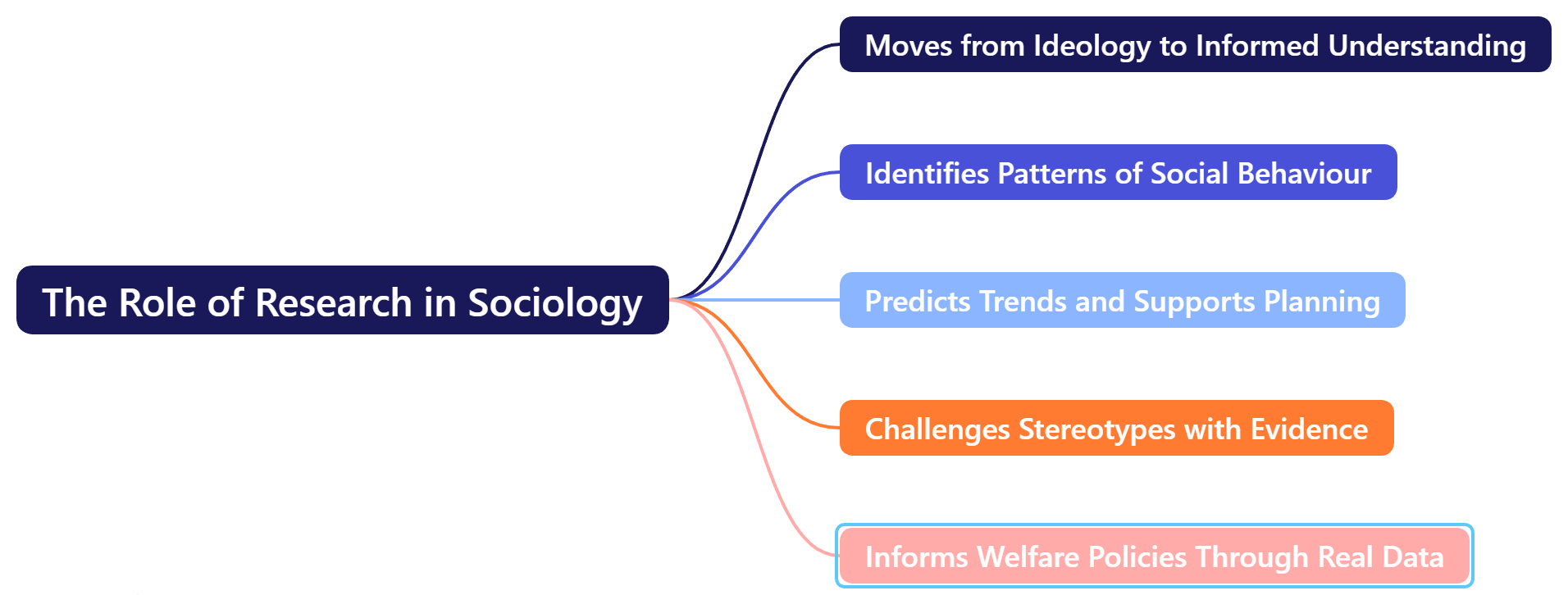
Weber believed that modern states rely on rational-bureaucratic systems; NSS embodies this rationality through standardized survey design, classification (NIC), and large-scale field coordination. The Role of Research in Sociology
Research is the backbone of sociology because it:
Robert Merton highlighted the importance of middle-range theories—linking empirical observation with theoretical explanation. NSS data on migration, unemployment, and education enables sociologists to develop such theories, contributing meaningfully to policy discourse. Survey Research & Social PolicyAmartya Sen’s Capability Approach argues that development must be evaluated not through GDP but through real freedoms—health, education, livelihood security, dignity. NSS data on consumption, inequality, and social indicators strengthens this evaluative framework, ensuring that policy is people-centric rather than growth-centric. Similarly, Anthony Giddens’ structuration theory suggests that individuals shape social structures while being shaped by them. NSS captures this dynamic interaction by documenting how people adapt to social change—urbanization, digitalization, climate shifts, job mobility. Four Divisions of NSS and Their Sociological Role
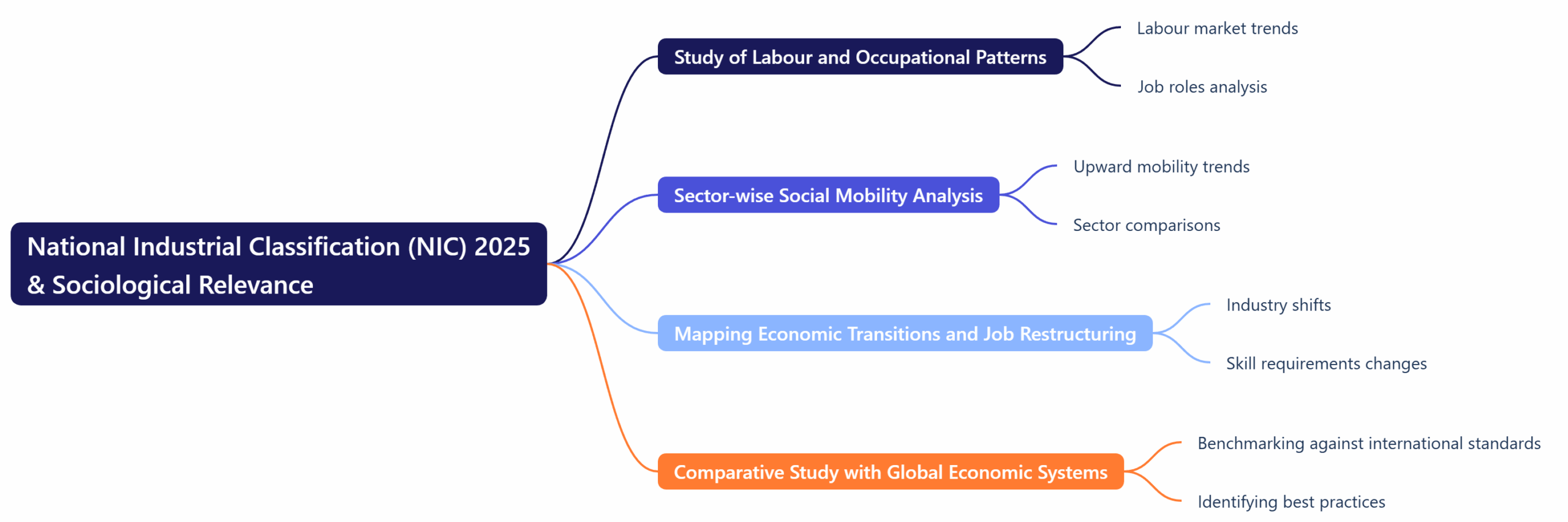
Together, they enable what Habermas calls an informed public sphere rooted in transparency and democratic accountability. National Industrial Classification (NIC) 2025 & Sociological Relevance
NIC 2025 standardizes how economic activities are categorized, enabling:
It also enhances sociological research on the changing nature of work, such as the rise of gig labour and platform economy—shifting from traditional industries to digital employment. NSS, Evidence-Based Policymaking & Democratic AccountabilitySociologists argue that data is a tool of empowerment. Policies such as MGNREGA, NFSA, MSP revisions, health insurance, or unemployment relief rely heavily on NSS findings. Without NSS, public policy would operate blindfolded—benefiting elites over marginalized groups. The survey therefore strengthens democratic accountability, reflecting Dreze and Sen’s view that information is essential for citizen participation and justice. ConclusionThe 75-year journey of the National Sample Survey is a story of how a newly independent nation institutionalized scientific research to understand itself. More than numbers and tables, NSS represents India’s commitment to scientific temper, social justice, and inclusive democracy. Through the lens of sociology and thinkers across centuries, NSS emerges as a critical tool for analysing inequality, mapping social change, shaping development policy, and nurturing informed citizenship. As India modernizes data frameworks with tools like NIC 2025, the mission of NSS continues—ensuring that truth is measured, reality is documented, and democracy remains evidence-based. |
To Read more topics, visit: www.triumphias.com/blogs
Read more Blogs:
Protection of Plant Varieties and Farmers’ Rights (PPV&FRA) Act, 2001
The evolution of the NSS over 75 years highlights its importance in shaping the field of sociology in India. From its roots in empirical research to its current role in informing social policy, it’s clear that the NSS has been instrumental in fostering a deeper understanding of societal dynamics.