
The Gig Economy: Labour Market Dynamics, Workers Social Security, and Sociological Perspectives
Relevant for Sociology Paper 2: Industrialization and Urbanization in India
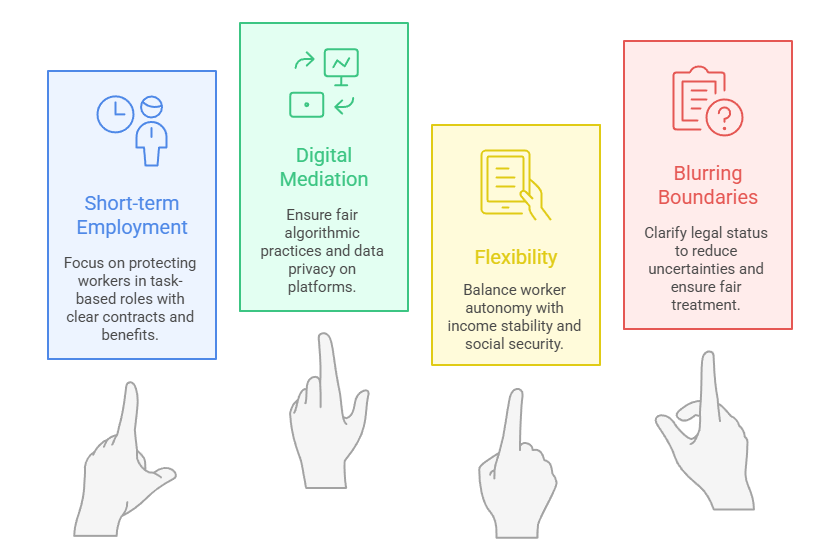
IntroductionThe gig economy refers to a labour market dominated by short-term, flexible, and task-based employment, often mediated through digital platforms. Unlike traditional employment, where workers enjoy long-term contracts, benefits, and social security, gig work offers freedom of choice but lacks stability and protections. In India, studies by the Boston Consulting Group (2024) estimate that about 15 million workers participate in the gig economy, spanning sectors such as software, shared services, professional services, ride-hailing, food delivery, and e-commerce logistics. Platforms like Uber, Ola, Zomato, Swiggy, Upwork, and Freelancer exemplify this trend, connecting service providers directly with consumers in real-time. While the gig economy has redefined work, offering flexibility and entrepreneurship opportunities, it has simultaneously exposed workers to precarity, exploitation, and social vulnerability, raising questions about labour rights, social protection, and economic equality. Defining the Gig Economy
The gig economy is characterized by:
Sociologically, the gig economy signifies a shift from traditional work relations toward networked, digital, and globalized labour markets. It challenges the conventional notions of job security, collective bargaining, and community-based labour identity. Impact on the Labour Market
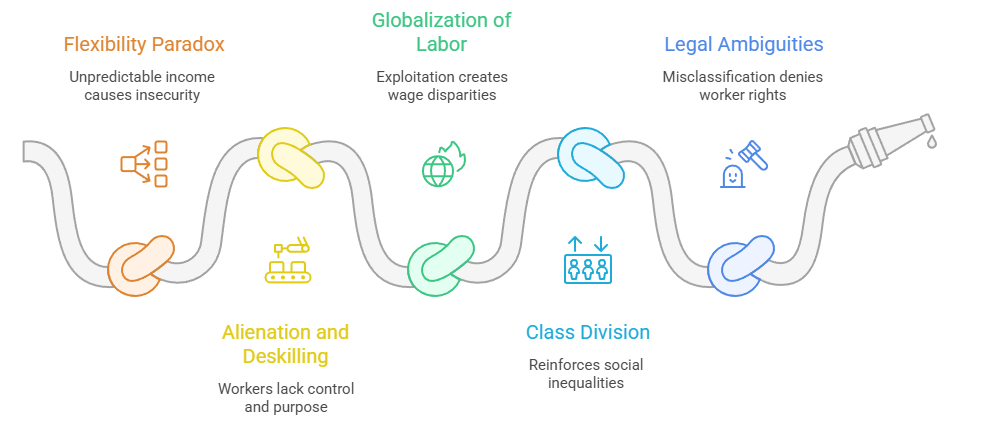
One of the most cited advantages of gig work is flexibility. Workers can select when, where, and how much to work. This is particularly beneficial for students, caregivers, or those balancing multiple responsibilities. However, this flexibility is a double-edged sword. The absence of guaranteed income, unpredictable hours, and platform-driven algorithms generate economic insecurity, anxiety, and mental stress. Sociologically, this tension reflects a dual experience of empowerment and vulnerability, requiring workers to constantly balance autonomy with survival.
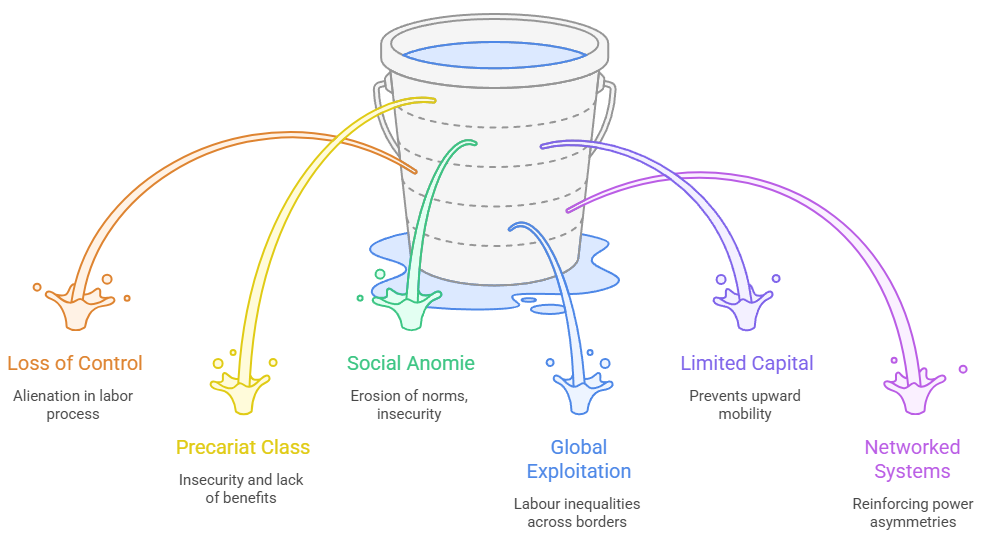
Karl Marx’s theory of alienation is highly relevant in analyzing gig work. Marx argued that alienation occurs when workers lose control over the production process and the product of their labour. In the gig economy:
As a result, gig workers may feel a lack of purpose and meaning, disconnected from the social and economic outcomes of their work.
Digital platforms enable the globalization of labour, allowing companies to tap into cheap labour markets across countries. Sociologist Saskia Sassen observes that global platforms exploit disparities in wages and labour regulations, creating a transnational precariat. In India, gig workers often compete with global peers, putting downward pressure on wages and benefits. This has led to income inequalities, particularly between urban, tech-savvy workers and rural or semi-skilled workers.
The gig economy fosters a new form of class stratification. Guy Standing’s concept of the precariat emphasizes the chronic insecurity, economic vulnerability, and lack of rights experienced by gig workers. Those without access to stable, well-paying jobs face marginalization, reinforcing existing social inequalities. Meanwhile, workers in higher-end knowledge-based gig sectors enjoy better pay and flexibility, creating a two-tiered workforce within the same economy. Pierre Bourdieu’s concept of social capital further explains that gig workers often lack networks and institutional support, preventing upward mobility.
A critical challenge in the gig economy is employment classification. Workers are often misclassified as independent contractors rather than employees, denying them minimum wage, overtime, provident fund, health insurance, and paid leave.
Globally, the EU Platform Work Directive (2023) mandates transparency in algorithms, fair wages, and social security access. In California, AB5 (2019) attempted to classify gig workers as employees, though ongoing litigation demonstrates the complexity of regulating digital labour markets. Impact on Workers’ Social SecurityThe gig economy has profound consequences for workers’ welfare and social security:
Policy and Legal FrameworksIndia has recognized the need to extend social security to gig workers:
Internationally:
Case Studies
These examples show that gig workers’ rights require both national and international legal attention, combined with technological oversight to ensure fairness. Sociological Perspectives
Future Directions
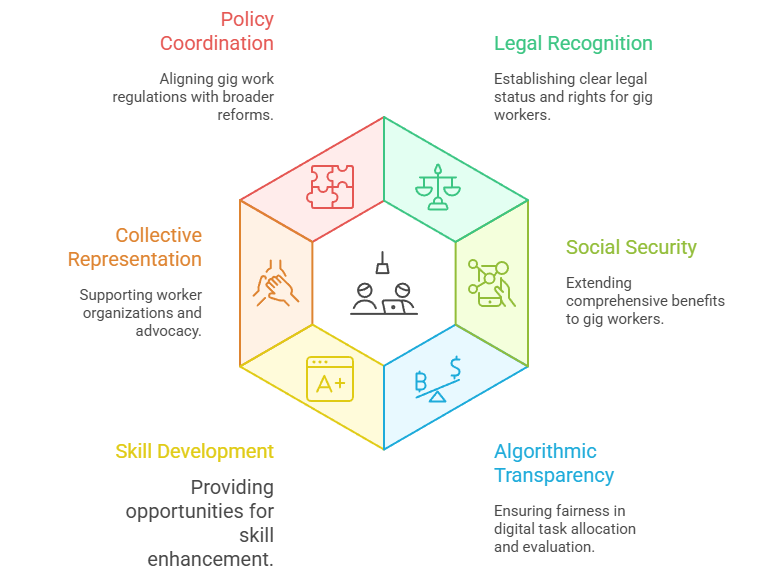
To mitigate the adverse impacts of gig work, India and other countries must focus on:
ConclusionThe gig economy represents a paradigm shift in labour markets, creating new opportunities but also systemic vulnerabilities. From a sociological standpoint, it challenges traditional employment norms, fosters alienation, exacerbates inequality, and threatens social security nets. While digital platforms enhance flexibility and convenience, they fragment labour, erode protections, and generate precarity, particularly for low-skilled workers. Legal reforms such as India’s Code on Social Security, 2020, and international measures like the EU Platform Work Directive offer frameworks for safeguarding gig workers. |
To Read more topics, visit: www.triumphias.com/blogs
Read more Blogs:
Manual Scavenging in India: Legal Mandates, Persistent Challenges, and Pathways for Eradication