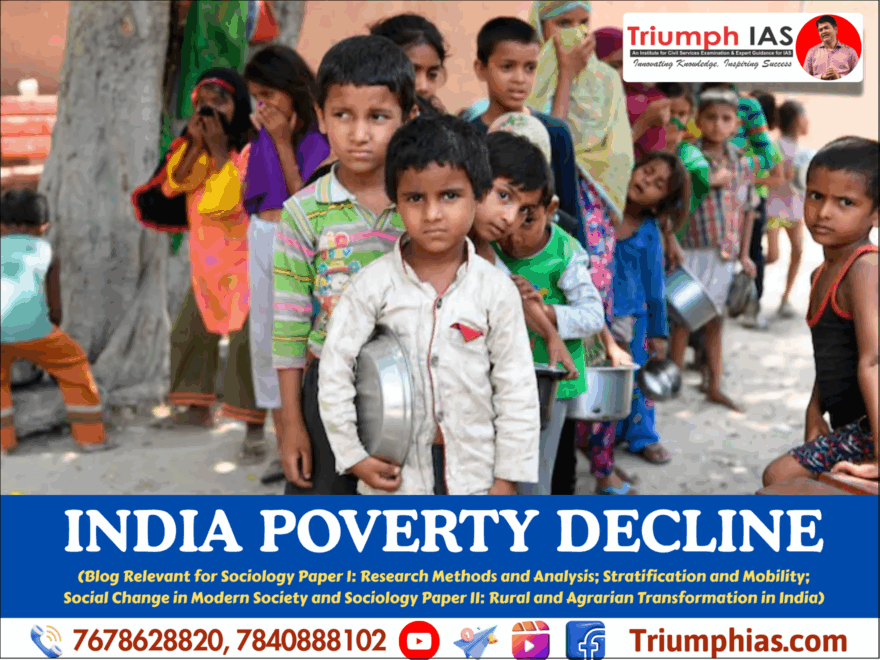
Introduction: India poverty decline
India’s recent poverty statistics claim dramatic reductions, with official surveys and multilateral bodies asserting near-eradication of poverty. However, such proclamations are increasingly under scrutiny due to methodological shifts, outdated poverty lines, and incomplete datasets.
Why the Recent Poverty Data Is Problematic
-
Methodological Inconsistency in HCES Surveys
- HCES 2022–23 introduced:
- Three-questionnaire model with three monthly visits.
- Shorter recall periods to reduce memory-based errors.
- Inclusion of “freebies” like subsidised food and LPG in total consumption.
➡These changes have inflated household consumption estimates, making comparisons with 2011–12 invalid without a standardized correction factor.
-
Outdated Poverty Lines
- India still uses:
- Tendulkar Line (2009): Rs 27 (rural), Rs 33 (urban).
- Rangarajan Line (2014): Rs 32 (rural), Rs 47 (urban).
➡These are based on the 2011–12 consumption pattern, not calibrated for current costs, calorific requirements, or changing livelihoods.
Why Dramatic Poverty Reduction Is Unlikely
-
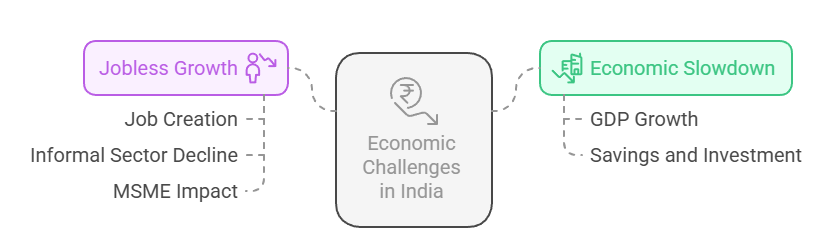
Economic Slowdown (Post-2014)
- GDP growth slowed to 8% (2014–2024) from ~8% (2004–14).
- Savings and investment rates fell sharply — India’s growth engines lost momentum.
-
Jobless Growth and Informal Sector Decline
- Job-led growth (2004–14) created 7.5 million non-farm jobs per year.
- Post-2016 shocks like demonetisation, GST, and COVID lockdowns disproportionately hurt informal and MSME sectors.
➡Reverse migration of 80 million back to agriculture shows rural distress, contradicting poverty reduction narratives.
Sociological Analysis:
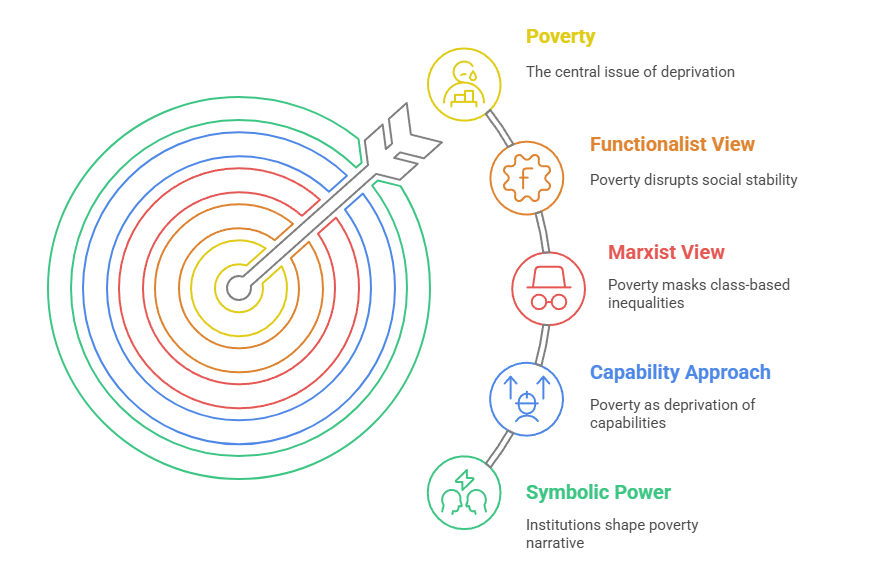
- From a functionalist view, poverty disrupts social stability. Welfare schemes and growth policies are meant to integrate marginalized groups into the mainstream. However, when data itself is flawed or manipulated, it can erode public trust in institutions and undermine the legitimacy of poverty-alleviation programs. Social equilibrium is threatened if citizens perceive inequality as ignored or misrepresented.
- Karl Marx would interpret current poverty statistics as a mask for deeper class-based inequalities. Capitalist structures tend to concentrate wealth and decision-making power among the elite. When growth disproportionately benefits urban corporations while informal workers and rural poor remain excluded, poverty figures become a political smokescreen that conceals economic exploitation and marginalization.
- Amartya Sen’s Capability Approach argues that poverty should be seen as the deprivation of capabilities—not just income. Higher reported consumption may suggest material improvement, but without corresponding gains in health, education, or personal agency, it doesn’t reflect a true escape from poverty. The new data lacks indicators of such multidimensional progress, undermining the narrative of poverty eradication.
- Pierre Bourdieu’s Concept of Symbolic Power helps explain how state institutions, like NITI Aayog, control the narrative by defining what counts as poverty. The language of “eradication” becomes a tool of symbolic domination, shaping perceptions while ignoring ground realities. This serves to legitimize the state’s developmental agenda, even if the poor continue to suffer material deprivation.
Issues with the Multidimensional Poverty Index (MPI)
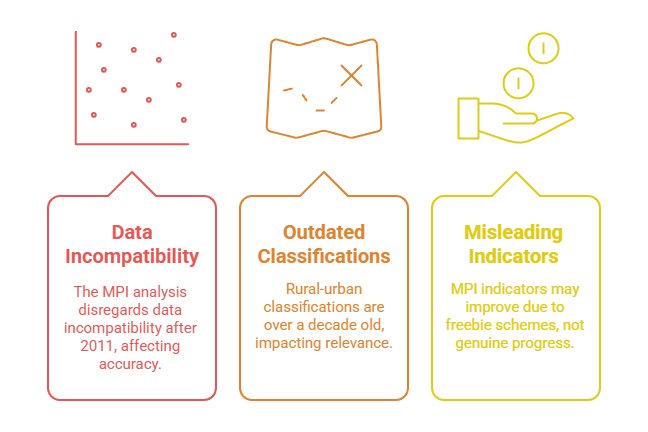
- India’s MPI by NITI Aayog and UNDP ignores the data incompatibility post-2011.
- Uses census classifications of rural-urban zones which are over a decade old.
- MPI indicators may improve due to freebie schemes, not actual income or job stability.
Reversal of Structural Gains
| Period |
Job Creation |
Real Wage Growth |
Non-Farm Shift |
| 2004–14 |
High (7.5M/year) |
Rising |
Away from agri |
| 2015–24 |
Low/Stagnant |
Stagnant |
Back to agri |
Indicates a K-shaped recovery, with the bottom 50% regressing, challenging the assumption of poverty eradication.
Conclusion:
Yes, India has made progress. But methodological caution, historical context, and sociological insight show that poverty decline claims are not as clear-cut. It is vital for policymakers, scholars, and UPSC aspirants to look beyond the surface numbers. India needs:
- A new poverty line reflecting calorific, social, and capability needs.
- Transparent, comparable survey methods.
- Recognition that poverty is not merely economic, but socially embedded.
PYQs:
Paper I:
“Discuss the limitations of using quantitative data for studying poverty.” (2023)
Paper II:
“How effective are welfare programmes in tackling rural poverty?” (2019)
“Discuss the transformation in the nature of rural poverty in India post-liberalisation.” (2020) |