Introduction: Plastic Love
“Plastic Love” is a term used to describe emotionally shallow, short-lived, and performative relationships—often shaped by modern media, technology, and consumer culture. The phrase gained global popularity through the 1980s Japanese city pop song by Mariya Takeuchi, but its sociological relevance in today’s digital age of simulated affection and disposable emotions is profound.
In the 21st century, love has become a marketable, digital product, often filtered through dating apps, social media validation, and influencer lifestyles. The result is a growing phenomenon of plastic relationships, lacking depth, longevity, or authenticity.
Sociological Analysis
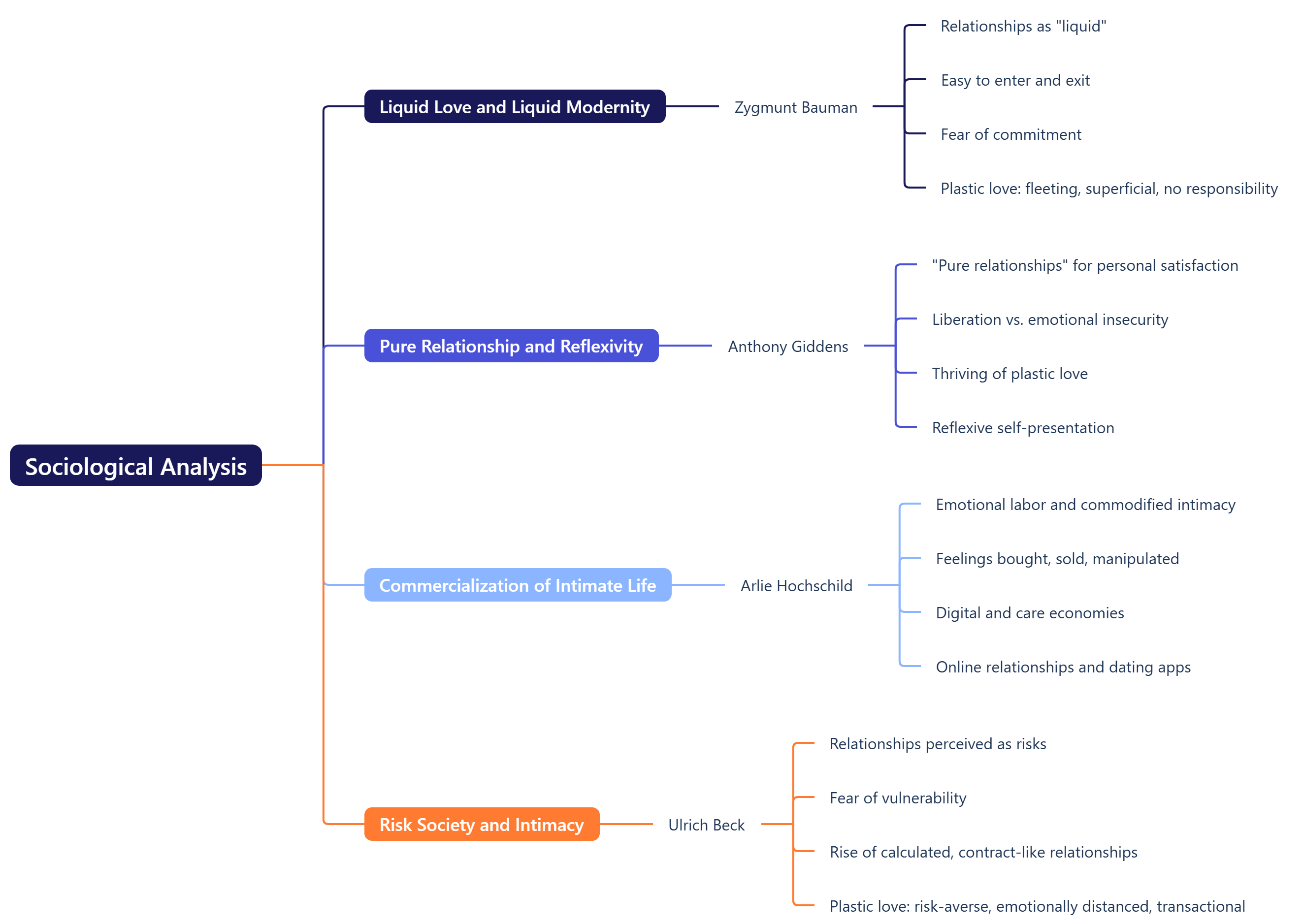
- Liquid Love and Liquid Modernity: Zygmunt Bauman argues that relationships today have become “liquid”—easy to enter and easier to exit. People fear commitment, leading to fragile bonds based on convenience, not connection. Plastic love mirrors this liquidity—fleeting, superficial, and devoid of responsibility.
- Pure Relationship and Reflexivity: In late modern societies, Anthony Giddens says “pure relationships” are formed for personal satisfaction, rather than social obligation. While liberating, they also breed emotional insecurity and constant negotiation. Plastic love thrives in this environment of reflexive self-presentation and conditional intimacy.
- Commercialization of Intimate Life: Arlie Hochschild’s work on emotional labor and commodified intimacy shows how feelings are bought, sold, and manipulated—especially in digital and care economies. Online relationships and dating apps commodify affection—users swipe based on appearances, not substance.
- Risk Society and Intimacy: Ulrich Beck notes that modern individuals perceive relationships as risks—leading to fear of vulnerability. This fuels a rise in calculated, contract-like relationships. Plastic love is risk-averse, emotionally distanced, and often transactional.
Contemporary Examples in Indian Society
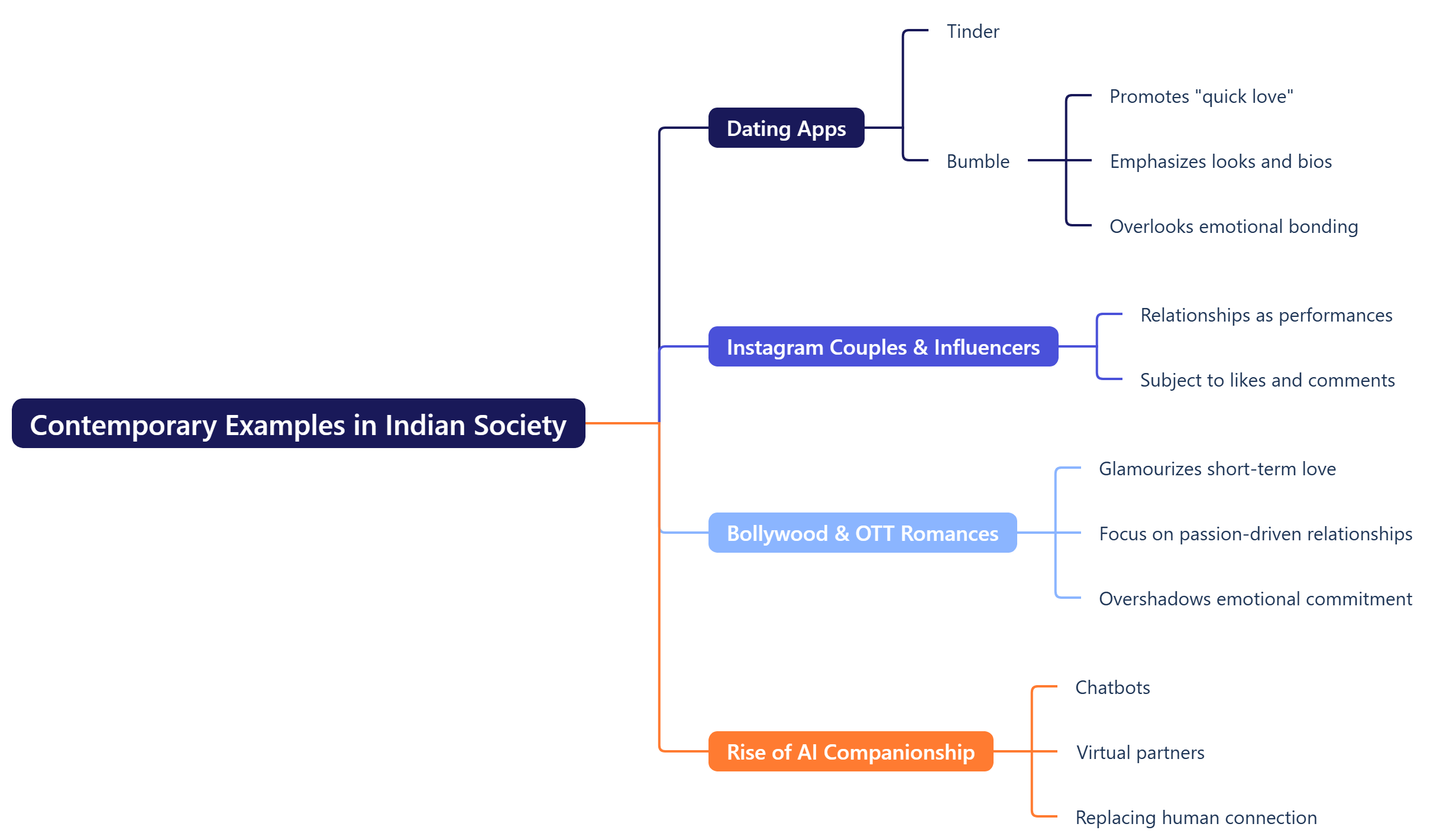
- Dating Apps (Tinder, Bumble): Promote “quick love,” emphasizing looks and bios over emotional bonding.
- Instagram Couples & Influencers: Relationships become performances, subject to likes and comments.
- Bollywood & OTT Romances: Often glamorize short-term, passion-driven love, overshadowing emotional commitment.
- Rise of AI Companionship: Chatbots and virtual partners replacing human connection.
Impact on Society
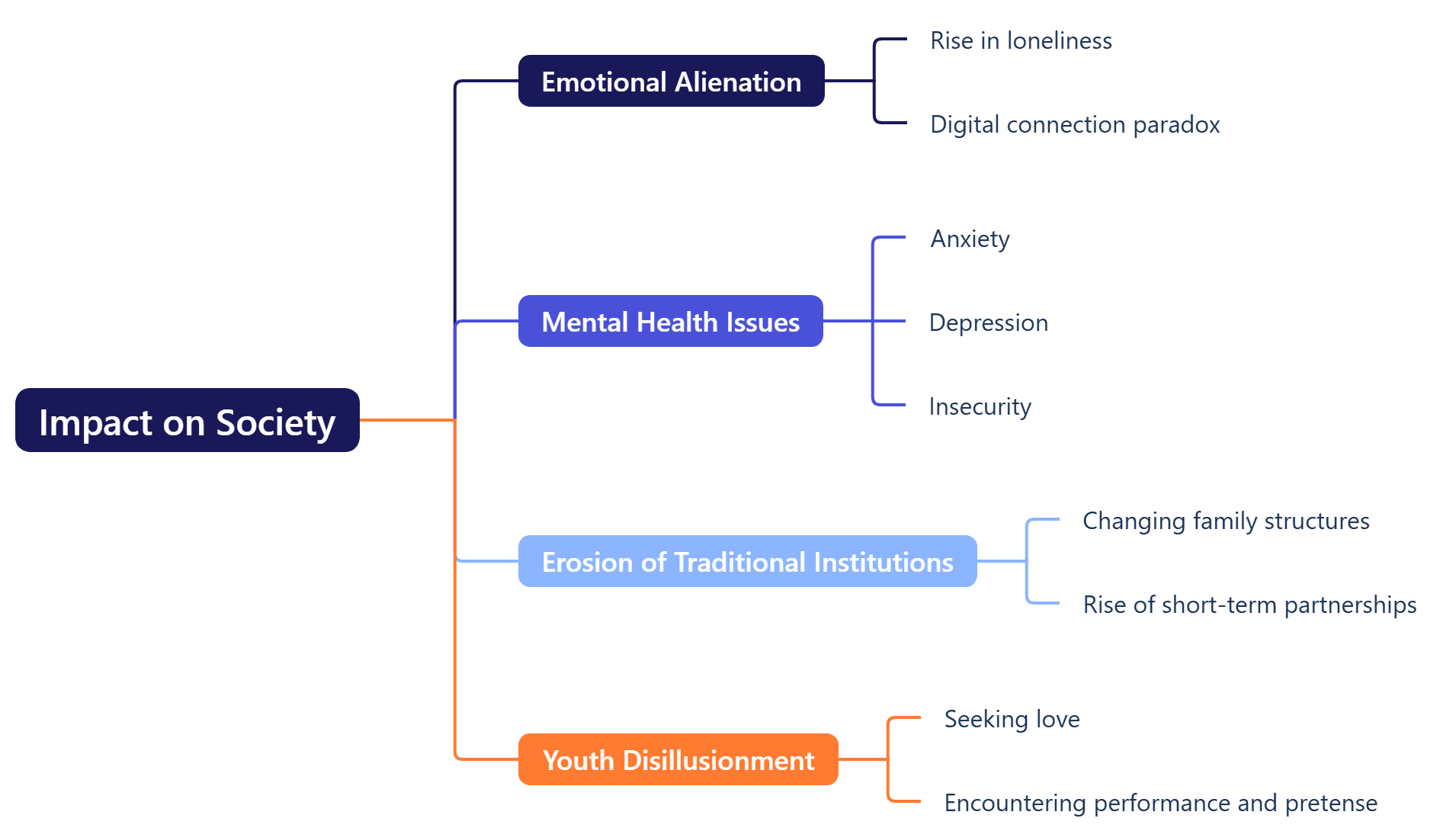
- Emotional Alienation: Rise in loneliness despite being “connected” digitally.
- Mental Health Issues: Anxiety, depression, and insecurity due to unstable emotional bonds.
- Erosion of Traditional Institutions: Marriage and family structures being replaced by short-term partnerships.
- Youth Disillusionment: Generation seeking love but finding performance and pretense.
Conclusion:
Plastic love is a symptom of a hyper-consumerist, digitally saturated world where affection is commodified and permanence is passé. While technology has expanded access to partners, it has also hollowed out emotional depth, making relationships more about self-presentation than selflessness. As India’s youth navigate this new terrain of emotional hyper-connectivity but social loneliness, sociology must play a crucial role in understanding and addressing the crisis of connection. UPSC aspirants must reflect on how modernity, technology, and culture are reshaping even the most intimate aspects of our lives.
PYQs
Paper 1
- What is meant by ‘liquid modernity’? Examine its impact on personal relationships. (2023)
- Analyze the social consequences of changing definitions of love and commitment in modern societies. (2021)
- Explain how modernization has transformed the institution of marriage. (2020)
- What is ‘reflexivity’ in the context of Anthony Giddens’ theory of modernity? How does it influence intimate relationships today? (2019)
- Discuss the impact of media on the formation of identity and interpersonal relationships. (2017)
- What do you understand by the commodification of love and intimacy in a capitalist society? (2016)
- How does Zygmunt Bauman explain the transient nature of relationships in postmodern society? (2015)
- Examine the sociological relevance of virtual communities and online interactions. (2014)
Paper 2
- Discuss the impact of dating apps and social media on marriage and love relationships in urban India. (2023)
- Examine the transformation of the Indian family system in the context of digital communication. (2022)
- How has consumerism affected interpersonal relationships among Indian youth? (2021)
- Discuss the changing nature of courtship and mate selection in India with the influence of globalization. (2020)
- Explain the role of popular media in shaping perceptions of romance and relationships in contemporary Indian society. (2019)
- Analyze the growing trend of live-in relationships and its implications for Indian social structure. (2018)
- To what extent have technological innovations influenced intimacy and social interaction in urban India? (2017)
- Assess the sociological implications of commodified emotions in India’s digital economy. (2016)
- Discuss the challenges posed by ‘individualization’ to traditional family values in India. (2015)
- Critically analyze the emergence of virtual intimacy and its impact on youth culture in India. (2014)
|


One comment