
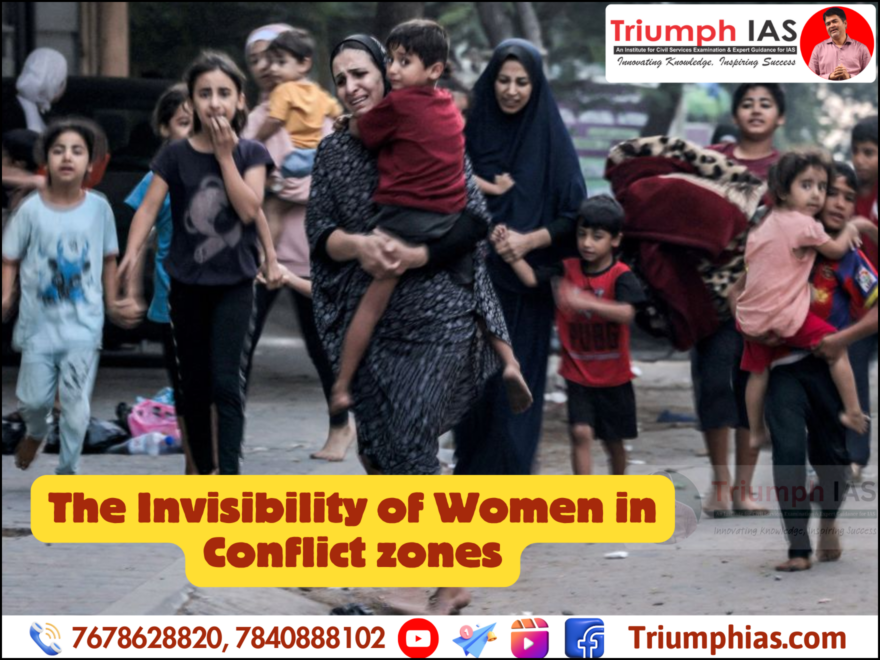
The Invisibility of Women in Conflict Zones
(Relevant for Sociology Paper 1: Social Stratification- Gender as a dimension of inequality and Sociology Paper 2: Women’s Movements; Challenges of Social Transformation- Communalism, Regionalism, Ethnic Conflict in India)
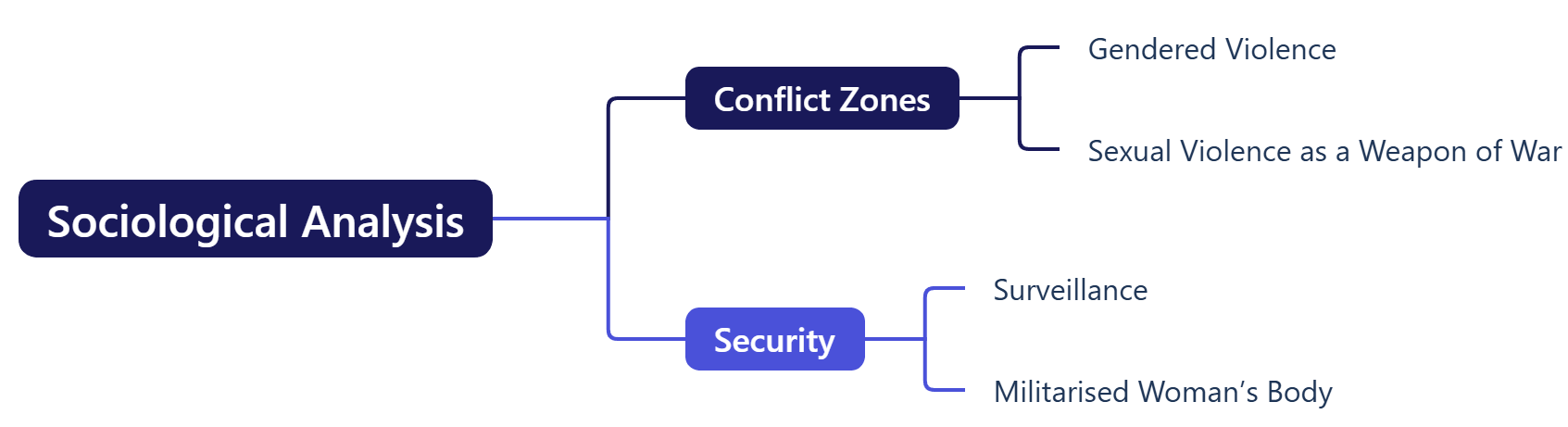
IntroductionWar zones are not only theatres of political and military contestation but also deeply gendered spaces where the condition of women in conflict zones becomes alarmingly vulnerable. From sexual violence as a weapon of war to economic displacement and exclusion from peacebuilding processes, women’s experiences remain largely underrepresented in mainstream security discourse. Conflict zones disproportionately affect women due to pre-existing gender hierarchies. War amplifies gender inequalities, pushing women into roles of refugees, widows, and caretakers, often without social or institutional support. Their access to basic rights—health, education, safety, and economic opportunity—is severely compromised. This blog explores the condition of women in war-torn societies using core sociological theories and concepts. Sociological Analysis
“Civil conflicts have more than doubled over the last two decades.” — UN Report Increased civil conflicts have worsened vulnerabilities, particularly for women. Sexual violence in war zones is often systematic and politically motivated, not merely an act of individual deviance. This aligns with the conflict perspective in sociology, which views society as a stage of power struggle where the state and institutions reinforce existing hierarchies—including patriarchy. According to Pierre Bourdieu’s concept of symbolic violence, sexual violence in war becomes a tool for asserting power, both symbolic and physical, reinforcing hegemonic masculinity.
Rape and sexual abuse are increasingly used as instruments of war, aimed at humiliating communities and asserting dominance. As sociologists noted that, the normalisation of rape during conflict is tied to a deep-rooted patriarchal militarisation of state structures. This reflects how structural violence, a concept introduced by Johan Galtung, disproportionately affects women in the form of legal invisibility, denial of healthcare, and lack of access to justice.
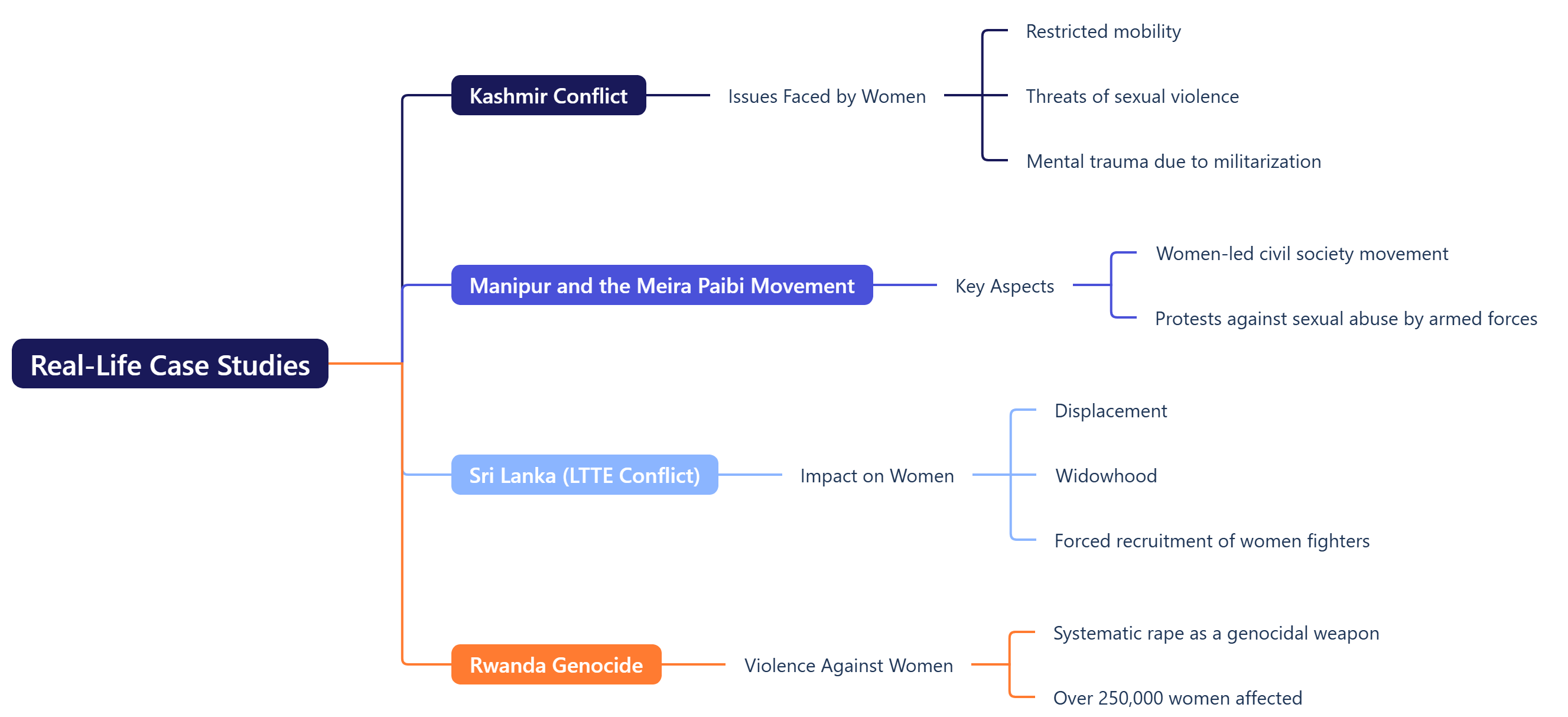
In areas like Kashmir and Manipur, security infrastructure (BSF, army, fencing) controls not just borders but also women’s mobility and autonomy. Women become the symbolic battlegrounds of nationhood. As sociologist’s writings show how the private/public binary collapses in conflict—homes become unsafe, and women are both victims and agents in the militarised landscape. According to Erving Goffman’s dramaturgical theory, where conflict zones alter “frontstage” and “backstage” behaviors and expectations for women, leading to role conflict and identity distortion. Real-Life Case Studies
Women as PeacebuildersDespite being marginalised, women are not passive victims. They engage in grassroots initiatives—relief work, rebuilding lives, conflict mediation, and rehabilitation. From organizing safe shelters to coordinating food and health access, their contributions remain critical yet undervalued. Example: In conflict-ridden Manipur, women collected essentials to support displaced communities and help rebuild livelihoods. Example: In post-war Rwanda, women-led cooperatives helped restore social trust and economic resilience. International Frameworks and LimitationsAlthough frameworks like UNSCR 1325 (Women, Peace and Security) exist, implementation gaps and weak enforcement limit their effectiveness. Justice delivery mechanisms for sexual violence are often slow, bureaucratic, or absent. Beyond Victimhood:Women in war zones are often portrayed either as helpless victims or resilient heroines. As Samreen Mushtaq warns, both roles risk romanticising or invisibilizing the complexity of their lived experiences. Feminist sociology urges us to see women not as binaries but as dynamic social actors within militarised contexts. ConclusionThe invisibility of women in conflict zones is not an oversight—it’s a reflection of deeply entrenched power structures that prioritize state security over human security. Through the lenses of structural violence, symbolic oppression, and feminist international relations theory, we uncover how war amplifies existing inequalities and creates new forms of gendered suffering. Yet, women are not just passive recipients of violence—they are agents of peace, resilience, and reconstruction. Recognizing their voices and lived realities is not only a moral imperative but also a strategic necessity for achieving sustainable peace. In the sociology of conflict, gender is not peripheral—it is foundational. Integrating women’s experiences into policy, justice, and peace frameworks transforms our understanding of both war and peace, moving us from a narrative of domination to one of dignity, equity, and empowerment. PYQsPaper I
Paper II
|

One comment