India and the Arctic: Navigating Strategic and Scientific Frontiers

India and the Arctic: Navigating Strategic and Scientific Frontiers

India and the Arctic: Navigating Strategic and Scientific Frontiers

(Relevant for GS Paper-3, Environmental pollution and degradation)

The Arctic region, once considered a remote expanse of ice and snow, has emerged as a focal point of global strategic, environmental, and economic interest. For India, a nation situated thousands of kilometres away, the Arctic presents both challenges and opportunities that are increasingly relevant in the context of climate change, energy security, and international cooperation.​

India’s Foray into the Arctic

India’s Foray into the Arctic

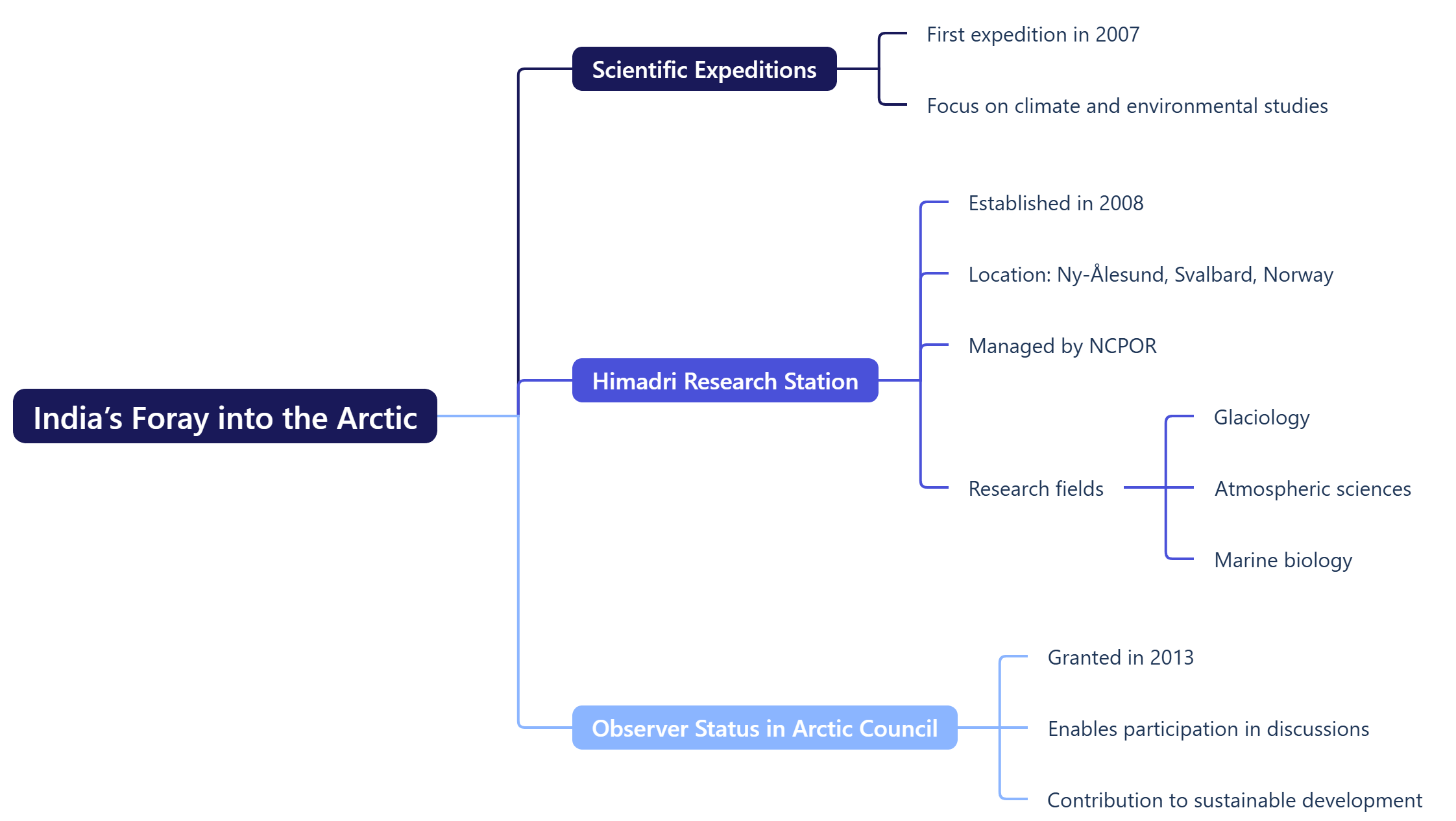
India’s engagement with the Arctic dates back to 1920 when it signed the Svalbard Treaty, allowing signatories to conduct commercial activities in the region. However, significant strides were made in the 21st century:​

  • Scientific Expeditions: India launched its first scientific expedition to the Arctic in 2007, focusing on climate and environmental studies.​
  • Himadri Research Station: In 2008, India established ‘Himadri,’ its first permanent Arctic research station in Ny-Ålesund, Svalbard, Norway. Managed by the National Centre for Polar and Ocean Research (NCPOR), Himadri facilitates research in fields like glaciology, atmospheric sciences, and marine biology. ​
  • Observer Status in Arctic Council: In 2013, India was granted Observer status in the Arctic Council, enabling it to participate in discussions and contribute to the region’s sustainable development. ​

Strategic and Environmental Significance

Strategic and Environmental Significance

Climate Change Implications

The Arctic is warming at twice the global average rate, leading to melting ice caps and rising sea levels. These changes have far-reaching effects on global weather patterns, including the Indian monsoon. Studies indicate that Arctic warming can disrupt monsoon cycles, impacting agriculture and water resources in India. ​

Energy and Mineral Resources

The Arctic is believed to hold about 22% of the world’s undiscovered oil and natural gas reserves. India’s energy companies, such as ONGC Videsh, have shown interest in exploring these resources through collaborations with Arctic nations. ​

New Shipping Routes

Melting ice is opening new maritime pathways like the Northern Sea Route, which can significantly reduce shipping distances between Europe and Asia. For India, this presents opportunities to enhance trade efficiency and reduce transportation costs.

India’s Arctic Policy: A Framework for Engagement

India’s Arctic Policy A Framework for Engagement

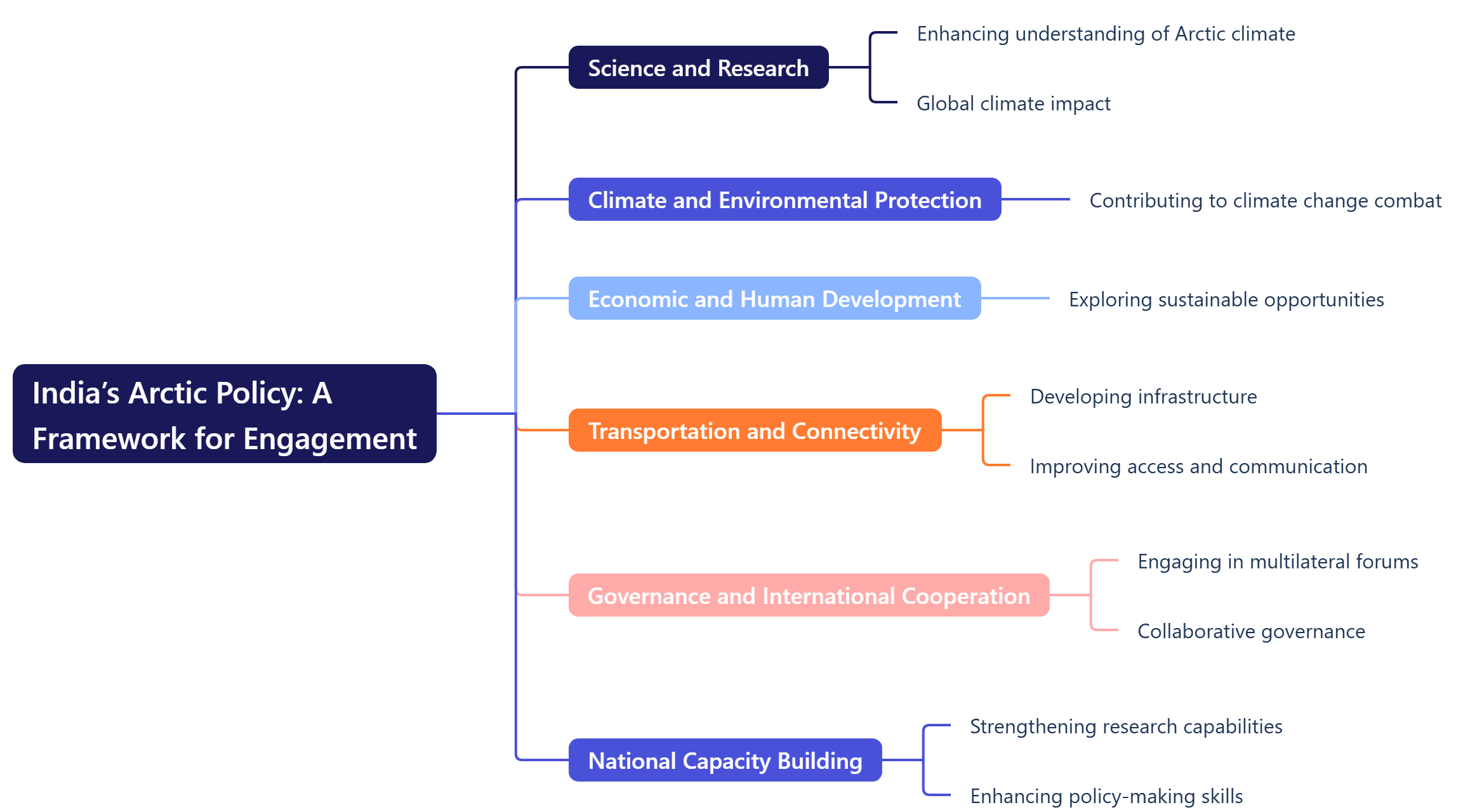
In 2022, India unveiled its first Arctic Policy titled “India and the Arctic: Building a Partnership for Sustainable Development.” The policy outlines six pillars:​

  1. Science and Research: Enhancing understanding of the Arctic’s climate and its global impact.​
  2. Climate and Environmental Protection: Contributing to global efforts to combat climate change.​
  3. Economic and Human Development: Exploring sustainable economic opportunities.​
  4. Transportation and Connectivity: Developing infrastructure to improve access and communication.​
  5. Governance and International Cooperation: Engaging in multilateral forums for collaborative governance.​
  6. National Capacity Building: Strengthening India’s capabilities in Arctic research and policy-making. ​

Challenges in the Arctic Engagement

  • Geopolitical Tensions: The Arctic is witnessing increased militarization and competition among nations, complicating collaborative efforts.​
  • Environmental Concerns: Resource extraction and increased human activity pose threats to the fragile Arctic ecosystem.​
  • Technological and Financial Constraints: Conducting research and operations in the Arctic requires significant investment and advanced technology, areas where India faces limitations.​

Recommendations for Strengthening India’s Arctic Presence

  1. Enhance Scientific Research: Invest in advanced research facilities and encourage interdisciplinary studies to better understand Arctic dynamics.​
  2. Foster International Collaboration: Engage with Arctic nations and institutions for joint research projects and knowledge exchange.​
  3. Develop Sustainable Practices: Ensure that economic activities in the Arctic are environmentally sustainable and socially responsible.​
  4. Capacity Building: Train scientists and policymakers in Arctic studies to build a skilled workforce dedicated to polar research.​
  5. Public Awareness: Educate the public about the significance of the Arctic and India’s role in its preservation and study.​

Conclusion

India’s engagement with the Arctic is a testament to its commitment to global environmental stewardship and sustainable development. By balancing scientific inquiry with strategic interests, India can contribute meaningfully to the Arctic’s future while safeguarding its own environmental and economic well-being. As the Arctic continues to evolve, proactive and collaborative approaches will be key to navigating the challenges and opportunities that lie ahead.

Explore India’s growing engagement with the Arctic through strategic cooperation, climate research, and sustainable development. Learn how India balances geopolitical interests with scientific collaboration in this vital region.

To Read more topics like India and the Arctic: Navigating Strategic and Scientific Frontiers in Public Posts, visit: www.triumphias.com/blogs

Read more Blogs:

Science Technology and Social Change | Sociology Optional Coaching | Vikash Ranjan Classes | Triumph IAS | UPSC Sociology Optional

Agents of Social Change | Sociology Optional Coaching | Vikash Ranjan Classes | Triumph IAS | UPSC Sociology Optional

One comment

Leave a Reply

Your email address will not be published. Required fields are marked *